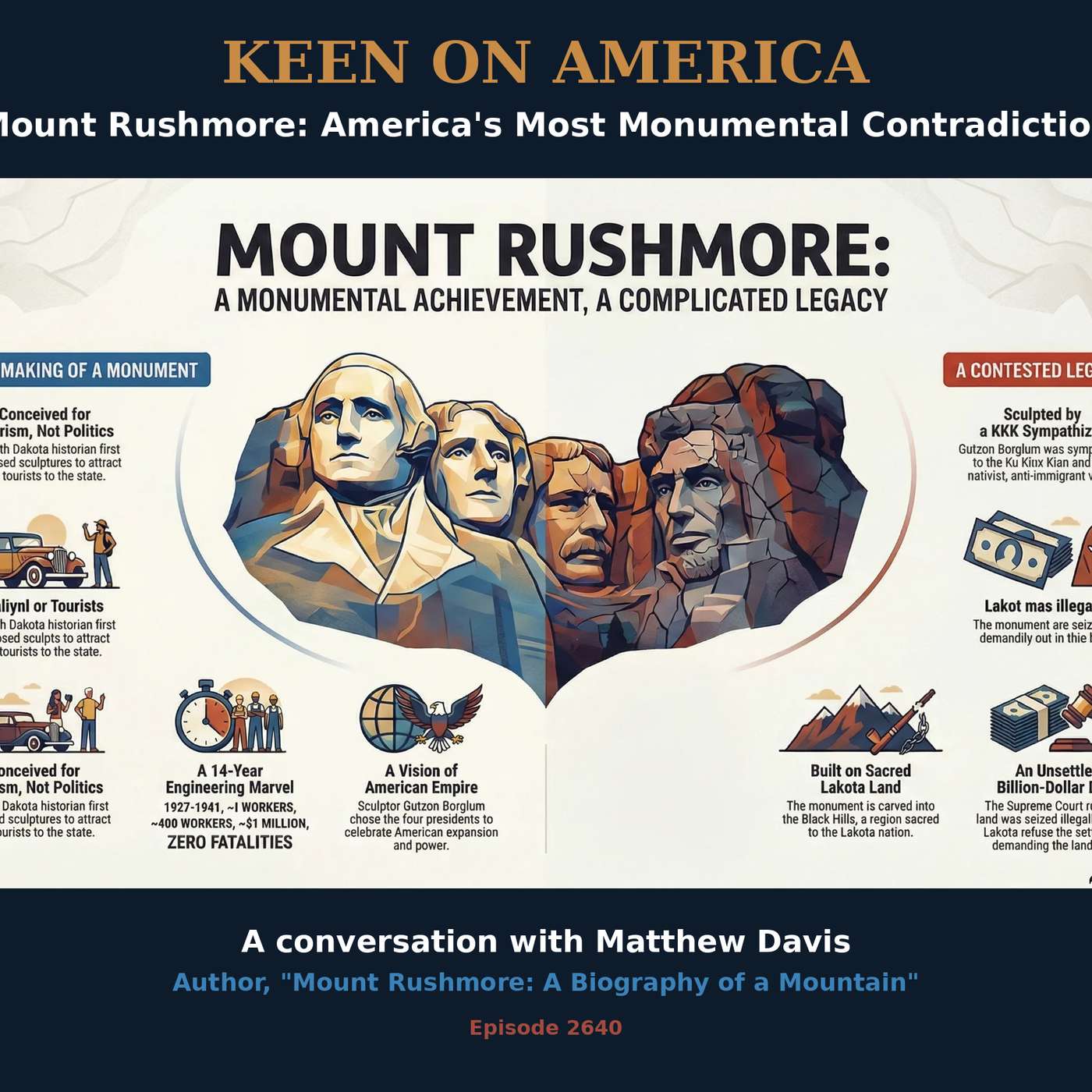

Mount Rushmore: America's Most Monumental Contradiction
Mount Rushmore, with its images of four Presidents carved into the Black Hills of South Dakota, is America’s most identifiable monument. It might also be its most monumental contradiction — which is saying a lot, given the country’s gaping contradictions. According to Matthew Davis, the mountain’s biographer, the history of the Rushmore project captures both the remarkable engineering achievements of early 20th-century America and the country’s bloody colonial and racist past. So Mount Rushmore, Davis suggests, is indeed as American as cherry pie. Only that pie and those cherries aren’t quite as sweet as the MAGA crowd might like to think.
Keen On America is a reader-supported publication. To receive new posts and support my work, consider becoming a free or paid subscriber.
This is a public episode. If you'd like to discuss this with other subscribers or get access to bonus episodes, visit keenon.substack.com/subscribe
Nick Seabrook: How Gerrymandering Is Killing American Democracy
Lolá Ákínmádé Åkerström: No, Sweden Isn't Perfect: On Racism, Xenophobia, and Not Even Feeding Your Own Guests
Jennifer Senior: How America's Rasputin, Steve Bannon, Is Simultaneously Clubbable and a Mortal Threat to the Republic
Ethan Lou: Is Today's Crypto Crash Terminal or Just Another Chapter in Its Inevitable Takeover of Our Financial System?
Christopher Leonard: How Today's Inflationary Crisis is Likely to Further Inflame Our Democratic Crisis
Simon Kuper: What Political Lessons Can We Learn From a Well-Run Football Club Like FC Barcelona?
Oliver Bullough: How Britain Became the Jeeves of Tycoons, Tax Dodgers, Kleptocrats, and Criminals
James Kirchick on the Hidden History of Gay Washington
Nabil Ayers: Why Writing an Autobiography Is More Like Recording an Album Than Making a Single
Rebekah Caruthers: How We Can Use the January 6th Insurrection to Create a More Perfect American Democracy
Gene Andrew Jarrett on Paul Laurence Dunbar, the Caged Bird That Sang
Nicole Eustace: What the Murder of an Indigenous American in 1722 Tells Us About the Dark Origins of the United States
Chloe Maxmin: Why the Democrats Need to Start Listening to Rural America