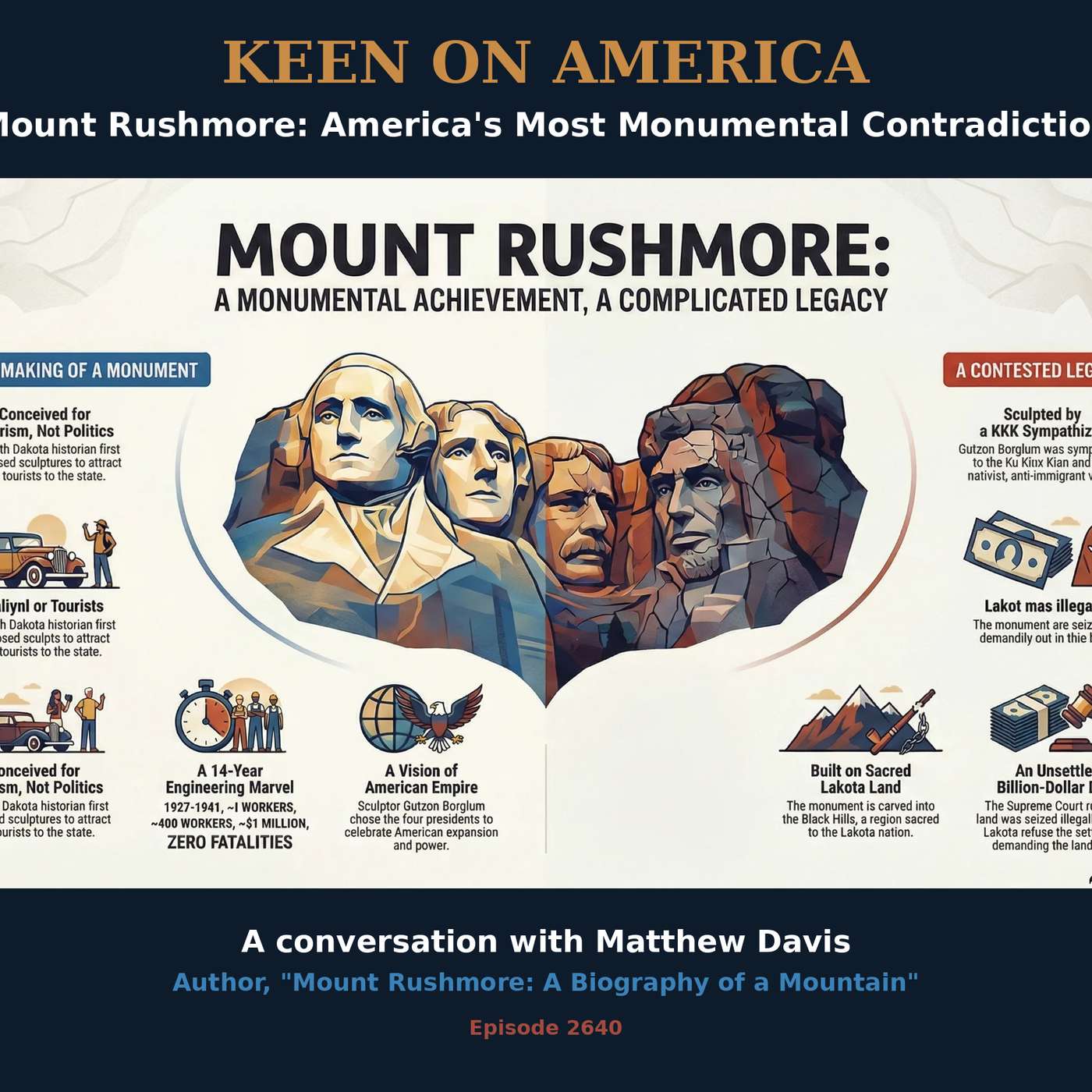

Mount Rushmore: America's Most Monumental Contradiction
Mount Rushmore, with its images of four Presidents carved into the Black Hills of South Dakota, is America’s most identifiable monument. It might also be its most monumental contradiction — which is saying a lot, given the country’s gaping contradictions. According to Matthew Davis, the mountain’s biographer, the history of the Rushmore project captures both the remarkable engineering achievements of early 20th-century America and the country’s bloody colonial and racist past. So Mount Rushmore, Davis suggests, is indeed as American as cherry pie. Only that pie and those cherries aren’t quite as sweet as the MAGA crowd might like to think.
Keen On America is a reader-supported publication. To receive new posts and support my work, consider becoming a free or paid subscriber.
This is a public episode. If you'd like to discuss this with other subscribers or get access to bonus episodes, visit keenon.substack.com/subscribe
Why Social Media Still Matters: Jeff Jarvis on the origins of blogging , what went wrong at Twitter and Facebook, and how he still believes in the social potential of the Internet
The 1963 Birmingham Campaign: Paul Kix on the ten weeks that changed America
Is American Capitalism Irredeemably Rotten? Brendan Ballou on Private Equity's Plan to Pillage and Plunder the United States
HELL TO PAY: Michael Lind explains how the suppression of wages and unions is destroying America
From Solitaire to Heartstopper: Alice Oseman on asexuality, authentic story telling and book banning
The First Lady of World War II: Shannon McKenna Schmidt on Eleanor Roosevelt's remarkable heroism during the War
The Miracle That the United States Needs Right Now: John Blake's personal story on how to get beyond race and racism in America today
Telling Our Stories Our Way: Angeline Boulley on the need to get beyond "trauma "in Native American literature
The Promise of Second Life: Amber Atherton on the rise (and fall) of virtual communities
Excellent Advice for Living (and Dying): Kevin Kelly on how to become improbable versions of ourselves and why we should be intimate with our ancestors
The Art of Fictionalizing Non-Fiction: Katie Hafner on Kafka, Silicon Valley and the truish story behind her novel "The Boys"
Trump Was a Joke: Sophia McClennen on how satire makes sense of a President who didn't
Free and Equal: Daniel Chandler on what a fair society should look like