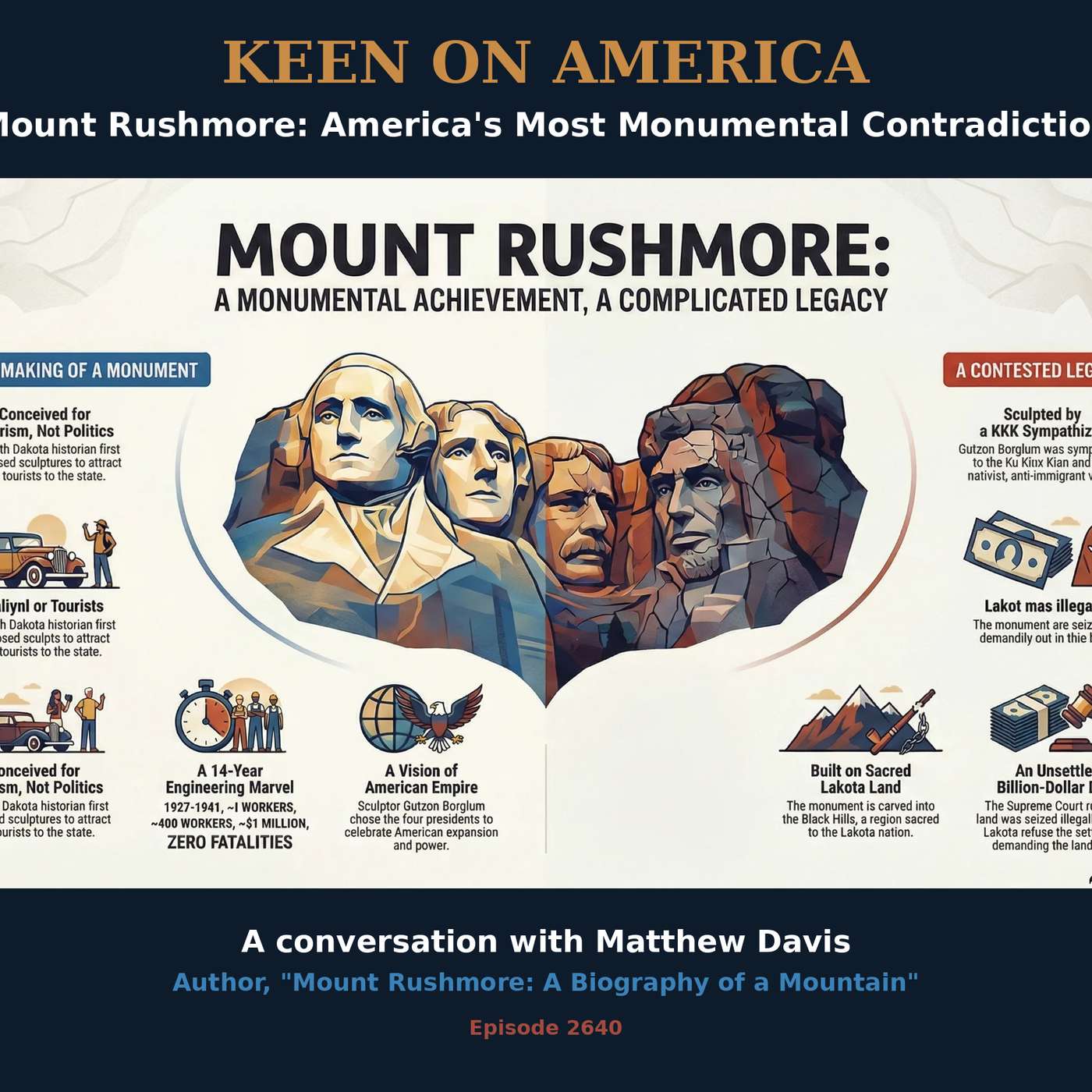

Mount Rushmore: America's Most Monumental Contradiction
Mount Rushmore, with its images of four Presidents carved into the Black Hills of South Dakota, is America’s most identifiable monument. It might also be its most monumental contradiction — which is saying a lot, given the country’s gaping contradictions. According to Matthew Davis, the mountain’s biographer, the history of the Rushmore project captures both the remarkable engineering achievements of early 20th-century America and the country’s bloody colonial and racist past. So Mount Rushmore, Davis suggests, is indeed as American as cherry pie. Only that pie and those cherries aren’t quite as sweet as the MAGA crowd might like to think.
Keen On America is a reader-supported publication. To receive new posts and support my work, consider becoming a free or paid subscriber.
This is a public episode. If you'd like to discuss this with other subscribers or get access to bonus episodes, visit keenon.substack.com/subscribe
Are You Drowning in Work? Nick Sonnenberg on how to reduce clutter and enable productivity
Do Women Make Better Murderers Than Men? Ren DeStefano on female serial killers and why she suspects everyone might have a murder in them
Great Kingdoms of Africa: John Parker Liberates African history from the colonial narrative of oppression, suffering and powerlessness
Hallucinations, Guardian Angels and The Third Man: Dr Ben Alderson-Day on the strange science and true stories of the unseen other
Keen On Keen: Andrew Keen on the collapse of Silicon Valley Bank, ChatGPT4 and the general state of tech in 2023
Appropriating the appropriators: Nguyễn Phan Quế Mai on why female novelists like herself should appropriate the voices of men
As the Crisis Deepens: A rather miserable Keith Teare on the collapse of Silicon Valley Bank and our lack of trust in ideas and institutions
Horror Literature as a Form of Realism: Leopoldo Gout on the living dead who layer Mexico City
Grasping at the Realities of Today's Banking Crisis: Brad DeLong on the new economic laws of our social media age
The Case for Cultural Appropriation: Martin Puchner on how culture is simultaneously owned by nobody and by all of us
Beijing 1949: Elisabeth B. Armstrong on the most consequential anti-colonial feminist conference that you've never heard of
How to Walk the Walk: Neil Gross on three police chiefs who defied the odds and changed American cop culture
Has World War One Ended Yet? Alice Winn on innocence, privilege, violence, sexuality and love in 1914-18 England