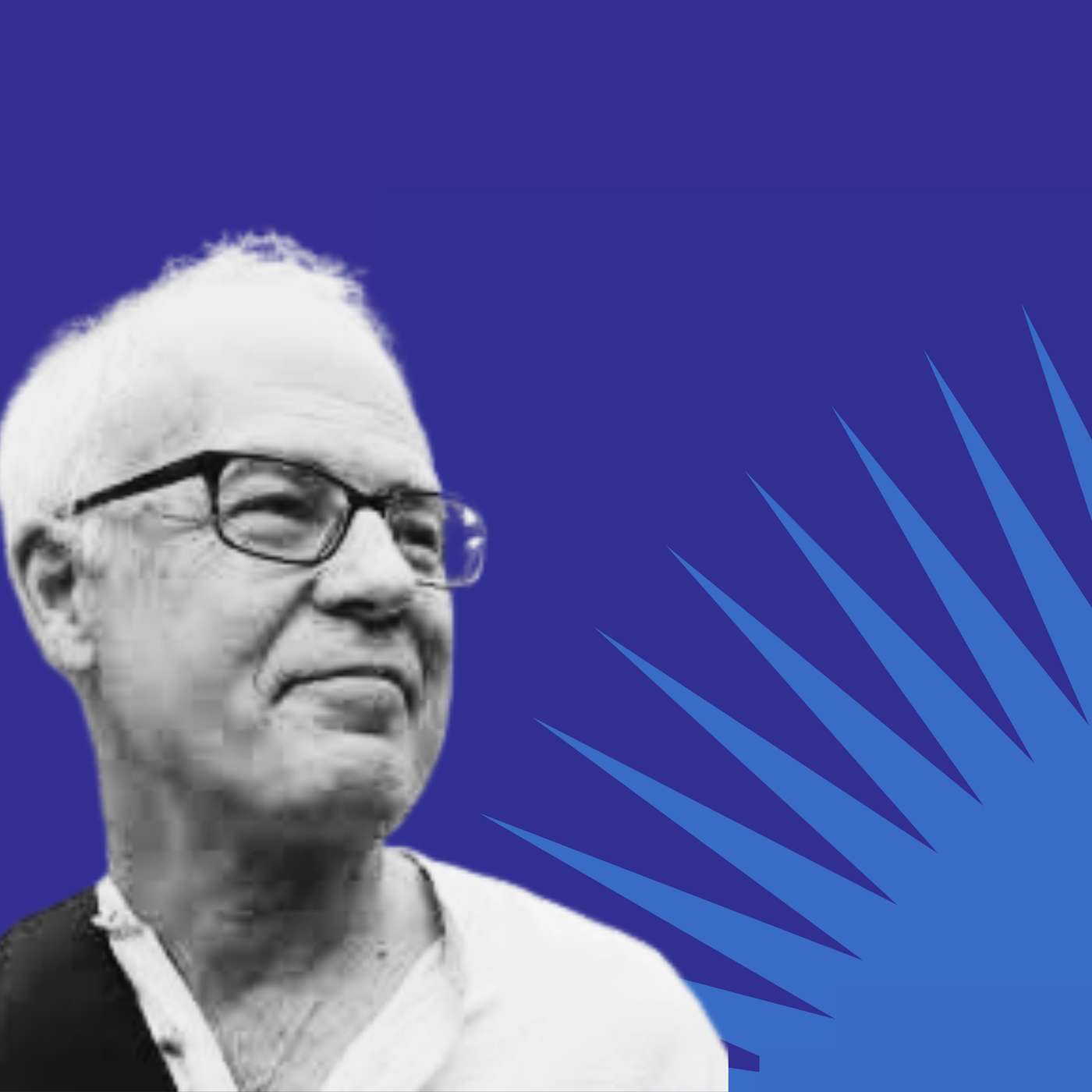
"I'm much more likely to protest when I feel responsible—when violence is being done in my name." — Bruce Robbins
As always, the media is full of stories about political protest. A Columbia University Gaza protester held by ICE claims to have been chained to her bed after a seizure. Our friends at FIRE are addressing the right to demonstrate against ICE in a house of worship. Obama is arguing that ICE demonstrators should have the right to demonstrate on the streets of Minneapolis. The US government, meanwhile, cheers protesters on the Iranian streets while cracking down on protesters at home. Today's guest isn't shy at pointing out that contradiction.
Bruce Robbins is a professor at Columbia—ground zero for the Gaza encampments of 2024—and his new book Who's Allowed to Protest? argues against those who protest the protesters. Conservatives like David Brooks, Musa al-Gharbi, and others have dismissed campus demonstrators as "spoiled rich kids at elite schools" who are "just doing this to feel morally superior." Robbins points out that the same argument was used against Vietnam protesters in the 60s, against Greta Thunberg's climate activism, and against anyone whose cause appears in any way utopian. This reactionary critique never changes: they're privileged, they're not starving, so ignore their hypocritical whining.
What drives people to protest? Robbins says it's a sense of moral responsibility. He confesses that he's much more likely to get off his couch when violence is done in his name—particularly as a Jew or an American. And he makes an interesting broader argument: that the conservative attack on student "elites" dangerously conflates educated elites with moneyed elites. The firefighters in LA were an elite team, he reminds us. Scientists are elites. We need expertise, Columbia's Old Dominion Foundation Professor in the Humanities says. The question is who controls this expert knowledge and who pays for it.
I think Bruce Robbins has a point here. But some American student protesters, especially the Gaza crowd, do make themselves vulnerable to critics like Brooks and al-Gharbi. As I suggested to Robbins, if these smart kids at Columbia want to protest, then they should be smart about it. Especially by recognizing the moral complexities of the Palestine-Israel issue and by being able to convincingly explain why they chose to protest this injustice over everything else.
About the Guest
Bruce Robbins is the Old Dominion Foundation Professor in the Humanities at Columbia University. He is the author of Atrocity: A Literary History and numerous other books. His new book is Who's Allowed to Protest? (2026). He succeeded Edward Said in the Old Dominion chair.
References
People mentioned:
● David Brooks wrote about "America Needing a Mass Movement"—though apparently not an anti-Israel one. Robbins finds his dismissal of protesters hypocritical.
● Musa al-Gharbi is the author of We Have Never Been Woke: The Cultural Contradictions of a New Elite, which Robbins takes issue with.
● Edward Said held the Old Dominion chair before Robbins and was a visible Palestinian presence at Columbia. His office was trashed multiple times and he received death threats.
● Mahmoud Khalil was a Columbia student arrested in his apartment lobby in front of his pregnant wife, jailed for 104 days, released by court order, and is now facing re-arrest.
● Bari Weiss, now head of CBS News, tried to get Palestinian professors fired when she was a Columbia undergraduate, sponsored by the David Project.
● Greta Thunberg faces the same "spoiled rich kids" critique that Gaza protesters face. Robbins sees the same silencing tactic applied to any protest that seems "disinterested."
● Greg Lukianoff and FIRE are mentioned as free speech absolutists.
Events mentioned:
● Columbia 1968 preceded May 1968 in Paris. Apparently the Paris students asked Columbia students for advice on what to do after occupying a building.
● The Columbia encampments of April 2024 made the university ground zero for Gaza protest in America.
● Robbins was found guilty by Columbia for taking students to visit the encampment during his class on representations of atrocity.
About Keen On America
Nobody asks more awkward questions than the Anglo-American writer and filmmaker Andrew Keen. In Keen On America, Andrew brings his pointed Transatlantic wit to making sense of the United States—hosting daily interviews about the history and future of this now venerable Republic. With nearly 2,800 episodes since the show launched on TechCrunch in 2010, Keen On America is the most prolific intellectual interview show in the history of podcasting.
Website
Substack
YouTube
Apple Podcasts
Spotify
Chapters:
- (00:00) - Introduction: Headlines full of protest
- (02:07) - The double standard on protest
- (03:32) - Lika Cordia and Mahmoud Khalil
- (05:46) - Is this just a Columbia issue?
- (07:44) - Brooks, al-Gharbi, and the broader argument
- (09:12) - Greta Thunberg and the spoiled-kids critique
- (10:11) - Do leftists have the same authoritarian impulse?
- (12:19) - Not rights but attention
- (13:09) - The 60s parallel: Vietnam and Oedipal nonsense
- (14:50) - Why Columbia became ground zero
- (16:47) - Bari Weiss and the David Project
- (19:03) - Bruce is found guilty
- (23:38) - Iran, Sudan, and what gets us off the couch
- (28:18) - Elite firefighters and respect for expertise
- (31:18) - Do protesters need to be better i...