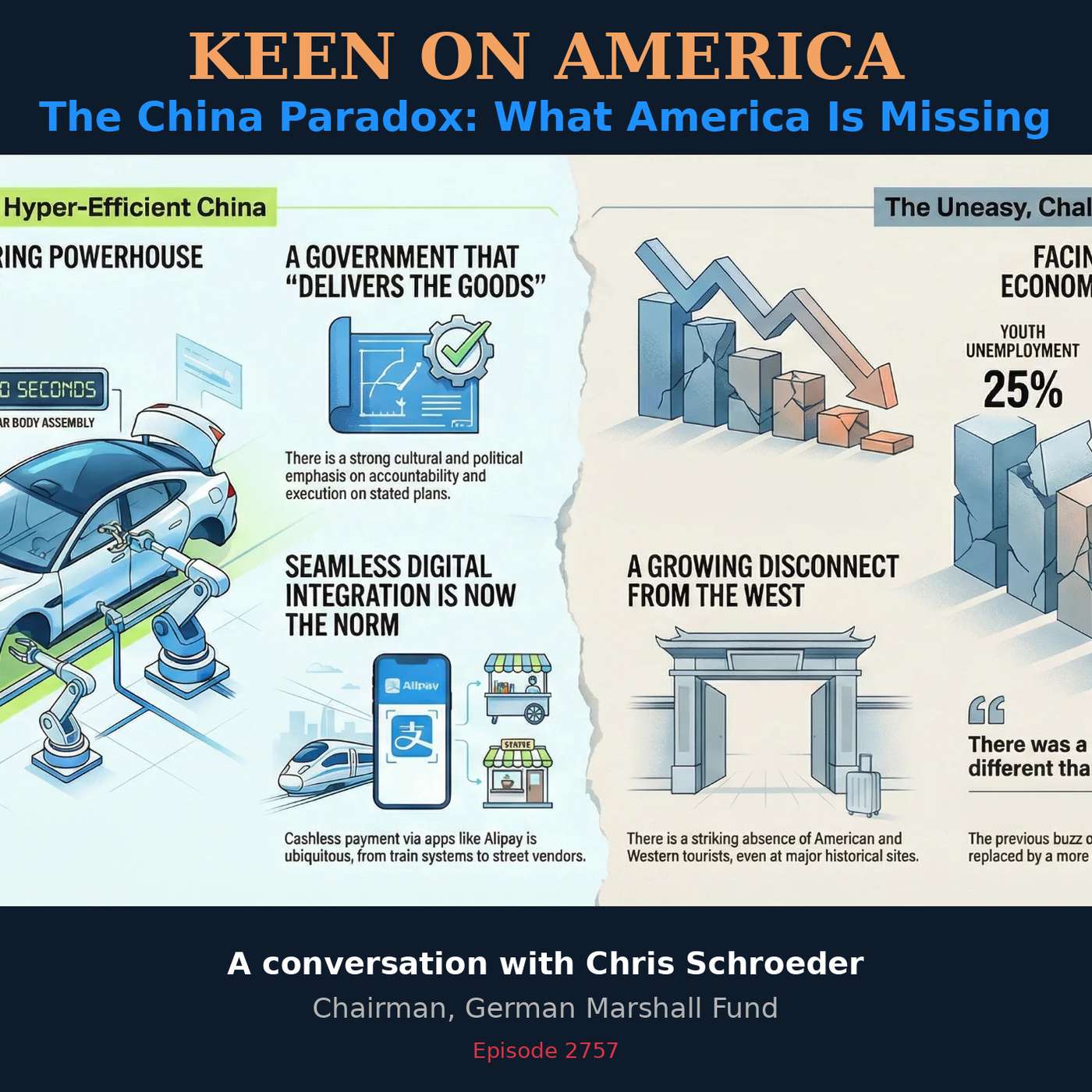

The China Paradox: Chris Schroeder on what America is Missing
According to the German Marshall Fund chair Chris Schroeder, China both goes to bed and wakes up thinking of China rather than America. How does the Washington DC based Schroeder know? Because, unlike almost all Americans, he actually made the effort of visiting China this year and seeing this vast and paradoxical country for himself. “Curiosity has never been more valuable,” Schroeder warns. “If you are not on the ground, you have no sense of nuance. You get caught in a narrative which is much more macro." And that’s exactly what the global investor and entrepreneur did. He got on the ground - talked to young Chinese entrepreneurs, traveled on high speed rail, saw an entire car assembled in twenty seconds. Americans might not want to obsess over the China paradox. But they should probably occasionally spare a thought for this remarkable country before going to bed or waking up in the morning.
According to German Marshall Fund chair Chris Schroeder, China goes to bed and wakes up thinking about China — not America. How does the Washington, DC-based Schroeder know? Because, unlike almost all Americans, he actually made the effort of visiting China this year and seeing this vast and paradoxical country for himself. “Curiosity has never been more valuable,” he warns. “If you are not on the ground, you have no sense of nuance. You get caught in a narrative which is much more macro.” And that’s exactly what the global investor and entrepreneur did — he talked to young Chinese entrepreneurs, traveled on high-speed rail, saw an entire car assembled in 20 seconds. Americans don’t need to think about China every night or morning. But they would be advised to listen to nuanced and on-the-ground stories of curious travelers like Chris Schroeder.
This is a public episode. If you'd like to discuss this with other subscribers or get access to bonus episodes, visit keenon.substack.com/subscribe
01.20.23: That Was The Week in Tech
GEORGE KENNAN: A Life Caught Between the United States and the Soviet Union
Curtis White on Transcendence: How Art and Dharma Can Save Us in a Time of Collapse
Can an Updated Version of Dale Carnegie's 20th Century Help Us Fix Our 21st Century Future
Why the Best Lessons in Life are Experienced rather than Learned
The Revolt against Humanity: Adam Kirsch Imagines a Future Without Humanity"
LIFE ON MARS: IMAGINING THE FIRST CITY ON THE RED PLANET
Jacqueline Jones: What Does the Plight of Boston's Black Workers in the Civil War Era Tells Us About the Struggle Today of All Americans For an Honest Living?
Jayne Ann Krentz: Genre Fiction Matters Because It Enables Writers to Address Perennial Moral Issues Like Honor and How to Distinguish Between Right and Wrong
Pico Iyer: Why Travel Writing is a Form of Memoir and How Covid Has Changed How We See the World
Jared Yates Sexton: Midnight in America? Why the Coming Crisis in the Republic Offers Hope For a Better Future
Angela Stent: Why 2023 Probably Won't Bring An End to the War in Ukraine and Other Unpalatable Truths From the Putin World
Corinne Sawers: Why the Pro-Market American Model of Confronting Today's Climate Emergency Might Offer the Most Realistic Way to Get to Net Zero