
The China Paradox: Chris Schroeder on what America is Missing
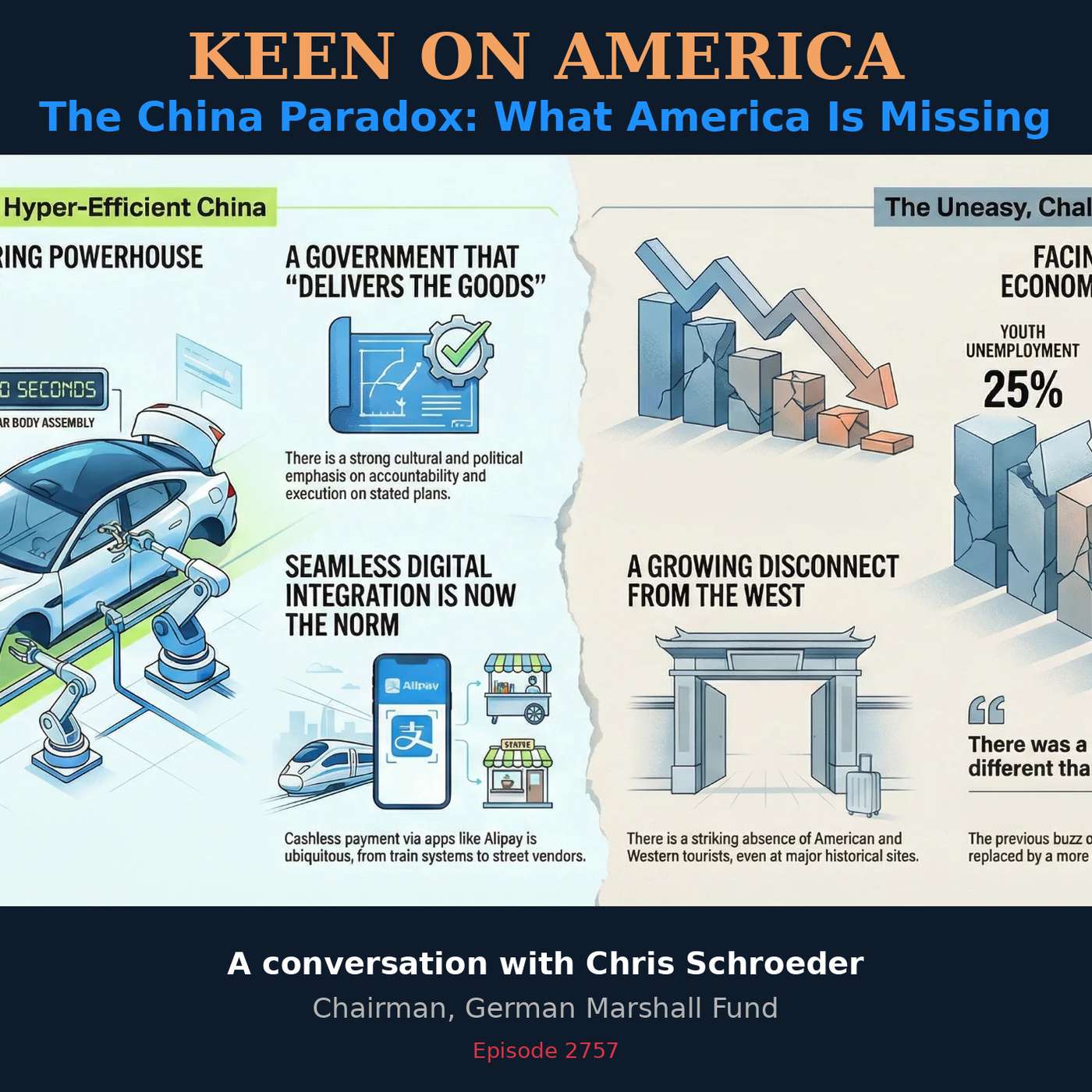
According to the German Marshall Fund chair Chris Schroeder, China both goes to bed and wakes up thinking of China rather than America. How does the Washington DC based Schroeder know? Because, unlike almost all Americans, he actually made the effort of visiting China this year and seeing this vast and paradoxical country for himself. “Curiosity has never been more valuable,” Schroeder warns. “If you are not on the ground, you have no sense of nuance. You get caught in a narrative which is much more macro." And that’s exactly what the global investor and entrepreneur did. He got on the ground - talked to young Chinese entrepreneurs, traveled on high speed rail, saw an entire car assembled in twenty seconds. Americans might not want to obsess over the China paradox. But they should probably occasionally spare a thought for this remarkable country before going to bed or waking up in the morning.
According to German Marshall Fund chair Chris Schroeder, China goes to bed and wakes up thinking about China — not America. How does the Washington, DC-based Schroeder know? Because, unlike almost all Americans, he actually made the effort of visiting China this year and seeing this vast and paradoxical country for himself. “Curiosity has never been more valuable,” he warns. “If you are not on the ground, you have no sense of nuance. You get caught in a narrative which is much more macro.” And that’s exactly what the global investor and entrepreneur did — he talked to young Chinese entrepreneurs, traveled on high-speed rail, saw an entire car assembled in 20 seconds. Americans don’t need to think about China every night or morning. But they would be advised to listen to nuanced and on-the-ground stories of curious travelers like Chris Schroeder.
This is a public episode. If you'd like to discuss this with other subscribers or get access to bonus episodes, visit keenon.substack.com/subscribe
Dimitris Xygalatas: How Seemingly Senseless Acts Make Life Worth Living
Anna DeForest: How American Medicine, With Its Reliance on the Scientific "Data," Does Such a Bad Job of Dealing With Life's Greatest Mystery: Death
Mia Baytop Russell: How to Confront Corporate Burnout and Make Work Meaningful Again
Benjamin Cunningham: The Wife-Swapping Czech Double Agent Whose Sad Saga Captured the Nihilism of the Cold War Era
Phillip Levine: Why Biden's Student Debt Forgiveness Proposal Isn't the Solution to the Real Economic Injustices of the American College System
Christian Busch: Is the "Serendipity" of "Good Luck" Just More Neo-Liberal Pseudo-Science From Our Business School Elite?
Linda Villarosa: Why Racism Is the Deadliest Pandemic Afflicting Both African-American Lives and the Health of the Nation
Linda Kinstler: On How We Remember the Holocaust
Gary Weiss: What Donald Trump Might Have Learned From the Real-Life Story of Crazy Eddie
Anya Kamenetz on The Stolen Year: Kids, Covid, and the Catastrophic Cost of the Pandemic
William Deresiewicz: Can a Critic of "Wokeness" Really Be Genuinely Liberal or Progressive?
Sinclair McKay on Berlin: Life and Death in the City at the Center of the 20th-Century World
Dan Bouk on Reading Between the Data: Revealing the Hidden Stories of Race, Gender, and Sexuality in the U.S. Census