The China Paradox: Chris Schroeder on what America is Missing
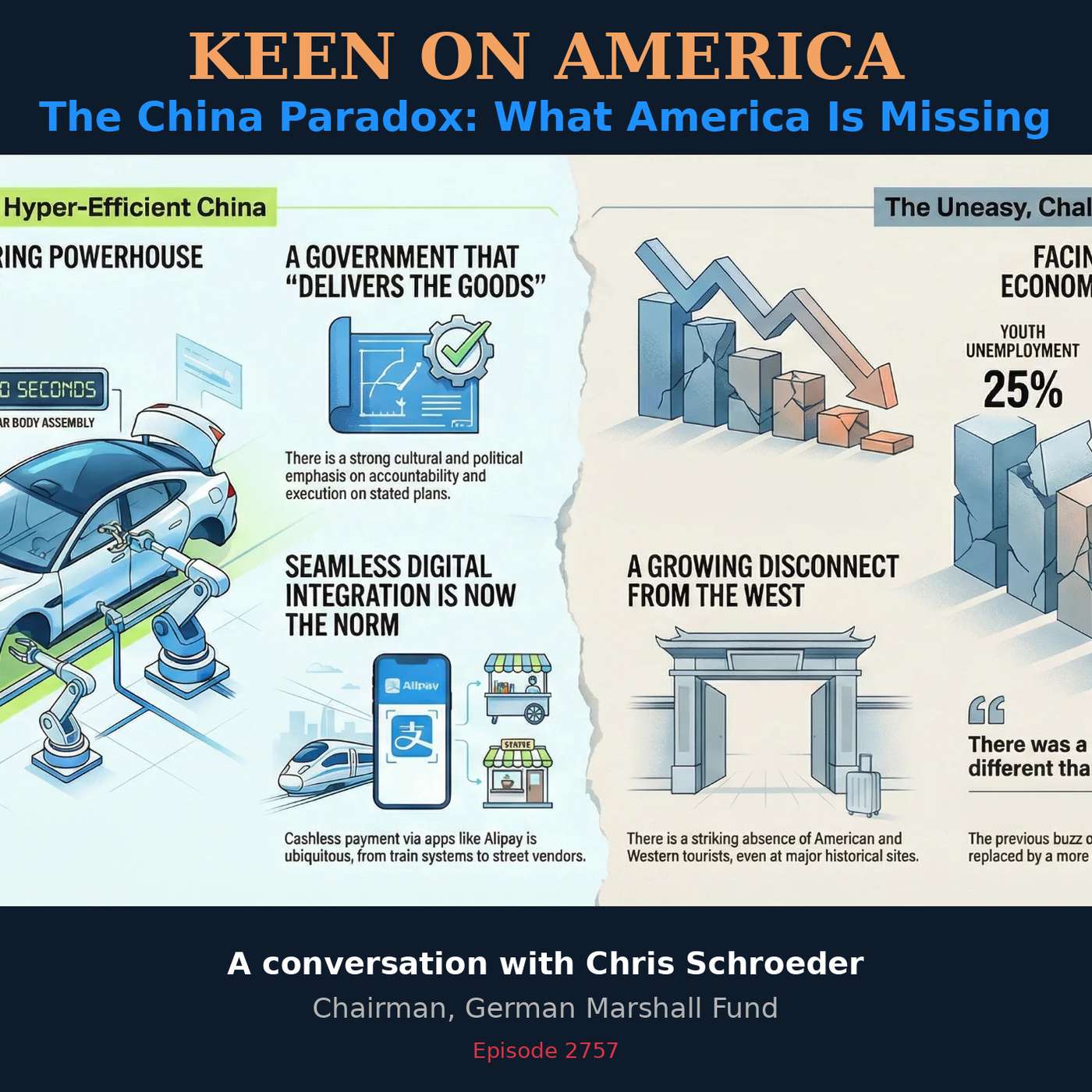
According to the German Marshall Fund chair Chris Schroeder, China both goes to bed and wakes up thinking of China rather than America. How does the Washington DC based Schroeder know? Because, unlike almost all Americans, he actually made the effort of visiting China this year and seeing this vast and paradoxical country for himself. “Curiosity has never been more valuable,” Schroeder warns. “If you are not on the ground, you have no sense of nuance. You get caught in a narrative which is much more macro." And that’s exactly what the global investor and entrepreneur did. He got on the ground - talked to young Chinese entrepreneurs, traveled on high speed rail, saw an entire car assembled in twenty seconds. Americans might not want to obsess over the China paradox. But they should probably occasionally spare a thought for this remarkable country before going to bed or waking up in the morning.
According to German Marshall Fund chair Chris Schroeder, China goes to bed and wakes up thinking about China — not America. How does the Washington, DC-based Schroeder know? Because, unlike almost all Americans, he actually made the effort of visiting China this year and seeing this vast and paradoxical country for himself. “Curiosity has never been more valuable,” he warns. “If you are not on the ground, you have no sense of nuance. You get caught in a narrative which is much more macro.” And that’s exactly what the global investor and entrepreneur did — he talked to young Chinese entrepreneurs, traveled on high-speed rail, saw an entire car assembled in 20 seconds. Americans don’t need to think about China every night or morning. But they would be advised to listen to nuanced and on-the-ground stories of curious travelers like Chris Schroeder.
This is a public episode. If you'd like to discuss this with other subscribers or get access to bonus episodes, visit keenon.substack.com/subscribe
Why 2023 was the year in which we finally got to converse with AI: Kevin Surace explains why creative artists must master AI technology in 2024
The KEEN ON 2023 Fiction Awards: Bethanne Patrick's six favorite novels of the year
In Defense of Henry Kissinger's "pragmatic realism": Charles Kupchan critiques the illusional idealism that he believes has undermined American foreign policy over the last decade
Why the 21st Century will be the Asian Century: Kishore Mahbubani on the end of Western domination and the rise of Asian societies, economies and philosophies
International anarchy, murderous crime lords and the 21st century nation-state: Miles Johnson explains how the violence of today's international criminal gangs mirror the authoritarian politics of our age
How AI can fix the future of healthcare, education and climate: Mark Minevich imagines a planet positively powered by AI
Among the Criminal Bros: Max Marshall on a Fraternity crime story that reflects the rigged system of money and power in 21st century America
The victory of the gut over reason: Kevin Casas-Zamora worries about the fragile state of democracy around the world in 2023
On the Dire State of the Free Press in 2024: Andy Lee Roth explains how "solutions journalism" offers a more truthful alternative to corporate owned media in America today
Why AI will radically disrupt traditional internet search engines: Keith Teare on Google, OPenAI and the crisis of online search economics
How collaborating on #CrimeTime strengthened this couple's marriage: Jeneva Rose and Drew Pyne discuss their TikTok driven crime mystery based on an actual robbery in their Chicago apartment building
Is there really rampant anti-semitism at elite American universities like Columbia? Shai Davidai on what these universities should be doing to confront anti-semitism and foster a two-state peace between Israelis and Palestinians
The 19th century American explorer who exposed the brutality of the Russian imperial system: Gregory Wallance on the original George Kennan and his epic journey through the frozen heart of Russia