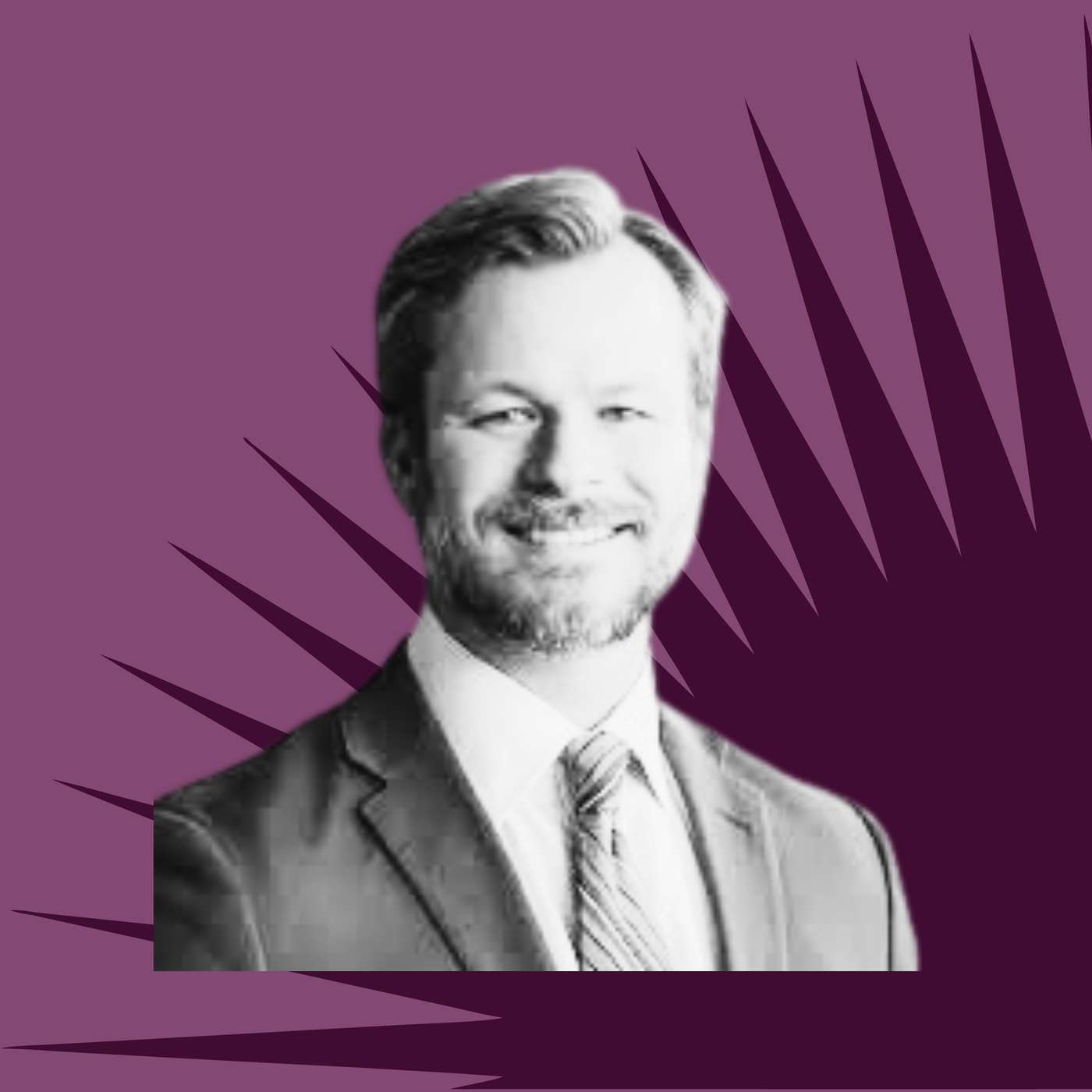
"150 universities have adopted neutrality policies just since October 7th. I'm on the losing end of this trend." — Brian Soucek
Universities keep claiming what they see as the moral high ground of neutrality. But Brian Soucek, who holds the MLK chair at UC Davis School of Law, believes that's a dangerous myth. In his new book, The Opinionated University: Academic Freedom, Diversity, and the Myth of Neutrality in American Higher Education, Soucek argues in favor of the biased university. His argument is that even (or, perhaps, particularly) when universities stay quiet, they're actually taking sides through their policies, their hiring, their building names, their actions. Silence isn't neutral. It's ideological.
This fetish with neutrality is gaining in popularity, Soucek warns. Since October 7th, an estimated 150 universities have adopted neutrality pledges—pushed by well-funded efforts from the Goldwater Institute and others. Every pledge has a vague moral carve-out: universities will still speak when their "mission is at stake." But everyone has a mission and they are all different. That's the whole point. Soucek claims the moral high ground of pluralism. That's why he wants Boston College to be different from Yale, UC Davis different from University of Austin. The flattening of higher education into some imagined neutral sameness is what terrifies this classical liberal.
The real crisis, Soucek insists, isn't self-censoring students or woke professors. It's the external threat of federal funding cuts, hostile state legislatures, a Trump administration that has declared DEI illegal without exactly making it so. Universities are staying quiet because, as one UC president put it, "We don't want to be the tallest nail." But Harvard's faculty spoke out through the AAUP, and it changed the conversation. For Soucek, silence isn't safety. It's surrender. Eventually everyone will become the tallest nail. And will be flattened by a hammer-wielding ideological foe.
On the promise or threat of AI, Soucek is blunt: the idea of objective algorithms deciding what statues to take down or what books to read sounds to him "completely dystopian." We'd lose something essential if we stopped allowing communities to make these contested decisions differently, he says. For Soucek, that's not a bug of an otherwise unbiased university. It's the feature of any credible institute of higher learning.
Five Takeaways
● Neutrality Is a Myth: Universities claim neutrality but act in non-neutral ways—through policies, hiring, building names. Silence is a choice, not an absence of choice.
● 150 Universities Signed Neutrality Pledges Since October 7th: Well-funded efforts from the Goldwater Institute are pushing this flattening of higher education. Soucek sees himself on the losing end.
● The External Threats Are the Real Crisis: Not self-censoring students. Federal funding cuts are existential. Universities are staying quiet so as not to be "the tallest nail."
● Pluralism, Not Homogeneity: Different universities should have different missions. That's why University of Austin is fine. New College Florida—where changes were imposed from above—is a disaster.
● AI Objectivity Is Dystopian: Letting algorithms decide which statues to take down or which books to read? We'd lose something essential. Contested decisions should stay contested.
About the Guest
Brian Soucek is Professor of Law and holds the Martin Luther King Jr. Chair at UC Davis School of Law. He is the author of The Opinionated University: Academic Freedom, Diversity, and the Myth of Neutrality in American Higher Education. He earned his JD from Yale Law School and his undergraduate degree from Boston College.
References
Concepts mentioned:
● The Kalven Report was a 1967 University of Chicago faculty report on institutional neutrality. It's been revived by organizations pushing neutrality pledges.
● The Goldwater Institute has funded efforts to get university boards to adopt neutrality policies modeled on the Kalven Report.
● Heterodox Academy is a campus speech advocacy organization that estimated 150 universities adopted neutrality policies since October 7th.
● FIRE (Foundation for Individual Rights and Expression) conducts surveys on campus self-censorship that Soucek references.
Universities mentioned:
● University of Austin is a new university founded by tech figures with a consciously different mission. Soucek supports its existence as an example of pluralism.
● New College Florida was transformed by Governor DeSantis and Chris Rufo. Soucek calls it a disaster—changes imposed from above, not through shared governance.
About Keen On America
Nobody asks more awkward questions than the Anglo-American writer and filmmaker Andrew Keen. In Keen On America, Andrew brings his pointed Transatlantic wit to making sense of the United States—hosting daily interviews about the history and future of this now venerable Republic. With nearly 2,800 episodes since the show launched on TechCrunch in 2010, Keen On America is the most prolific intellectual interview show in the history of podcasting.
Website
Substack
YouTube
Apple Podcasts
Spotify
Chapters:
- (00:00) - Introduction: The myth of neutrality
- (02:18) - A challenge to both Left and Right
- (03:15) - Is there really a free speech crisis?
- (05:33) - Who wants the neutral university?
- (06:48) - The Kalven Report and Goldwater Institute
- (07:54) - October 7th and Gaza
- (09:22) - Where does intolerance come from?
- (10:00) - Can courts be neutral?
- (11:24) - DEI and the university's mission
- (14:04) - Should universities speak out against Trump?
- (15:53) - Does the university tilt Left?
- (17:03) - MLK and the right to break unjust laws
- (20:13) - The myth ...