“It’s about blood. I cover a lot of bloodshed in the book, but I also talk about a different kind of blood: blood that ties, blood that binds families across time and distance.” — Jazmine Ulloa
Kristi Noem is gone. Under her tenure, 32 people died in ICE custody in 2025 — double the previous year’s toll. But Jazmine Ulloa, the New York Times’ national immigration reporter, doesn’t think much will change. Noem wasn’t really the point, she insists. The MAGA spectacle rolls on. Stephen Miller’s violently anti-immigrant agenda remains. And hysterical conservatives like Peter Schweizer are still writing books about how the Mexican government is “weaponizing” immigration by sending their people over the border.
Ulloa grew up three minutes from the Walmart where a self-proclaimed white supremacist drove nine hours from North Texas in August 2019, opened fire, and told an officer he was there to kill Mexicans. Her closest friend’s father escaped the parking lot as the shooting started. And it inspired her to write El Paso: Five Families and 100 Years of Blood, Migration, Race, and Memory — a chronicle of El Paso as the 21st century Ellis Island.
Her argument, made through five families over a century, is that El Paso is not an exception to America. It is America. Latino identity has always been American identity. The Southwest sat on Mexican land before it was American. The border was never a clean line — it was always a contested negotiation, shifting beneath the feet of families who crossed it for work, for survival, for birthday parties in Juárez. The “detention and deportation machine,” she is careful to note, was built by both parties over many decades. Trump didn’t invent it. He simply applied his scattershot cruelty to it.
What does feel new, Ulloa says, is how El Paso has become every American city — the same tactics long deployed at the border now rolling into Minneapolis and Chicago, snagging US citizens on the basis of how they look or how they speak. Some think this represents uncharted civil liberties territory. Border communities have been sounding this alarm for years, Ulloa notes. Nobody listened. Perhaps they will now.
Jazmine Ulloa’s El Paso is also, quietly, a love letter — to the city, to its 80% Hispanic population, to the corrido tradition, to a place where magical realism is not a literary device but a way of life. Ulloa wanted the prose to sound like your tío telling stories over coffee. “Borders or bridges?” is the question El Paso has always been answering for generations. Now America is asking the same question.
Five Takeaways
• The Machine Predates Trump: The deportation and detention apparatus dominating today’s headlines was constructed under both Democratic and Republican administrations across many decades — a bipartisan inheritance that Trump has amplified but did not originate.
• Noem’s Exit Changes Nothing: Relief crossed party lines when she was fired, but Ulloa is clear-eyed: Stephen Miller’s agenda remains intact, border crossings remain suppressed, and the same systemic challenges will persist under whoever takes over DHS.
• El Paso Is America’s Ellis Island — and Its Mirror: The city, 80% Hispanic and straddling two nations, has long been the place where immigration policy is made in the flesh. American identity has always been a negotiation — never a fixed truth, always contested terrain.
• Nativism Is Not an Aberration: From the Chinese Exclusion Acts to the KKK-backed Johnson-Reed Act of 1924, fear of the outsider has been a structural feature of US immigration policy — not a deviation from American values, but an uncomfortable expression of them.
• The Border Is Moving Inward: What was once contained to border communities — racial profiling, mass sweeps, civil liberties erosions — is now spreading into the American heartland. What Ulloa sees as genuinely new is the response: ordinary citizens coming out in their pajamas to document it.
About the Guest
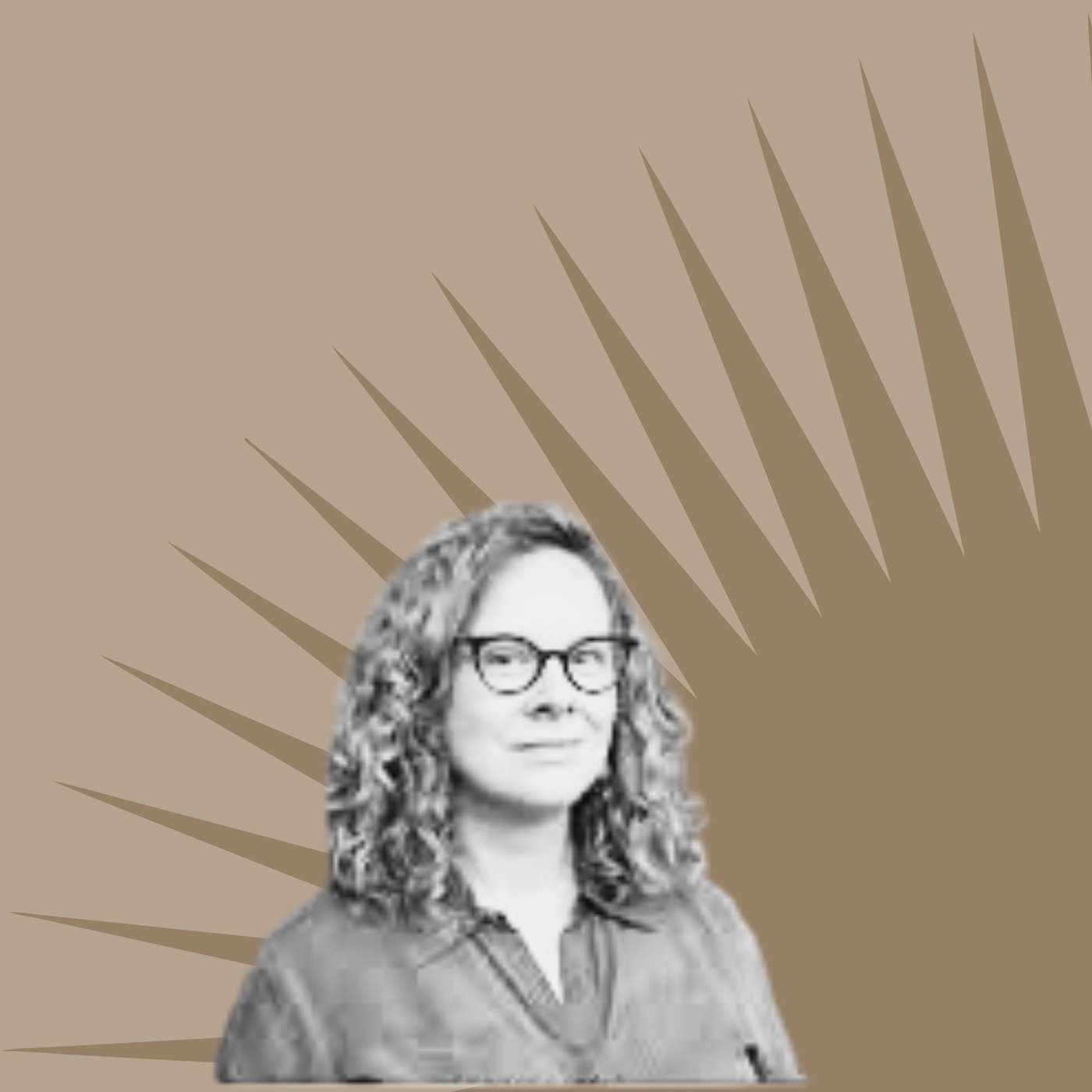
Jazmine Ulloa is the national immigration reporter for the New York Times. She is a former State House reporter for the Los Angeles Times and previously covered national politics for the Boston Globe. Her new book is El Paso: Five Families and 100 Years of Blood, Migration, Race, and Memory (Dutton/Penguin Random House, 2026). Born and raised in El Paso, she lives there now.
References:
• El Paso: Five Families and 100 Years of Blood, Migration, Race, and Memory by Jazmine Ulloa (Dutton/Penguin Random House, 2026).
• Episode 2830: So Are All Immigrants Manchurian Candidates? Peter Schweizer on Weaponizing Immigration — Schweizer’s conspiracy-inflected reading directly challenged by Ulloa.
• The Johnson-Reed Act of 1924 — the Coolidge-era immigration law, backed by the KKK, that used national-origin quotas to bar Southern and Eastern European and Asian immigration.
• The El Paso Walmart massacre, August 3, 2019 — 23 people killed by a white supremacist who posted a manifesto echoing the “Great Replacement” theory.
• One Hundred Years of Solitude by Gabriel García Márquez — the magical-realist tradition Ulloa draws on.
About Keen On America
Nobody asks more awkward questions than the Anglo-American writer and filmmaker Andrew Keen. In Keen On America, Andrew brings his pointed Transatlantic wit to making sense of the United States — hosting daily interviews about the history and future of this now venerable Republic. With nearly 2,800 episodes since the show launched on TechCrunch in 2010, Keen On America is the most prolific intellectual interview show in the history of podcasting.
Website
Substack
YouTube
Apple Podcasts
Spotify
Chapters: