The Man Who Made Books Random
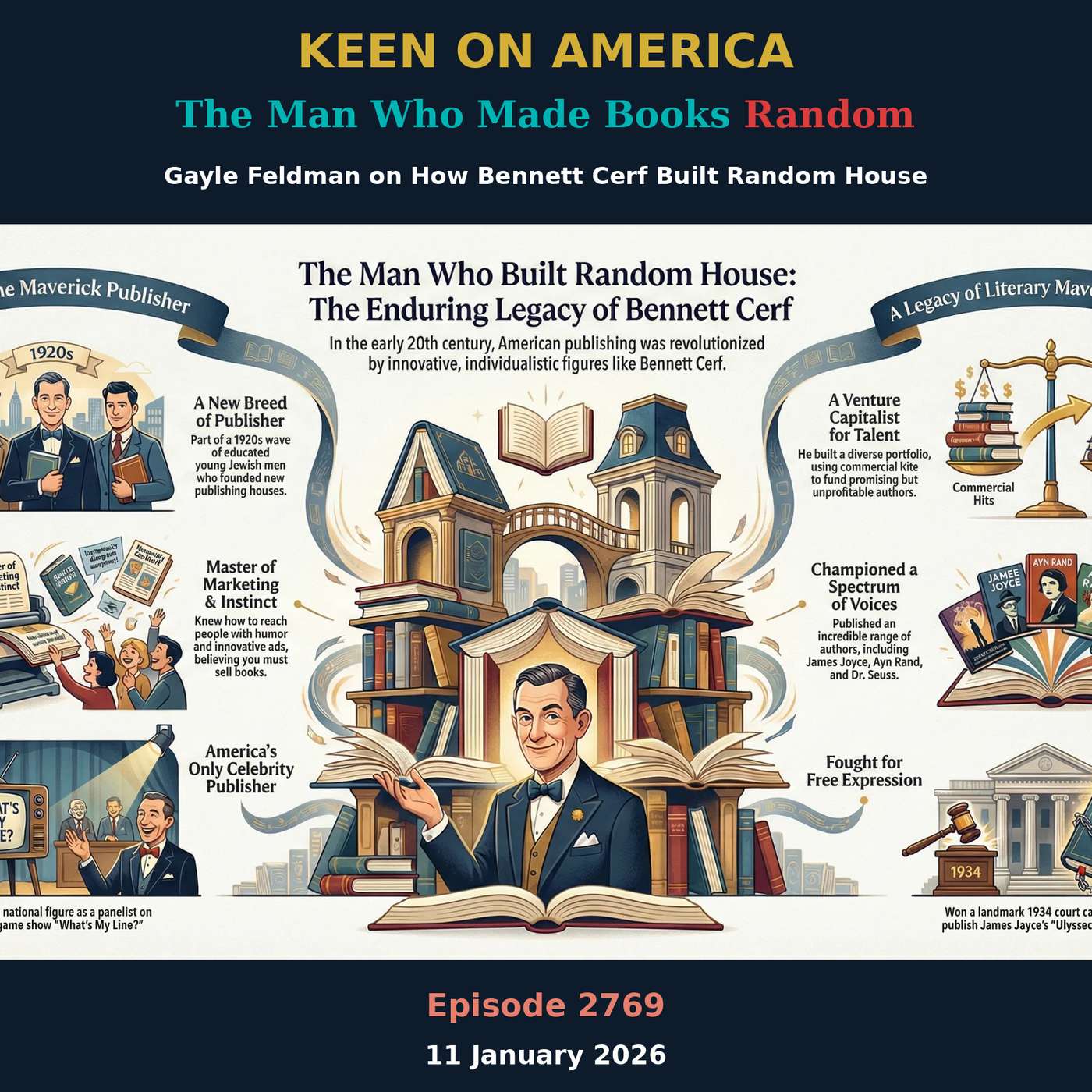
There was a time in the mid 20th century, the literary historian Gayle Feldman reminds us, when the book business was cool. Back then, New York publishing resembled Silicon Valley tech and the Mark Zuckerberg of his day was the Random House founder Bennett Cerf. In her new biography of Cerf, Nothing Random, Feldman tells the story of this celebrity entrepreneur, noting that he helped pioneer the publishing industry’s venture capitalist style business model which enabled hit authors like Ayn Rand or Dr Seuss to finance start-up writers like Cormac McCarthy. Those were the days, a slightly wistful Feldman reminisces. She’s right. If only today’s corporate publishing industry could recapture some of that Cerfian magic. Then books might become cool again.
Keen On America is a reader-supported publication. To receive new posts and support my work, consider becoming a free or paid subscriber.
This is a public episode. If you'd like to discuss this with other subscribers or get access to bonus episodes, visit keenon.substack.com/subscribe
Episode 2102: Peter S. Goodman on How the World Ran Out of Everything
Episode 2101: Bethanne Patrick's six new books to reach on the porch or beach this June
Episode 2100: Banning Lyon's remarkable memoir of trauma, healing and the outdoors
Episode 2099: John Ganz on how America cracked up in the early 1990s
Episode 2098: Guy Lawson gets us inside the biggest scandal in the history of college sports
Episode 2097: Keen On America featuring Francis S. Barry
Episode 2096: Sasha Vasilyuk uncovers Ukraine secretive history by digging into the Soviet past
Episode 2095: Keith Teare on why the AI game in Silicon Valley might already be all over
Episode 2094: Joseph O'Neill on football as the ugly game of neo-colonial exploitation
Episode 2093: J. Albert Mann offers a Young Person's Guide to the History of American Labor
Episode 2092: Shane Burley on why Anti Zionism isn't Antisemitism
Episode 2091: Lilie Chouliaraki on the Weaponization of Victimhood
Episode 2090: Meredith Broussard on the digital "revolution" of artificial unintelligence and inequality