
The Man Who Made Books Random
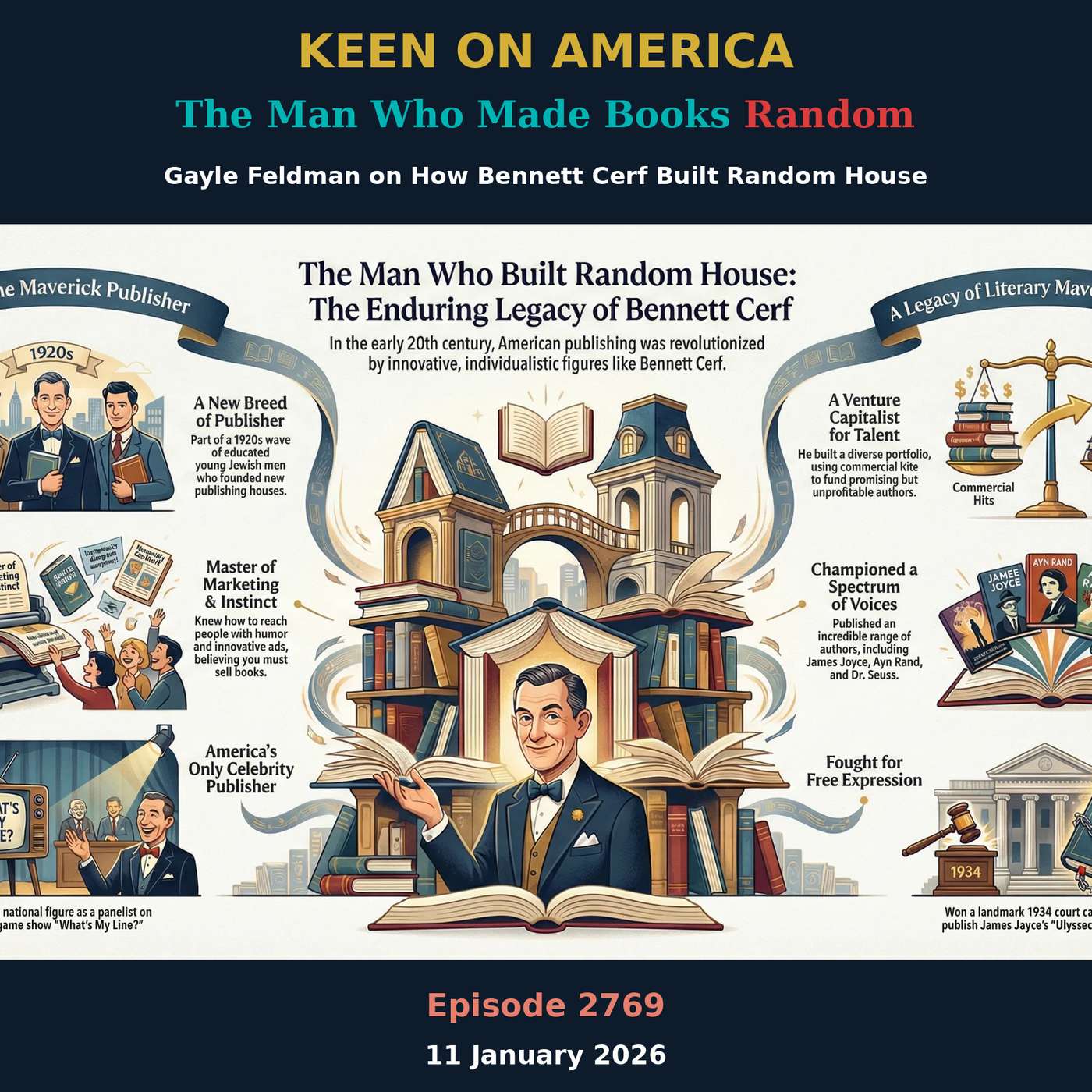
There was a time in the mid 20th century, the literary historian Gayle Feldman reminds us, when the book business was cool. Back then, New York publishing resembled Silicon Valley tech and the Mark Zuckerberg of his day was the Random House founder Bennett Cerf. In her new biography of Cerf, Nothing Random, Feldman tells the story of this celebrity entrepreneur, noting that he helped pioneer the publishing industry’s venture capitalist style business model which enabled hit authors like Ayn Rand or Dr Seuss to finance start-up writers like Cormac McCarthy. Those were the days, a slightly wistful Feldman reminisces. She’s right. If only today’s corporate publishing industry could recapture some of that Cerfian magic. Then books might become cool again.
Keen On America is a reader-supported publication. To receive new posts and support my work, consider becoming a free or paid subscriber.
This is a public episode. If you'd like to discuss this with other subscribers or get access to bonus episodes, visit keenon.substack.com/subscribe
The Case for "Regime Change" in Iran: Majid Sadeghpour on why the Current Iranian Theocracy can't be Reformed
How to Kick Addictive Ideologies: Dr Emily Bashah on ending violence in Israel/Palestine
The Return of the Dissident Academic Model: Balazs Trencsenyi on the Invisible University for Ukraine
Eleanor Shearer on RIVER SING ME HOME: A post-slavery West Indian novel celebrating motherhood and female resilience.
When Everyone Leads: Julia Fabris McBride on what she claims as a "revolutionary approach" to fixing our toughest challenges
The Revolution WILL Be Podcasted: Zencastr founder Josh Nielsen on the democratization of professional podcasting
Will Donald Trump EVER Go to Jail? Elie Honig on Trump's Houdini-like Ability To Get Away With It
Why the Second World War Still Hasn't Ended in the Netherlands: Nina Siegal on Dutch Moral Complicity in the Nazi Persecution of Holland's Jews
Dean Koontz on how to Sell 500 Million Books and Why AI Engines like ChatGPT Will Never Replicate the Human "Soul"
What Will Things Be like in 60,000 Years time? Annalee Newitz imagines the future of species, real-estate, love and dogs who shun humans
The Death of Unicorns, the birth of AI and the irrelevance of social media: That Was the Week in Tech for 1.27.23
Journeys of a Humanitarian: How Jane Olson Emulated her Heroine Eleanor Roosevelt to Become a World Citizen
In the Nation's Service: Philip Taubman on George P. Shultz's UnTrumpian Role in Ending the Cold War