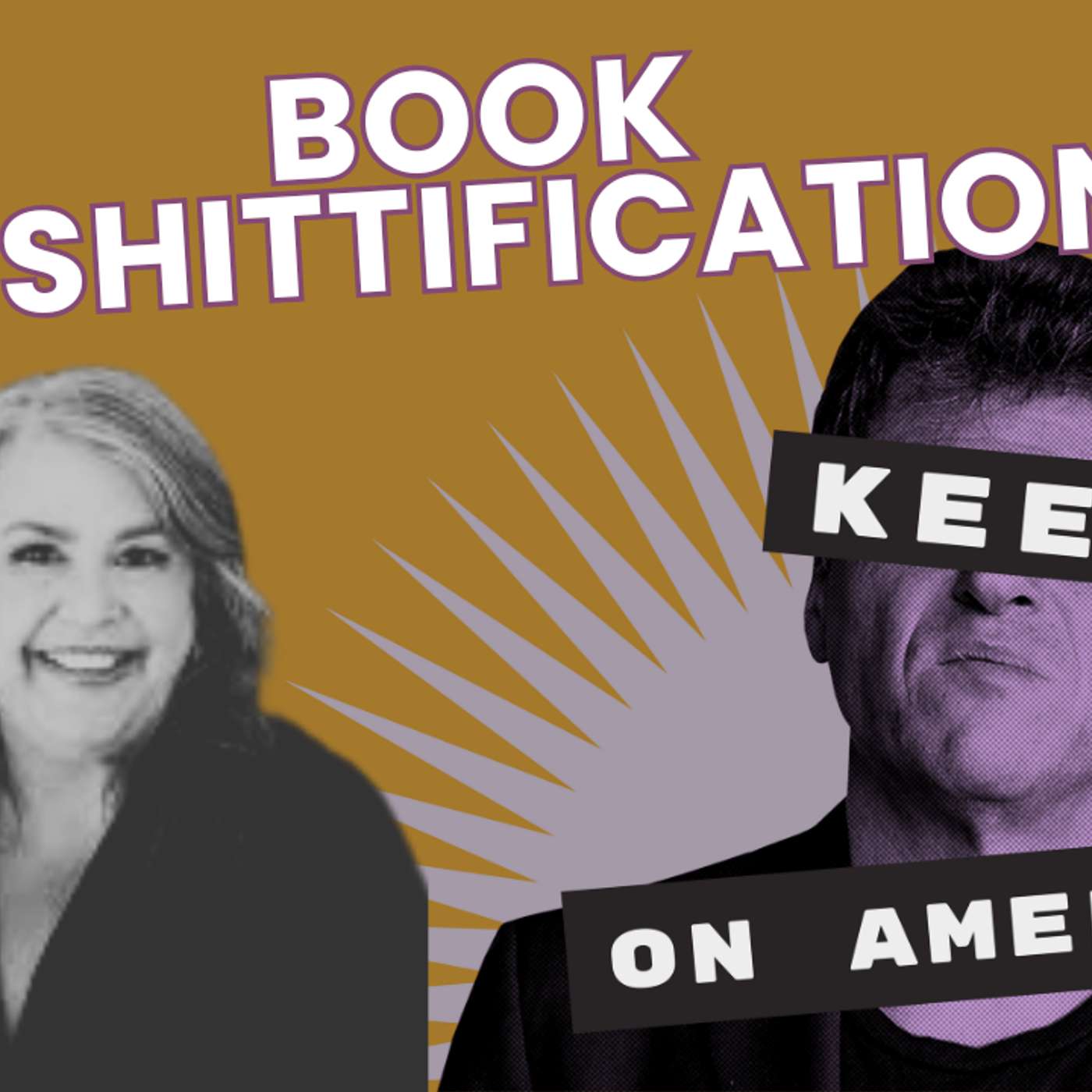
Next month, America will celebrate the centenary of the Scopes Trial, the so-called 1925 “Monkey Trial” on evolution that riveted a nation. Although perhaps celebrate is the wrong word to describe the Tennessee trial that not only riveted America but also divided it. According to the historian Brenda Wineapple, author of Keeping The Faith: God, Democracy, and the Trial that Riveted a Nation, the Scopes trial is as relevant to America in 2025 as it was in 1925. According to Wineapple, the trial wasn't really about science versus religion at all. Neither side truly understood Darwin's theory of evolution, which had been settled science for decades. Instead, the Scopes trial served as a cultural battleground where deeper American anxieties played out—fears about immigration, racial integration, women's suffrage, and rapid social change in the post-World War I era. The real combatants weren’t evolution and creationism, or even the courtroom celebrities Clarence Darrow and William Jennings Bryan, but competing visions of American identity. Today, as debates rage over book bans, curriculum restrictions, and civil rights, Wineapple argues that America is still fighting the same fundamental battles that erupted in that sweltering Dayton, Tennessee courtroom a century ago.
1. The trial wasn't actually about science versus religion Neither side understood Darwin's theory, which had been settled science for decades, revealing the real issues lay elsewhere.
\KEY QUOTE: "Nobody knew the science. Nobody understood the science, and Darwin had published, in 1859, The Origin of Species."
2. It was a proxy fight for deeper cultural anxieties about rapid social change The evolution debate masked fears about immigration, women's suffrage, racial integration, and post-WWI upheaval.
KEY QUOTE: "So there was a proxy fight that was occurring, because it really couldn't be about what it was said to be about, and I think people on the ground in 1925 knew that."
3. Race was a central but often hidden issue in the proceedings Black communities understood that evolution theory undermined racist hierarchies, making this fundamentally about racial anxiety.
KEY QUOTE: "Certainly many in the Black communities felt that this was about race because they understood... that the theory of evolution itself helped make absolutely indefensible the idea that racial hierarchies."
4. William Jennings Bryan embodied the contradictions of progressive populism Bryan simultaneously championed common people while holding reactionary views on race, showing populism's complex nature.
KEY QUOTE: "So in that sense, he was a progressive, as you said he was for the common people... at the same time as being very conservative, even to being reactionary."
5. The trial's relevance to contemporary America lies in ongoing battles over freedom and education
Today's debates over book bans and curriculum restrictions echo the same fundamental questions about who controls knowledge.
KEY QUOTE: "The issues that are being debated in terms of the trial or raised at the trial really are about freedom... who decides what we learn, what we can read."
I’ve always been intrigued by William Jennings Bryan, the three-time Democratic candidate for President, passionate Prohibitionist and lead prosecutor at the Scopes Trial. As today’s Democrats struggle to invent a progressive 21st century populism that can compete with MAGA, what can Bryan teach us? Bryan embodies populism's central paradox: his passionate defense of ordinary people against economic elites coexisted with deeply reactionary social views. He championed workers and women's suffrage while refusing to condemn the KKK. His "Cross of Gold" speech attacked Wall Street, but his fundamentalism led him to Dayton to prosecute a schoolteacher for teaching Darwin’s theory of evolution. This wasn't a bug but a feature of Bryan’s thinking —he believed "the people" should decide everything, from monetary policy to what children should learn about evolution. Today's progressives face the same dilemma: how do you harness populist energy for economic justice without empowering the “traditional” (ie: reactionary) values that seem to inevitably go with it? The example of William Jennings Bryan suggests that this tension may be inherent in democratic populism itself. A hundred years after Scopes, this remains the real monkey business confronting American progressivism.
Keen On America is a reader-supported publication. To receive new posts and support my work, consider becoming a free or paid subscriber.
This is a public episode. If you'd like to discuss this with other subscribers or get access to bonus episodes, visit
keenon.substack.com/subscribe