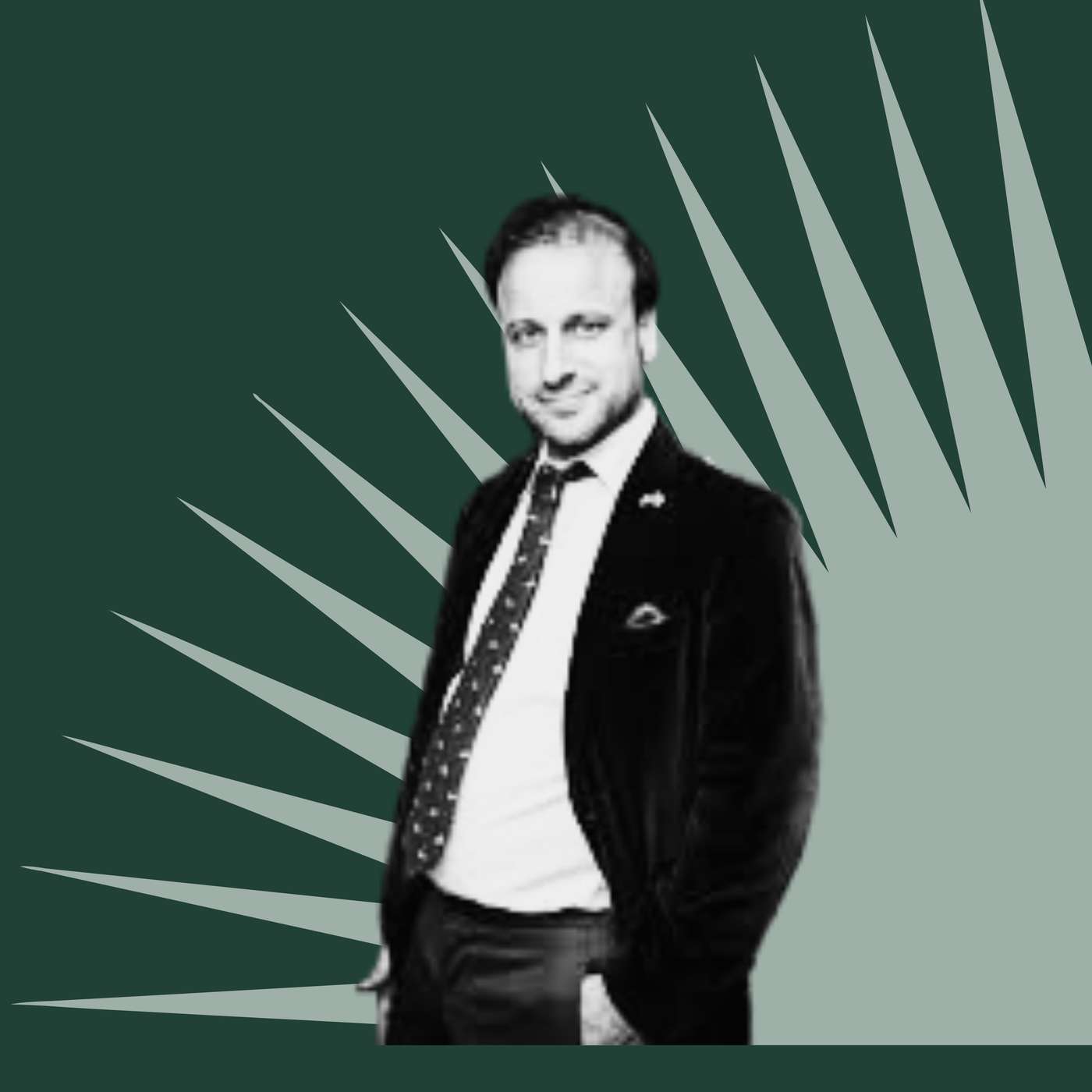
"They are fundamentally bound at the hip, because the Trump age is a conspiratorial age and a backlash against global wealth inequality... Epstein facilitated the rise of Trump." — Jason Pack
Late last year, Disorder podcast host Jason Pack came on the show and predicted that Mark Carney would be the "orderer" of 2025 and Jeffrey Epstein would be 2026's "disorderer-in-chief". Pack was uncannily right. Although, as he admits, such prescience gives him no pleasure.
Pack is no conspiracist. He thought QAnon was a hoax; he saw the antisemitism baked into its bizarre theories. But he's come to believe there was a genuine cover-up of the Jeffrey Epstein case—not orchestrated by the CIA, but by prosecutors who didn't want to go after powerful people, journalists comfortably ensconced in Epstein's world, and a system where too much wealth has accrued to too narrow a sliver of global elites.
What haunts him most is what the emails reveal about how the world actually works. Favors exchanged for favors in a network of infinite back-scratching. Noam Chomsky (!) and Leon Black busy trading intros for access to Epstein's underworld. The emails reveal completely amoral elites, Pack says, nihilists without even the pretense of moral scruples.
Trump and Epstein, Pack argues, are bound at the hip—not because Trump is guilty of Epstein's crimes, but because both are products of the same angry backlash against global wealth inequality and the collapse of institutional trust. Trump is, in Pack's memorable phrase, "a legal Epstein"—someone who gets things done through connections, who can appear the most elite Wall Street type to bankers and the most common man to coal miners. The evil genius of doppelgängerism. For Pack, the Epstein files may be a tremor before the big one—AI or crypto could bring the real 1789 style earthquake—but they've already destroyed something of priceless value: the illusion that elites are working on the behalf of the people.
Five Takeaways
● The Cover-Up Wasn't a Conspiracy—It Was the System: Cases sat on prosecutors' desks in Florida in 2003 and weren't filed. Journalists were tipped off in the early 2000s and didn't run with it. Pack isn't alleging CIA orchestration—just that too much wealth and power had accrued to too narrow a tranche of global elites, and they were able to cow journalists and prosecutors into silence.
● Trump and Epstein Are Bound at the Hip: Both are products of the same backlash against global wealth inequality and the collapse of trust since the end of the Cold War. The irony: Trump is himself a member of the elite who benefited from these networks, but his political appeal lies in his promise to dismantle them.
● "Order" vs. the Law of the Jungle: The world Epstein built wasn't ordered in any traditional sense—it was the logic of the jungle, based on blackmail and compromat. Russian intelligence running a financial sex trafficking influence scheme at the heart of the Anglo-American establishment. When they needed a service, they got the service.
● The Collapse of Social Trust: Pack contrasts our "low-trust" Anglo-American society with Scandinavian models where people still believe institutions work on their behalf. The Epstein files reveal completely amoral elites who believed in nothing—no religion, no moral code—and had no compunction about harming young women or stealing pensioners' money.
● A Tremor Before the Big One: Epstein won't bring down neoliberal capitalism. But AI making five families wealthier than the rest of the world combined could. Or crypto going to zero and 300,000 people realizing their life savings are gone. The true significance of the Epstein files is that they've stripped away the illusion that the system works on our behalf.
About the Guest
Jason Pack is a historian, consultant, and host of the Disorder podcast. He is the author of Libya and the Global Enduring Disorder. He is based in London.
References
Podcasts mentioned:
● Disorder Episode 167 — "Epstein Survivor Rina Oh on Getting Justice"
● Disorder Episode 168 — "How Can Epstein's Victims Get Closure? with Civil Rights Attorney Lisa Bloom"
● Bobby Capucci's "Jeffrey Epstein: The Cover-Up Chronicles" — deep dives into the Epstein files
● Jewish Currents — left-wing Jewish treatment of Epstein's connections to Ehud Barak and the Mossad
Previous Keen On episodes mentioned:
● Peter Bale interview (Episode 2813) — discussed the Epstein media cover-up and Michael Wolff's attempts to interest mainstream media
About Keen On America
Nobody asks more awkward questions than the Anglo-American writer and filmmaker Andrew Keen. In Keen On America, Andrew brings his pointed Transatlantic wit to making sense of the United States—hosting daily interviews about the history and future of this now venerable Republic. With nearly 2,800 episodes since the show launched on TechCrunch in 2010, Keen On America is the most prolific intellectual interview show in the history of podcasting.
Website
Substack
YouTube
Apple Podcasts
Spotify
Chapters:
- (00:00) - Introduction: Jason Pack hates being right
- (02:04) - Carney's Davos speech: Words as actions
- (05:44) - A Canadian-led initiative on Ukraine?
- (06:55) - The Epstein cover-up: Why I believe it
- (11:05) - What the New York Times knew and when
- (13:21) - Epstein survivors and their lawyers
- (15:06) - Too much wealth has accrued to too narrow a tranche
- (17:09) - The uncomfortable Jewish angle
- (21:03) - Emails to Woody Allen and Leon Botstein
- (23:00) - Trump and Epstein: Bound at the hip
- (27:03) - Trump as a legal Epstein
- (29:33) - Disorder or the law of the jungle?
- (33:28) - Does Scandinavia get off lighter?
- (38:05) - A tremor before the big one?