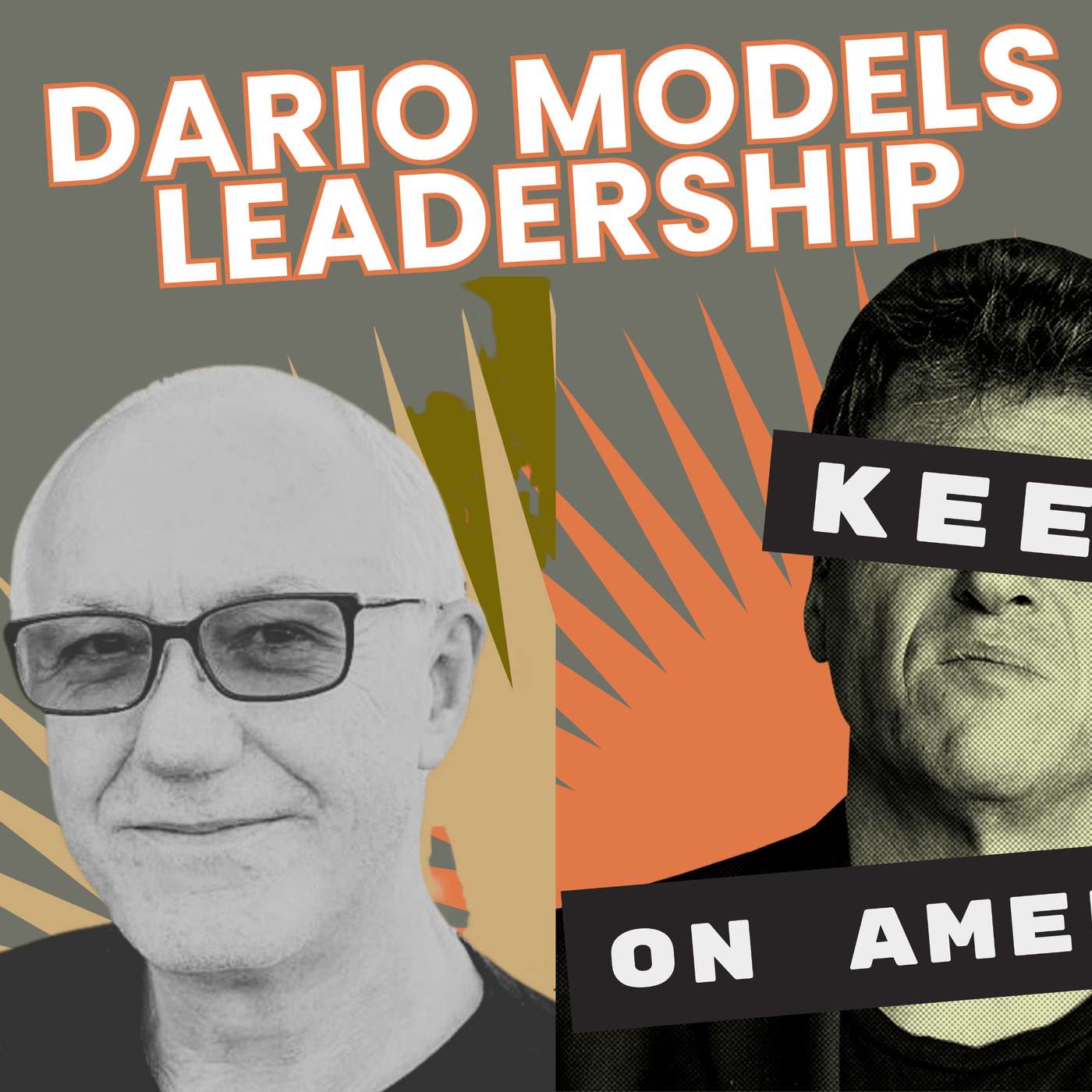
"He lied more than I thought he did—and I thought he lied a lot." — Tom Wells on Henry Kissinger
In our Epstein age, everyone seems to have access to everyone else's dirtiest secrets. But half a century ago, in the Watergate era, it was harder to get one's hands on the secret files, phone calls and other private data. But historian Tom Wells has done exactly that with the private phone calls of Henry Kissinger. Wells' new book, The Kissinger Tapes, is based on transcripts of Kissinger's secretly recorded phone conversations—recordings he made primarily for his memoirs and to keep track of what he told to whom.
Wells came to the project as a Kissinger critic but found himself respecting certain things about him: particularly his stamina, the work ethic and political skills. What Wells didn't expect was to discover that Kissinger lied even more than most of us assume. Especially about Vietnam and Cambodia. The most damning revelation is his callousness. Kissinger reveled in body counts, Wells reports. He even supported American planes indiscriminately bombing Vietnam so as to hit something. Anything. Anyone.
So was Kissinger evil? Or was he, to borrow from Arendt's account of the Adolf Eichmann trial, banal? Whereas Eichmann might have been following orders, Henry Kissinger was following his own career. One was an efficient bureaucrat, the other a supreme networker. Neither had any sensitivity to human suffering.
Five Takeaways
● He Lied More Than Expected: Wells came to the project already critical of Kissinger. But going through the transcripts, he discovered Kissinger lied even more than he'd assumed. About the secret wiretaps of government officials and journalists. About the false reporting system for the Cambodia bombing. He kept saying he didn't know anything, had nothing to do with it. He did.
● The Callousness Is Stunning: Nixon and Kissinger reveled in body counts. Nixon said, "I don't care about the civilian casualties." During the Laos invasion, he said he didn't even care if they lost 10,000 South Vietnamese troops. Kissinger remarked that if American planes just dropped bombs out the door without aiming, they'd have to hit something. This wasn't indifference. It was gratification.
● Morality Was Not Part of the Calculation: Kissinger saw most conflicts through the lens of U.S.-Soviet rivalry. The balance of power mattered. The human cost didn't. They secretly armed the Pakistani military during the Bangladesh genocide—between 300,000 and 3 million dead—because they needed Pakistan as a channel to China. The opening to Beijing was more important than the slaughter.
● He Was Supremely Two-Faced: Kissinger was always deferential to Nixon's face, always addressed him as "Mr. President." Behind his back, he said nasty things. He trashed Secretary of State William Rogers constantly. He and Defense Secretary Melvin Laird were rivals, both master leakers, both devious. They came to respect each other for it.
● Evil or Banal?: Hannah Arendt wrote about the banality of evil after covering the Eichmann trial. Some apply that framework to Kissinger. But there's a difference. Eichmann was following orders. Kissinger was following his career. One was an efficient bureaucrat. The other a supreme networker. Neither had any sensitivity to human suffering.
About the Guest
Tom Wells is a historian and the author of The War Within: America's Battle Over Vietnam. He is based in New Mexico.
References
Books mentioned:
● The Kissinger Tapes: Inside His Secretly Recorded Phone Conversations by Tom Wells — his new book based on transcripts of Kissinger's phone recordings.
● Zbig: The Man Who Cracked the Kremlin by Edward Luce — biography of Zbigniew Brzezinski, Kissinger's rival.
People mentioned:
● Hannah Arendt wrote about "the banality of evil" while covering the Eichmann trial—a framework some apply to Kissinger.
● Daniel Ellsberg leaked the Pentagon Papers; his son's book Truth and Consequences is discussed next week on the show.
About Keen On America
Nobody asks more awkward questions than the Anglo-American writer and filmmaker Andrew Keen. In Keen On America, Andrew brings his pointed Transatlantic wit to making sense of the United States—hosting daily interviews about the history and future of this now venerable Republic. With nearly 2,800 episodes since the show launched on TechCrunch in 2010, Keen On America is the most prolific intellectual interview show in the history of podcasting.
Website
Substack
YouTube
Apple Podcasts
Spotify
Chapters:
- (00:00) - Introduction: The age of Epstein vs. the age of Kissinger
- (01:31) - Why did Kissinger secretly record his calls?
- (02:54) - Did you come to this as a Kissinger hater?
- (05:43) - He lied more than I thought he did
- (06:08) - Breaking news: The callousness
- (07:47) - Realpolitik vs. indifference to human suffering
- (09:47) - Did Kissinger recognize moral critics?
- (11:06) - What kind of man was Kissinger?
- (14:18) - His relationship with Nixon
- (15:15) - Who did Kissinger trust?
- (16:40) - His private life and playboy reputation
- (19:00) - What the tapes reveal about Vietnam
- (20:56) - Did he care about American casualties?
- (22:19) - The monstrous quality
- (24:20) - Hannah Arendt and the banality of evil
- (25:52) - What the Kissinger tapes tell us about Trump
- (27:31) - What would Kissinger make of Ukraine and Gaza?