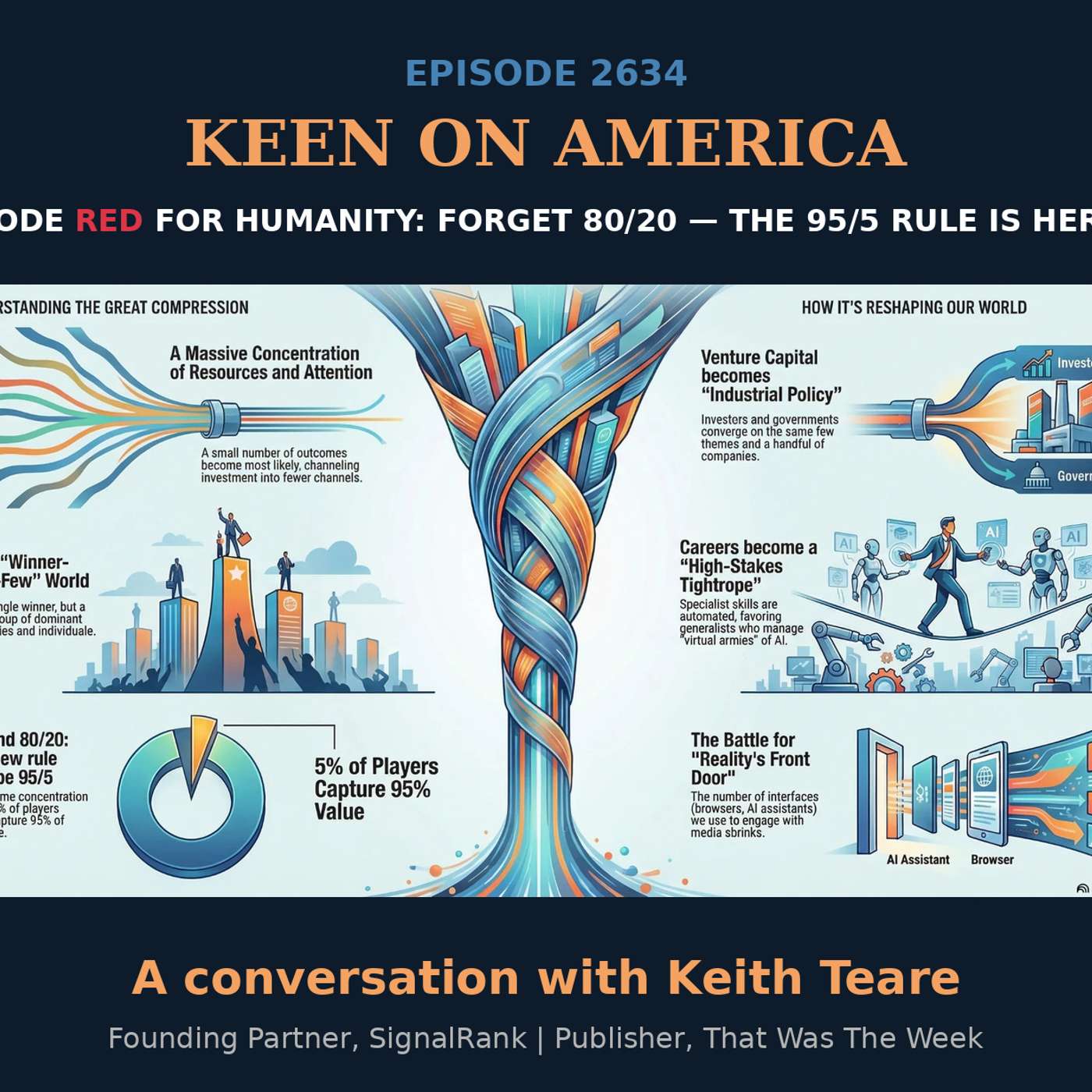
I’ve spent this week in Washington DC where most people seem suspicious and sometimes even downright hostile about the future. Especially the supposedly “abundant” AI future being built in Silicon Valley. So where is this abundance going to come from? Some optimists, like The Great Progression’s Peter Leyden, believe there’s an emerging coalition of smart technocratic elites who will construct a more efficient state to engineer a new progressive era. That Was The Week’s Keith Teare, however, is suspicious of this kind of new New Deal, arguing that reform from above is, by definition, flawed. That’s all very well. But then, if the future isn’t going to be built by a new kind of smart government, then where’s it going to come from? The defiantly anti-top-down Teare believes, without much evidence, that it will somehow percolate up from what he calls “the masses”. I’m not so sure. Do we really want to trust our AI future to a vengeful digital mob?
1. The Policy Gap is Real – But No One Knows How to Fill It Keith Teare identifies a critical void: while AI and automation may create unprecedented wealth, there’s no coherent framework for ensuring that abundance benefits everyone rather than concentrating in the hands of tech monopolists. Both left and right lack a practical manifesto for this transformation.
2. Innovation Will Happen – Distribution Won’t Keith Teare argues that technological progress and wealth creation are inevitable, driven by curious entrepreneurs and scientists working through the night. What doesn’t happen automatically is the flowering of society or the reallocation of resources. That requires something more than market forces alone.
3. Government as Currently Constituted Can’t Lead This Transformation Despite Peter Leyden’s call for “state capacity,” Teare remains deeply skeptical that bureaucratic governments can play a progressive role. He sees them as enemies of innovation, prone to regulation and rule-making rather than enablement. He prefers Trump’s hands-off approach to Democratic regulatory instincts.
4. The Bottoms-Up Revolution May Be Inevitable When pressed on alternatives to government action, Keith Teare suggests people power rather than state power will drive change. As AI displaces workers, those made unemployed will demand society provide them a living standard – creating pressure for transformation that could be peaceful (as Marx predicted for wealthy America) or disruptive.
5. Some Tech Leaders See Beyond Their Own Pockets Contrary to cynicism about Silicon Valley greed, Keith Teare points to Elon Musk’s vision of money becoming irrelevant under true abundance and Sam Altman’s WorldCoin project as evidence that at least some technologists can imagine distributing wealth beyond their own fortunes. Whether these visions are “childish fancy” or prophetic remains the debate.
Keen On America is a reader-supported publication. To receive new posts and support my work, consider becoming a free or paid subscriber.
This is a public episode. If you'd like to discuss this with other subscribers or get access to bonus episodes, visit
keenon.substack.com/subscribe