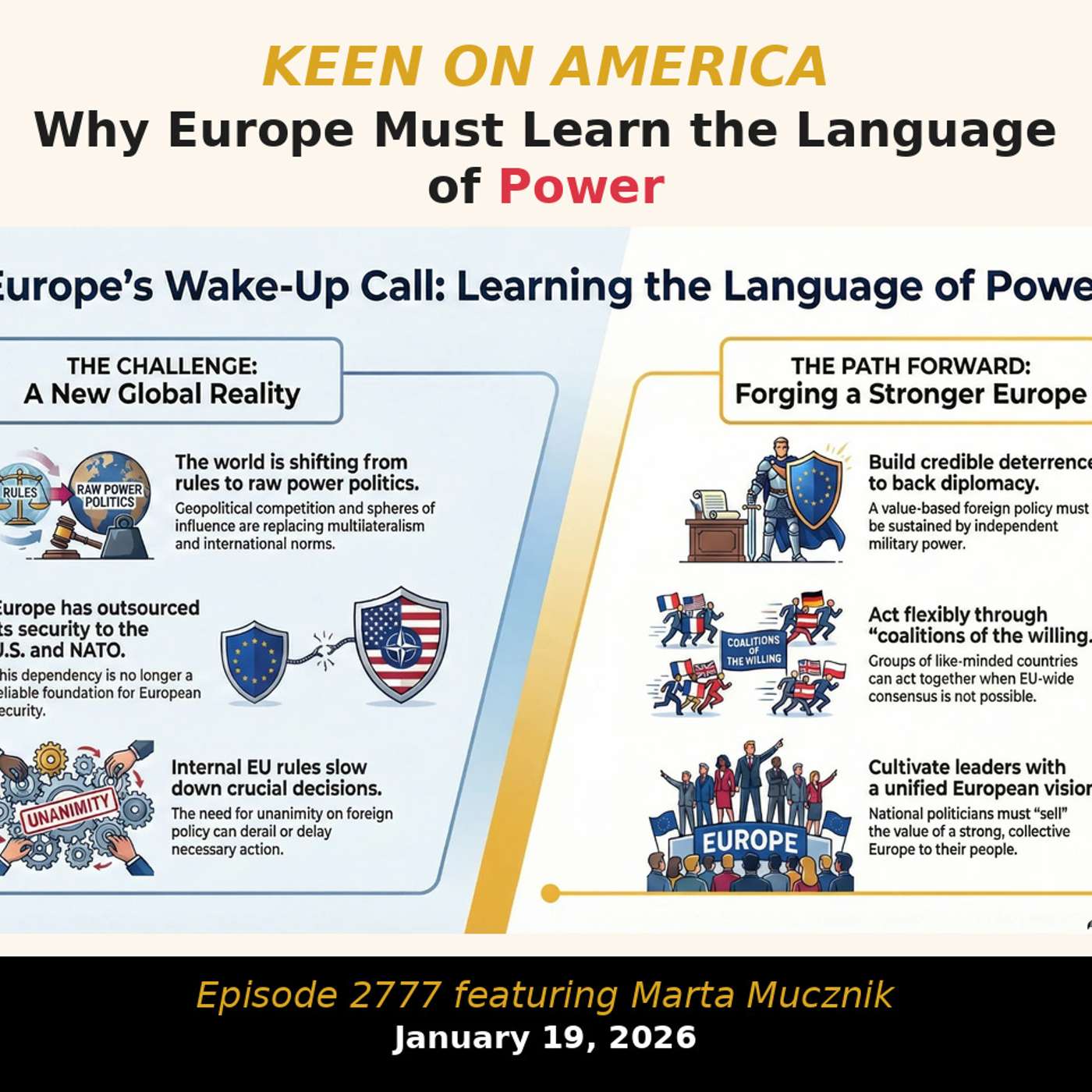
Why Europe Must Learn the Language of Power
I'm just back from another stimulating Digital Life Design (DLD) conference in Munich where all the talk was about the growing technological and political gap with the United States and China. From Machiavelli and Hobbes to Napoleon and Bismarck, Europe invented the modern concept of state power. But decades of outsourcing security to NATO and the US have left the continent dangerously rusty both in the language and execution of power. According to Marta Mucznik, a senior analyst at the Brussels-based left-leaning International Crisis Group, "projecting power is the language of today's world." And unless European politicians relearn it, Mucznik warns, that growing gap between Europe and the bipolar reality of a US-China centric world will only continue to dramatically widen.
Keen On America is a reader-supported publication. To receive new posts and support my work, consider becoming a free or paid subscriber.
This is a public episode. If you'd like to discuss this with other subscribers or get access to bonus episodes, visit keenon.substack.com/subscribe
Drowning in Black Swans: Why Governance is Failing in our Age of Chaos
Frozen Dreams: How a Family Agricultural Empire Exposed the Dark Side of American Capitalism
The Abundance Trap: Who Owns Our Future When Robots Do All the Work?
The Revenge Addiction: How Trump's Vengeful Brand is America's Deadliest Drug
The Authoritarian Pincer: How Both Left and Right Threaten Free Speech in America
F**k the Patriarchy: Tim Jackson's Path to a "Care" Economy
American Ruins: The Death of Expertise in Trump's Washington
Episode 2547: Paul Elie on Art, Faith and Sex in the 1980s
Episode 2546: Zaakir Tameez on the most unsung hero of the American Civil War and Reconstruction
Episode 2545: Matthew Hongoltz-Hetling on the Death of Trust in Science
Episode 2544: Marcus Alexander Gadson on the History of Sedition in the United States
Episode 2543: Edward Luce on the Life of Zbigniew Brzezinski
Episode 2542: John Cassidy on Capitalism and its Critics