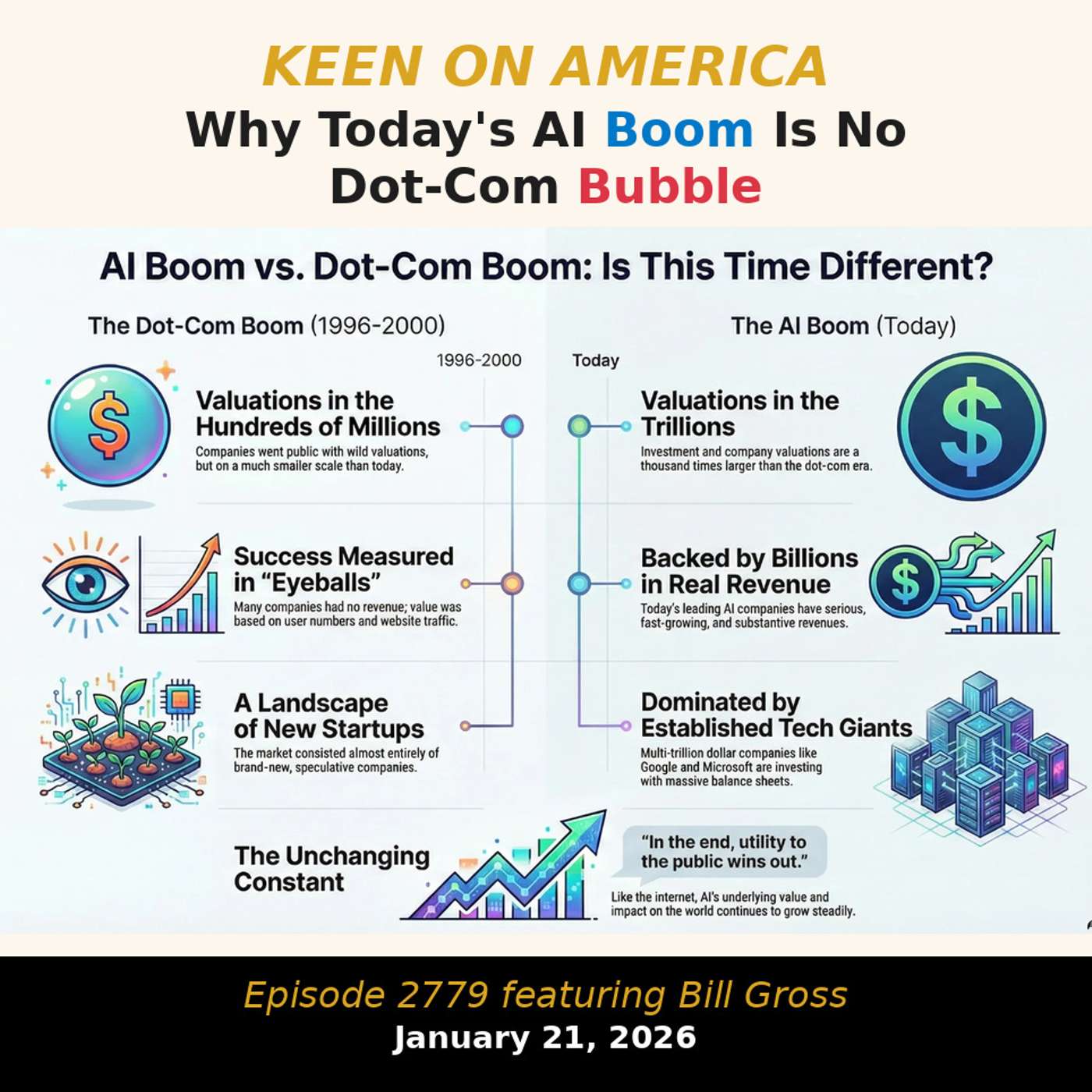

Why Today's AI Boom Is No Dot-Com Bubble
Few people experienced the Dot-Com bubble with more vertiginous intensity than Bill Gross, the Pasadena-based founder of Idealab and many many other internet startups over the last 30 years. So when I sat down with Gross at DLD, I couldn’t resist opening with the boom/bubble gambit. How, I asked him, does today’s AI hysteria compare with the Web 1.0 madness of the Nineties? While Gross - whose current ProRata.ai play is focused on protecting creativity in the age of generative AI - doesn’t believe that today’s boom is akin to the Dot-Com bubble, there are similarities. We are at what Gross calls a “Napster moment” in terms of making the big LLMs accountable for all the content they are illegally crawling (ie: stealing). And to get beyond this moment, he says, everyone from Google and OpenAI to Perplexity and Anthropic, needs to move to a “Spotify model” that fairly shares revenue with the human creators of knowledge.
Keen On America is a reader-supported publication. To receive new posts and support my work, consider becoming a free or paid subscriber.
This is a public episode. If you'd like to discuss this with other subscribers or get access to bonus episodes, visit keenon.substack.com/subscribe
Why Social Media Still Matters: Jeff Jarvis on the origins of blogging , what went wrong at Twitter and Facebook, and how he still believes in the social potential of the Internet
The 1963 Birmingham Campaign: Paul Kix on the ten weeks that changed America
Is American Capitalism Irredeemably Rotten? Brendan Ballou on Private Equity's Plan to Pillage and Plunder the United States
HELL TO PAY: Michael Lind explains how the suppression of wages and unions is destroying America
From Solitaire to Heartstopper: Alice Oseman on asexuality, authentic story telling and book banning
The First Lady of World War II: Shannon McKenna Schmidt on Eleanor Roosevelt's remarkable heroism during the War
The Miracle That the United States Needs Right Now: John Blake's personal story on how to get beyond race and racism in America today
Telling Our Stories Our Way: Angeline Boulley on the need to get beyond "trauma "in Native American literature
The Promise of Second Life: Amber Atherton on the rise (and fall) of virtual communities
Excellent Advice for Living (and Dying): Kevin Kelly on how to become improbable versions of ourselves and why we should be intimate with our ancestors
The Art of Fictionalizing Non-Fiction: Katie Hafner on Kafka, Silicon Valley and the truish story behind her novel "The Boys"
Trump Was a Joke: Sophia McClennen on how satire makes sense of a President who didn't
Free and Equal: Daniel Chandler on what a fair society should look like