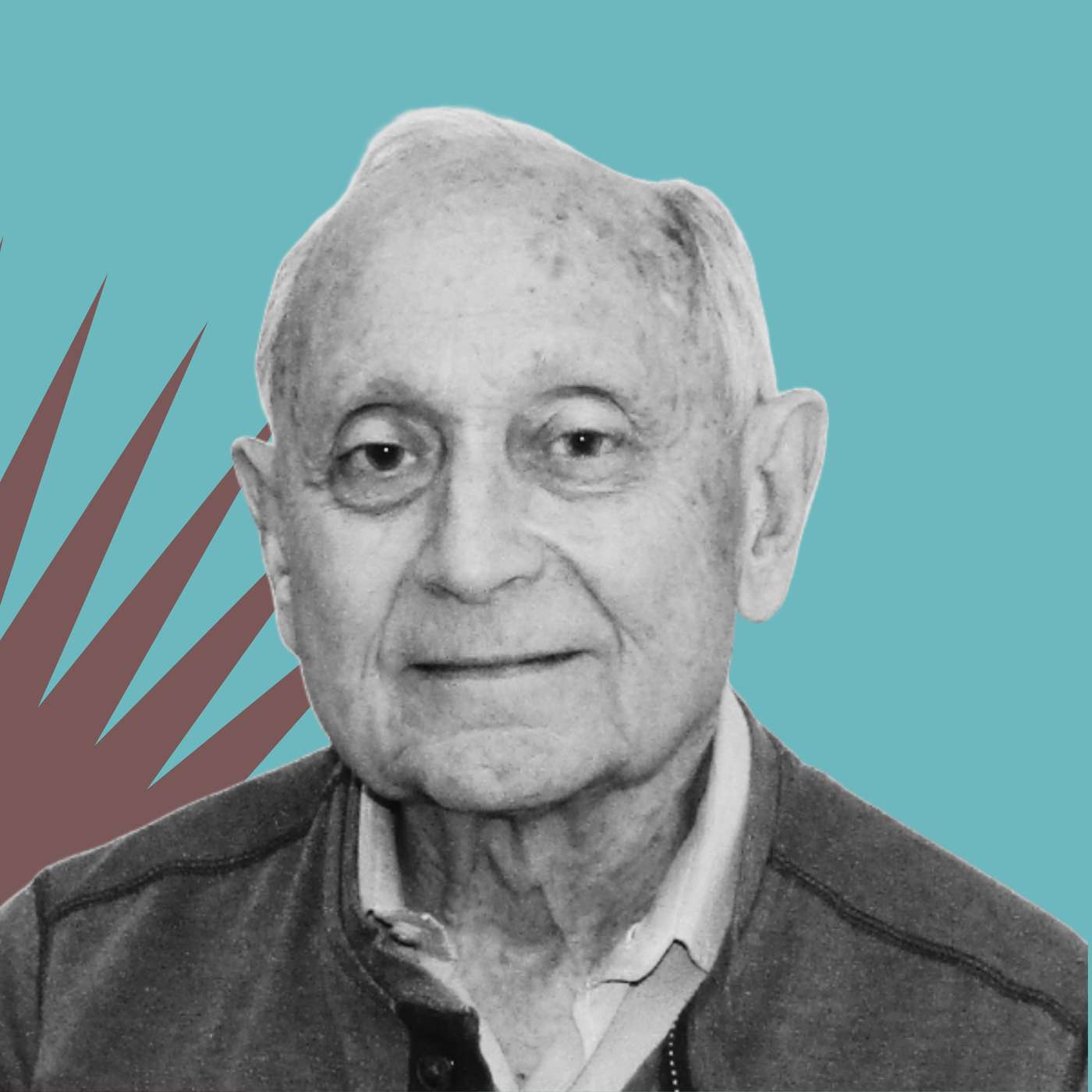
"You either need to call it fascism or you need to invent a new word with more or less the same meaning." — Jonathan Rauch
Jonathan Rauch's viral Atlantic essay has reignited the debate over what to call the Trump administration. Having previously settled on "semi-fascist," Rauch now argues that Trump ticks all 18 boxes on his checklist of fascist characteristics — from the glorification of violence and territorial ambitions to Carl Schmitt's philosophy of "enemies, not adversaries." We spar over whether the term obscures more than it reveals: Is this really fascism, or just authoritarianism with American characteristics? The conversation sharpens around Minneapolis, where citizens were shot face down, and the government initially denied it happened. You don't do that to win votes, Rauch argues — you do it because you believe that's how the social contract should work. He predicts Trump will fail to turn America into a fascist country but warns that institutions like the newly expanded ICE will outlast this administration.
About the Guest
Jonathan Rauch is a senior fellow at the Brookings Institution and a contributing writer for The Atlantic. He is the author of nine books, including The Constitution of Knowledge: A Defense of Truth (2021), Cross Purposes: Christianity's Broken Bargain with Democracy (2025), and Kindly Inquisitors: The New Attacks on Free Thought (1993). He received the 2005 National Magazine Award.
References
Thinkers discussed:
· Carl Schmitt was a Nazi political theorist whose "friend-enemy distinction" argued that politics is fundamentally about identifying and crushing enemies, not managing disagreements with adversaries.
· George Orwell wrote in his 1946 essay "Politics and the English Language" that "the word 'fascism' has now no meaning except insofar as it signifies something not desirable."
· Hannah Arendt was a German-American political theorist and refugee from Nazi Germany whose book The Origins of Totalitarianism examined both Nazism and Stalinism, preferring "totalitarianism" to "fascism" as the more encompassing term.
Historical figures:
· Benito Mussolini invented the term "fascism" (from the Latin fasces, a bundle of rods symbolizing collective strength) and ruled Italy as dictator from 1922 to 1943.
· Francisco Franco ruled Spain from 1939 to 1975. Whether he was truly a fascist or merely an authoritarian remains debated; he never got along well with Hitler and outlasted the fascist era by three decades.
· Viktor Orbán is the prime minister of Hungary whose systematic capture of media, courts, and civil society has become known as the "Orbán playbook" — a template Rauch argues the Trump administration is following.
Contemporary figures mentioned:
· Stephen Miller is a senior advisor to Trump who declared that "force is the iron law of the world" and told progressives "you are nothing" at a memorial service where the widow of the deceased had just offered Christian forgiveness to an assassin.
· Russell Vought is the director of the Office of Management and Budget, identified by Rauch as one of the younger ideologues building Trumpism into something more like a coherent ideology.
· Chris Rufo is a conservative activist and culture war strategist who has employed what Rauch calls "revolutionary language" in his campaigns against universities and public institutions.
Essays and books mentioned:
· "Politics and the English Language" (1946) is Orwell's essay arguing that the corruption of language enables the corruption of politics, and that vague or meaningless words like "fascism" make clear thinking impossible.
· The Origins of Totalitarianism (1951) is Hannah Arendt's study of Nazism and Stalinism as parallel forms of total domination, examining how mass movements, propaganda, and terror enable regimes to control entire societies.
About Keen On America
Nobody asks more awkward questions than the Anglo-American writer and filmmaker Andrew Keen. In Keen On America, Andrew brings his pointed Transatlantic wit to making sense of the United States—hosting daily interviews about the history and future of this now venerable Republic. With nearly 2,800 episodes since the show launched on TechCrunch in 2010, Keen On America is the most prolific intellectual interview show in the history of podcasting.
Website
Substack
YouTube
Apple Podcasts
Spotify
Chapters:
- (00:00) -
- (00:13) - The viral essay
- (02:10) - Why Rauch changed his mind
- (03:41) - Fascism vs. authoritarianism
- (05:54) - Carl Schmitt and "enemies not adversaries"
- (06:14) - Orwell on the word "fascism"
- (09:12) - Can old people be fascists?
- (11:51) - Blood and soil nationalism
- (14:14) - Minneapolis
- (17:51) - Kristallnacht comparisons
- (20:07) - The postmodern right
- (26:34) - Following the money
- (32:05) - ICE as paramilitary force