This episode dives deep into the complex world of administrative adjudication, revealing how agency decisions differ fundamentally from traditional courtroom procedures. If you're preparing for an exam or practicing law, understanding these distinctions is crucial to mastering how agencies operate within legal boundaries and constitutional protections.
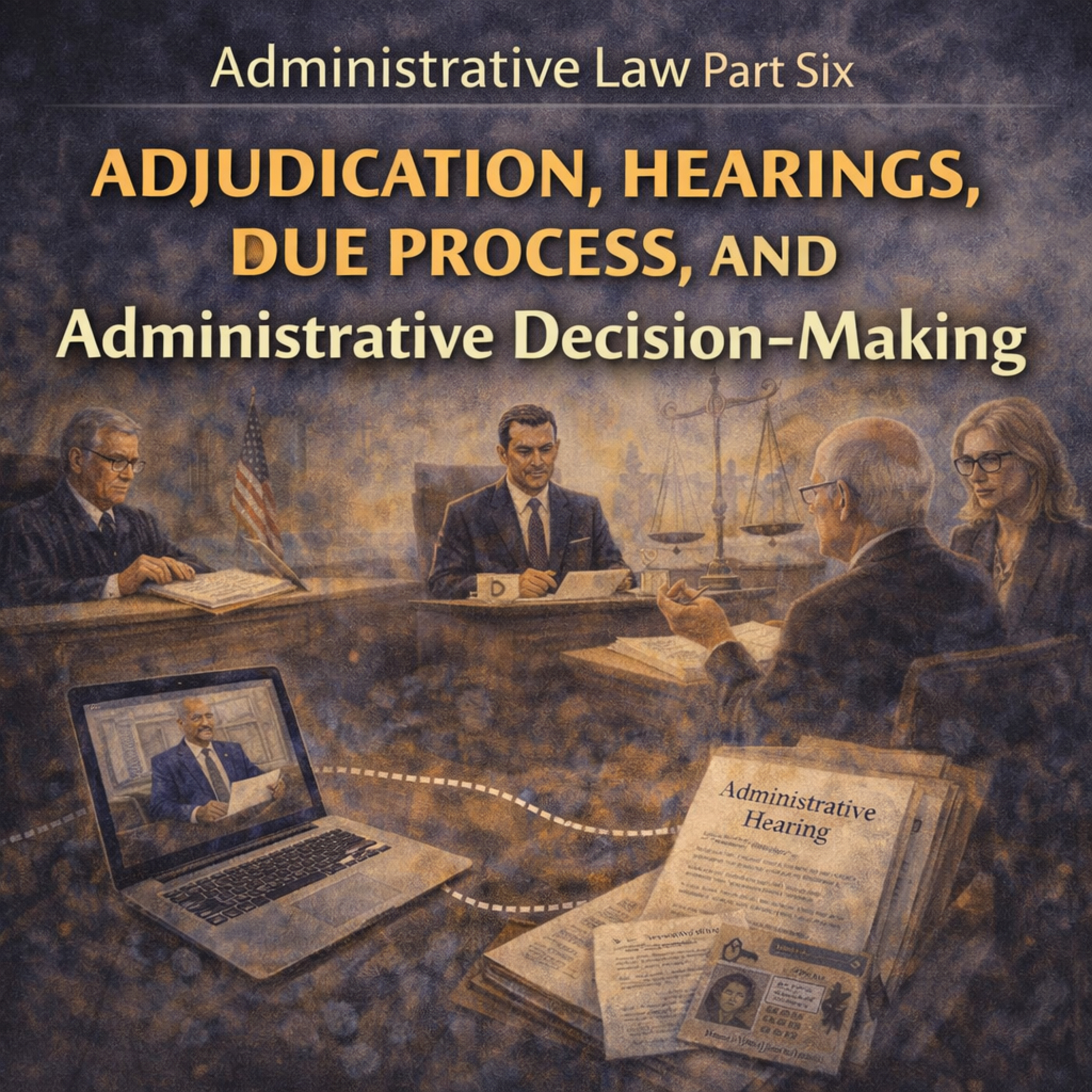
Most students stumble into administrative law’s complex adjudication system thinking it’s just like a courtroom trial—big mistake. In reality, agency hearings operate on a radically different script, built on flexible procedures, multiple hats, and a delicate balance between efficiency and fairness. This episode strips back the chaos to reveal the fundamental framework you need to ace exams and understand how agencies truly decide your rights and interests.
Imagine stepping into a world where the familiar courtroom rules are replaced by a labyrinth of statutory triggers, nuanced due process standards, and internal walls designed to prevent bias. From the narrow definition of adjudication under the APA to the crucial magic words that unlock formal proceedings, you'll discover how agencies determine whether they follow trial-like procedures or operate under a more relaxed informal process. And crucially, you'll see why most agency decisions are informal—without a full trial, yet still bound by constitutional minimums dictated by the Fifth Amendment.
We break down the core issues: how to spot the trigger words that escalate proceedings into formal adjudication; the roles of agency ALJs as insulated decision-makers with unique independence; and the layered procedural requirements that safeguard fairness—notice, cross-examination, and record-only decision-making. Plus, you’ll learn why the separation of investigatory, prosecutorial, and adjudicative functions within agencies isn’t automatically a bias risk, thanks to the presumption of administrative professionalism, and when bias allegations hold water. We explore structural bias versus individual bias, with real examples that clarify how to spot an unfair judge or an unconstitutionally entangled decision-maker.
When procedures aren’t perfectly followed, what remedies exist? Here’s where the Matthews v. Eldridge balancing test becomes your best friend—evaluating private interests, the risk of error, and the government’s interests to determine what process is “due” in any context. You’ll see how due process flexibly adapts in emergencies like poison inspections or urgent safety recalls, and how retroactive policy changes in adjudication are permissible unless they cause severe unfair surprise based on reliance on existing rules.
Finally, the episode tackles the final step—what happens when a dissatisfied party appeals to federal courts? You’ll understand why courts defer under the substantial evidence or arbitrary-and-capricious standards, and how they typically remand rather than overrule, preserving agency expertise. Plus, we reveal the crucial distinction between Article III judges and ALJs: why ALJs are not Article III judges, and the importance of the neutrality presumption despite structural conflicts of interest.
This is essential listening if you’re preparing for exams, heading into a legal career, or just wanting to grasp how the federal administrative system balances rapid decision-making with constitutional protections. By unlearning courtroom instincts and mastering these frameworks, you’ll navigate agency adjudication with confidence—knowing when procedural rules matter and when the system’s built-in flexibility ensures justice for both the regulated and the regulator.
Whether it’s analyzing bias, property interests, timing, or standards of review, this episode arms you with the key doctrines and exam strategies needed to break down even the most complex administrative disputes. Get ready to see past the chaos and understand the carefully negotiated legal architecture shaping administrative justice.