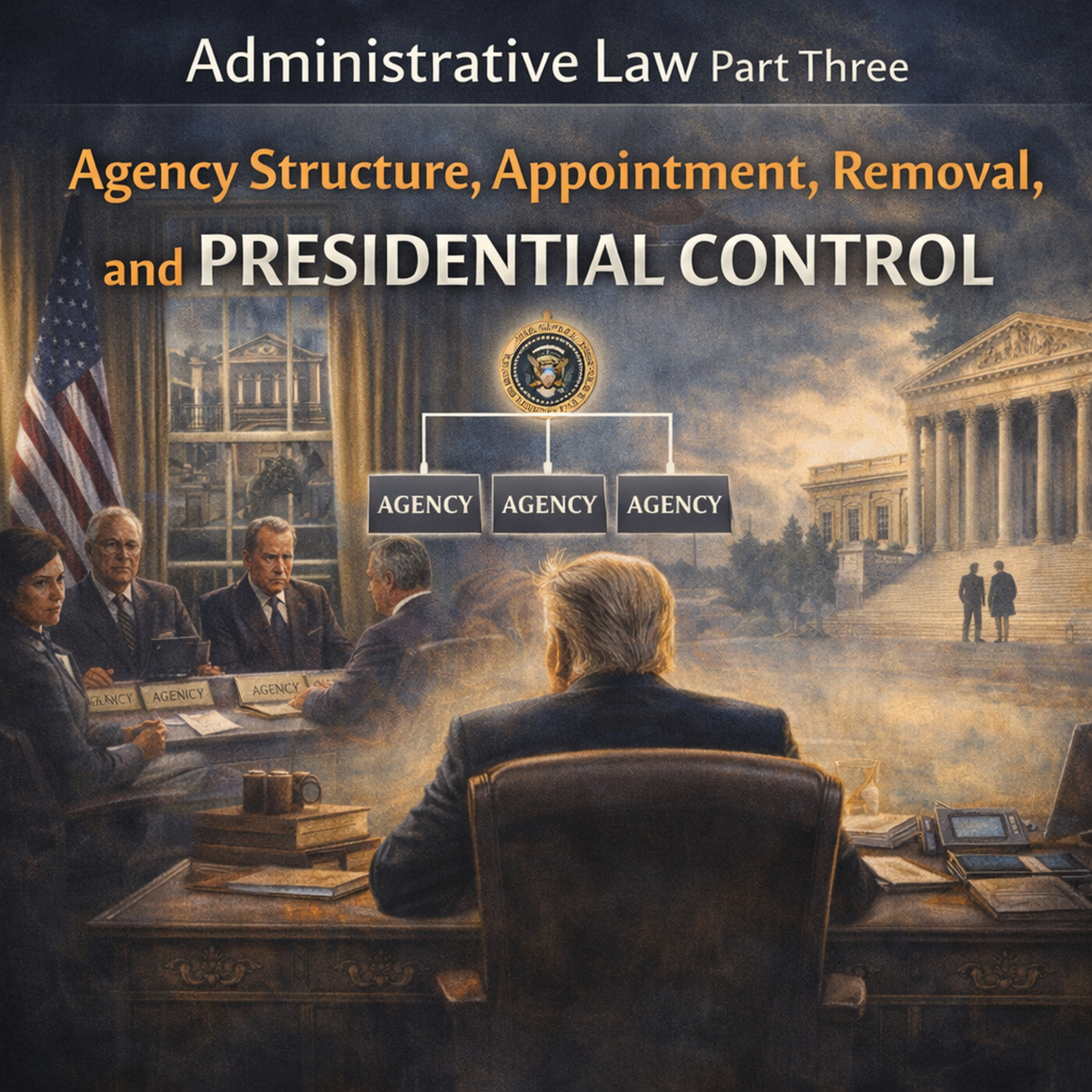
Administrative Law Part Three: Agency Structure, Appointment, Removal, and Presidential Control

Administrative Law Part Three: Agency Structure, Appointment, Removal, and Presidential Control

Author: The Law School of America March 18, 2026 Duration: 57:09

Most Americans believe federal agencies operate in straightforward, binary ways—either you have the authority or you don’t. But behind the scenes, agency structure is a complex constitutional plumbing system, rife with legal traps that can unravel entire cases. When a federal agency’s design is flawed, even a single constitutional error can invalidate decades of regulation, or even the agency’s entire existence. This episode pulls back the curtain on the real mechanics of agency power, revealing how appointment, removal, and control are hotly contested legal battlegrounds that shape U.S. governance.

Imagine you’re a business owner threatened with multimillion-dollar fines or facing a licensure ban. You might assume the law is clear—an agency acts within its authority or it doesn’t. But beneath that surface, courts scrutinize whether agency officials were constitutionally appointed, how they can be lawfully fired, and whether their organizational structure satisfies the strict limits of the Constitution. You’ll discover how landmark Supreme Court cases like Lucia v. SEC and Free Enterprise Fund set the boundaries. These rulings expose how stacking protections or creating insulated agencies can violate the President’s Article II power, and why some agency officials, like ALJs and inspectors, are actually officers of the United States, not just civil servants.

We break down the core doctrine: the Buckley v. Vallejo test for significant authority, the Edmund v. United States supervision criteria for inferior officers, and the subtle distinctions between independent agencies and executive departments. You’ll learn how the Appointments Clause is a constitutional gatekeeper—who can be appointed where, and how failure to comply renders decisions voidable. The episode reveals the crucial difference between “full control” and “independent insulation,” illustrating how modern courts draw the line, especially in cases like the CFPB’s single-director structure or multi-layered insulation, which courts increasingly find unconstitutional.

But it’s not just about who’s appointed properly—it's about whether agencies are structured so that the President can effectively control them. We explore how the “unitary executive” theory—the idea that all executive power resides in the President—drives recent Supreme Court decisions. You’ll see how the Court zigs when agencies try to wall off decision-making with multi-layer protections, and zag when it demands that the President must wield the power to remove and supervise key officials. The case law is stark: stacking dual layers of for-cause protections or creating unreviewable adjudicators can threaten the President’s constitutional duty, but so can making officials completely removable at will.

Timing and process matter—especially in the vital realm of agency personnel and rulemaking. You’ll learn how the Office of Information and Regulatory Affairs (OIRA) operates as the president’s secret weapon, scrutinizing regulations before they’re issued, and how the Supreme Court has ruled on the limits of White House pressure that violate statutory procedures. We reveal the trap: White House demands aren’t illegal per se, but they cannot override Congress’s statutory authority or bypass the Administrative Procedure Act.

This episode also dives into practical remedies—when courts find structural flaws, they prefer surgical fixes like severing unconstitutional parts rather than dismantling agencies altogether. Whether it’s removing a four-cause removal protection or reclassifying an agency’s structure, the courts aim to preserve regulatory stability while enforcing constitutional safeguards.

Perfectly suited for anyone preparing for the bar exam or deepening their understanding of administrative law, this episode offers a step-by-step analytical roadmap. From classifying officers with Buckley and Edmund tests, to mapping chains of command, and understanding how courts fix unconstitutional structures.

Ever wondered how the law really works but felt intimidated by dense textbooks and jargon? Law School, from The Law School of America, is here to change that. This podcast approaches legal education like a series of engaging conversations, breaking down the foundational principles of the American legal system into clear, manageable segments. Each episode focuses on a specific concept or area, building your comprehension step-by-step without overwhelming you. You'll hear straightforward explanations that connect theory to real-world application, making complex topics accessible whether you're a student, a professional in a related field, or simply a curious citizen. The goal is to demystify the law, transforming it from an abstract subject into a practical understanding you can use. By consistently tuning in, you gradually construct a solid framework of legal knowledge. This isn't about quick tricks; it's about dedicated, cumulative learning. The structure of the podcast is designed for steady progress, allowing listeners to absorb information at their own pace and truly integrate it. Think of it as an audio companion for your intellectual journey into jurisprudence, offering clarity and insight one episode at a time.
Author: Language: en-us Episodes: 100

Law School
Podcast Episodes
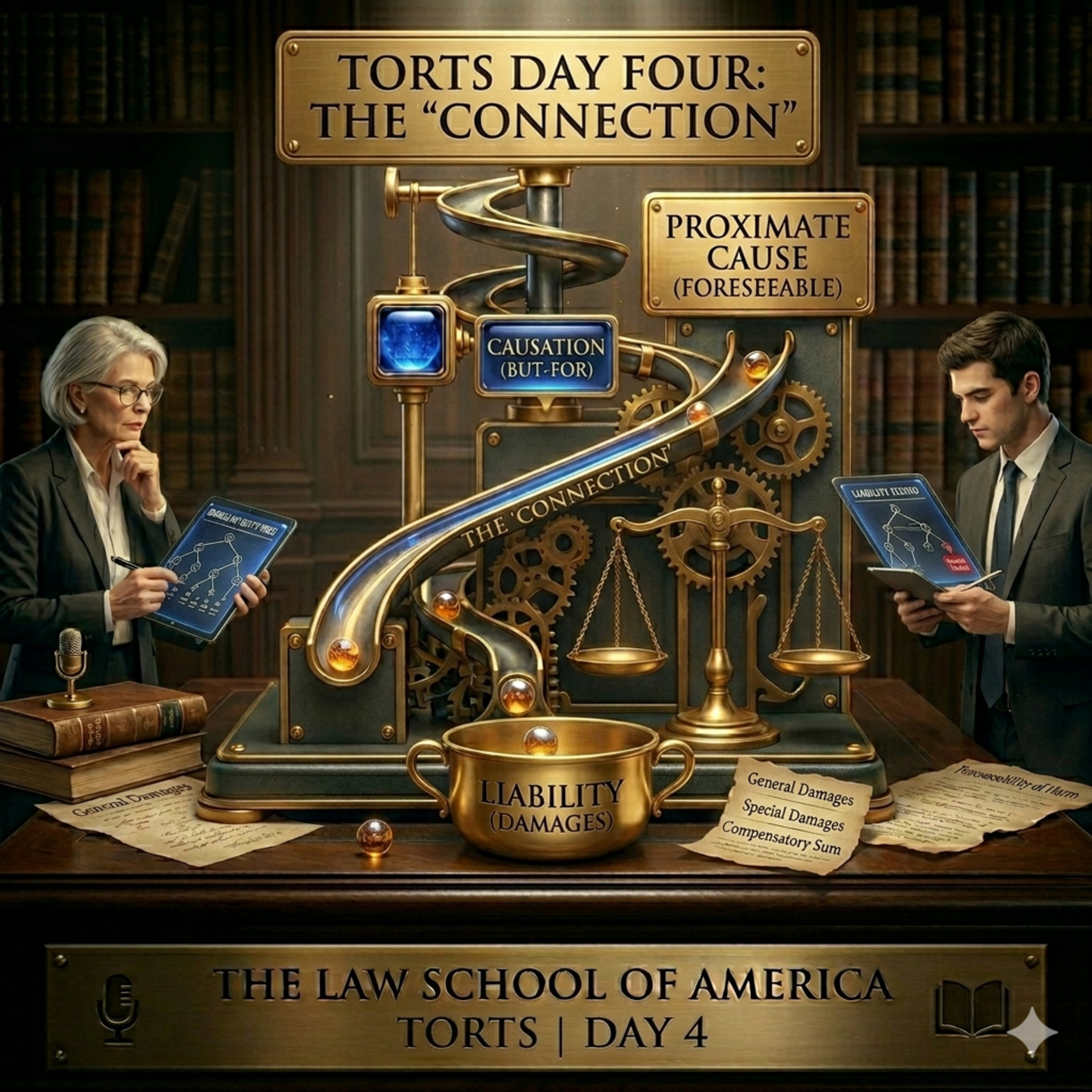
Torts Day Four: The "Connection" [not-audio_url] [/not-audio_url]

Duration: 58:32
In this episode, we explore the core principles and intricate mechanics of tort law, focusing on how courts connect careless acts to injuries and assign responsibility. From the factual causation to the nuanced doctrines…
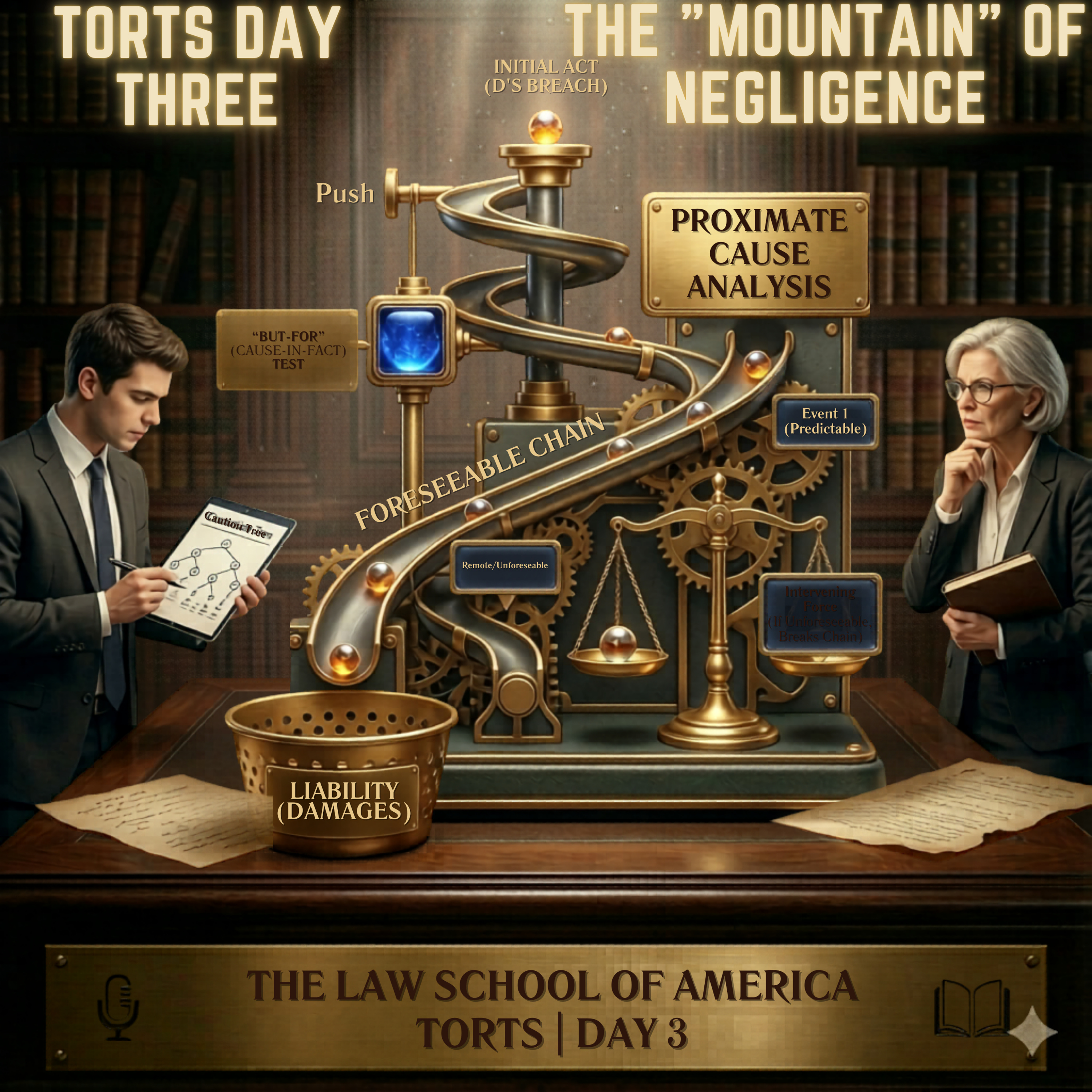
Torts Day Three: The "Mountain" of Negligence [not-audio_url] [/not-audio_url]

Duration: 1:01:53
In this episode, we explore the fundamental doctrines of negligence—the most crucial foundation of personal injury law—and decode how courts determine fault through duty and breach analysis. Whether you're a law student,…
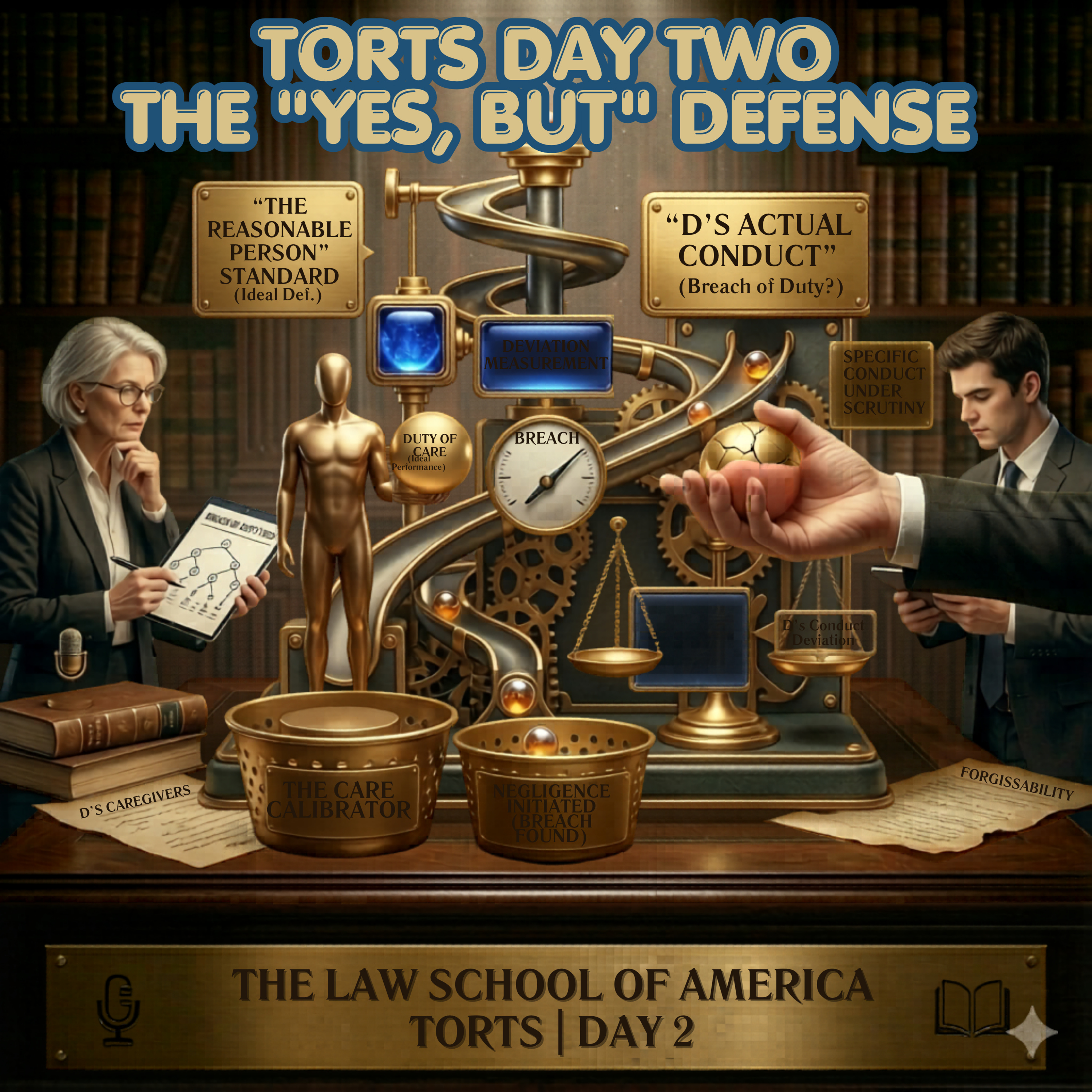
Torts Day Two: The "Yes, But" Defense [not-audio_url] [/not-audio_url]

Duration: 1:03:03
In this episode, we delve into the strategic complexity of affirmative defenses in tort law. Understanding how and when these shields apply can turn a losing case into a victory, or vice versa. We explore key defenses li…
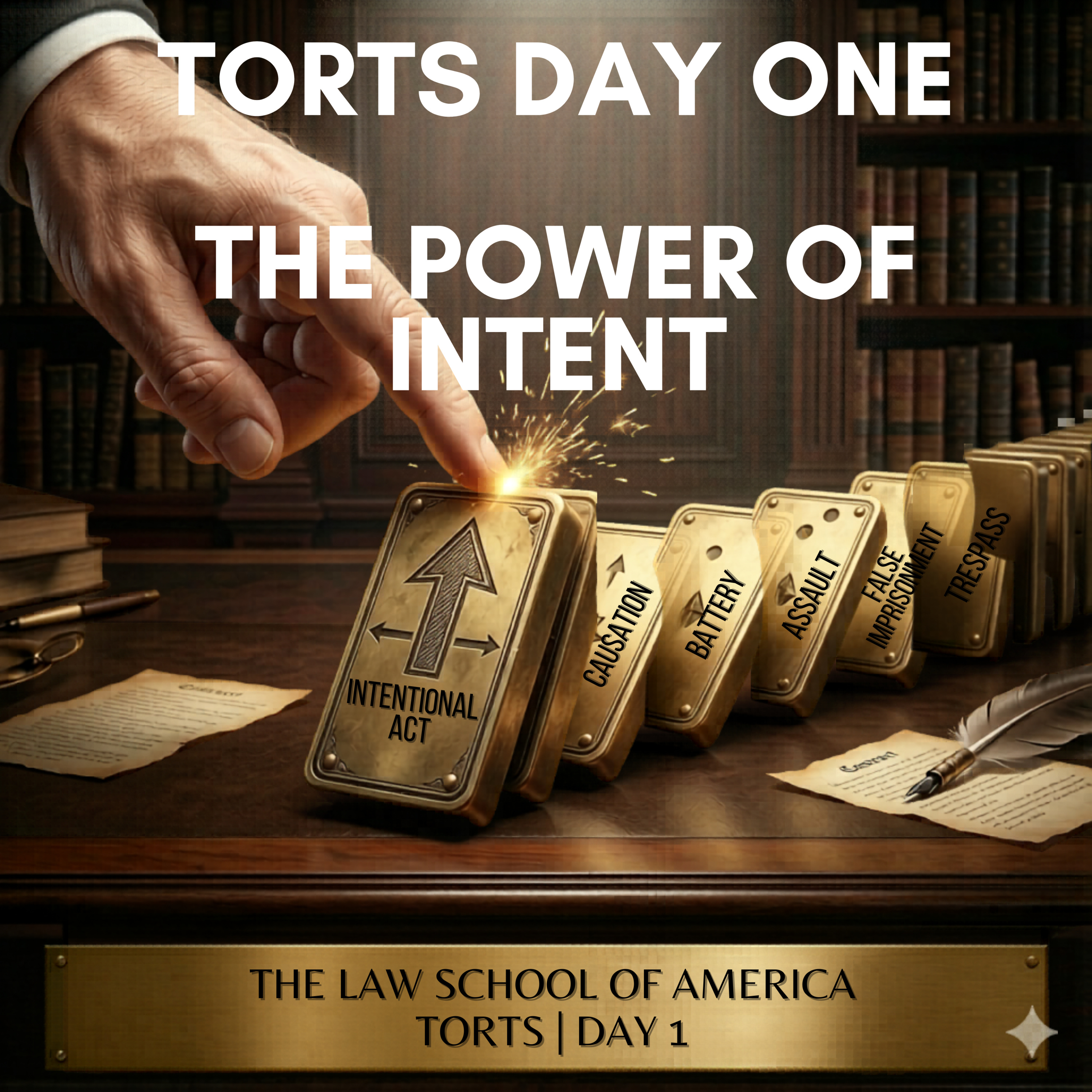
Torts Day One: The Power of Intent [not-audio_url] [/not-audio_url]

Duration: 58:52
This episode breaks down the core principles of intentional torts, from the foundational engine of volitional acts and intent to the nuanced doctrine of transferred intent. Whether you're preparing for law school exams o…
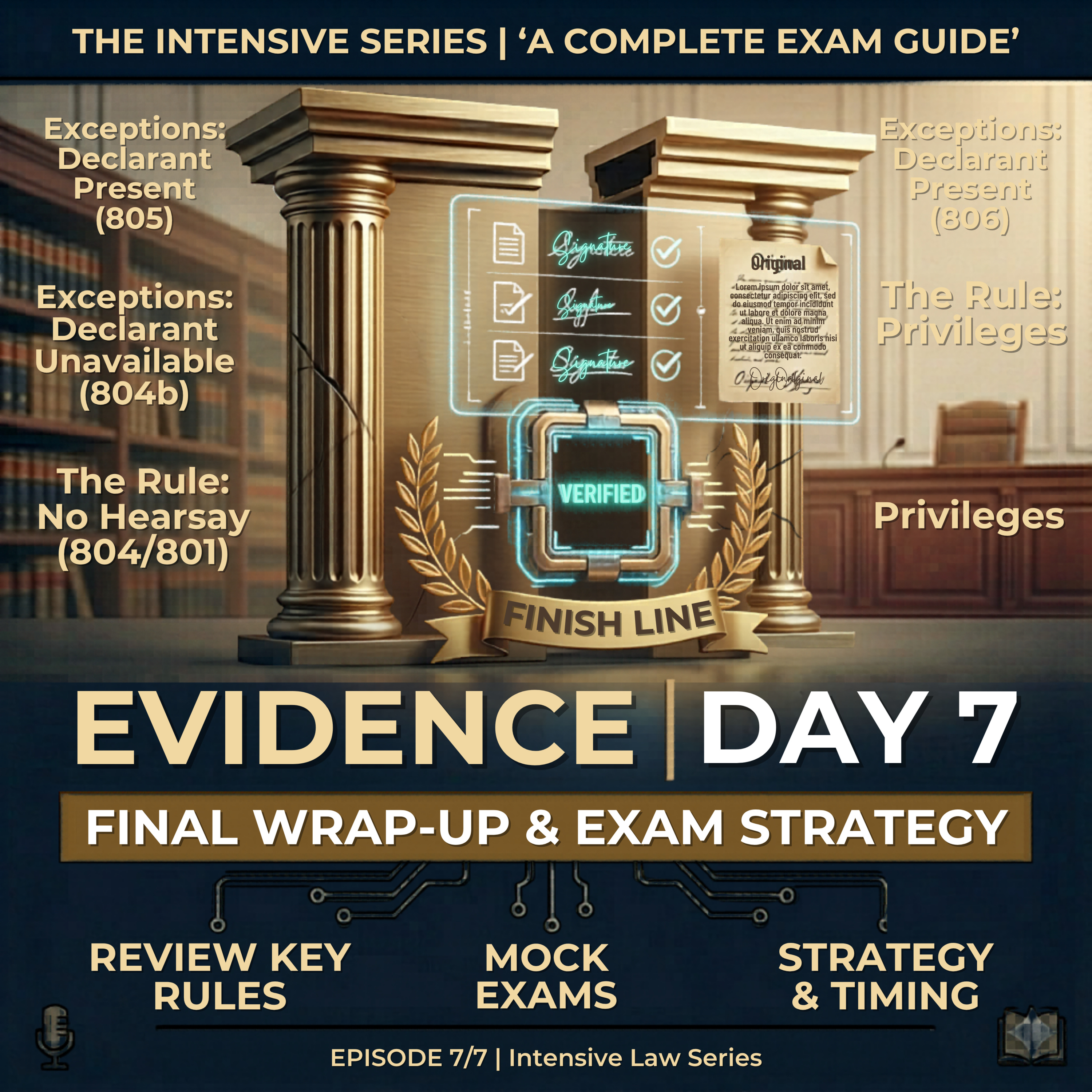
Evidence Day Seven: The Vault and the Final Machine [not-audio_url] [/not-audio_url]

Duration: 1:26:54
Prepare for your next exam or courtroom with a systematic framework that demystifies the complexity of evidence law. In this episode, we dissect the layered process of evaluating evidence—from privileges and presumptions…
Evidence Day Six: The Container and the Key [not-audio_url] [/not-audio_url]

Duration: 57:07
This episode takes you through the rigorous process of introducing physical evidence in court, breaking down complex rules with clear analogies and real-world examples. Whether you're preparing for the bar exam or seekin…
Evidence Day Five: The Hearsay Exceptions [not-audio_url] [/not-audio_url]

Duration: 1:07:12
In this deep dive into evidence law, we explore how courts differentiate between trustworthy and unreliable out-of-court statements through rules, doctrines, and constitutional safeguards. If you're preparing for a law e…
Evidence Day Four: The Hearsay Gauntlet [not-audio_url] [/not-audio_url]

Duration: 1:01:34
In this episode, we demystify the complex world of hearsay evidence, turning what often feels like an insurmountable maze into a clear, actionable framework. Whether you're a law student, a lawyer, or just a curious mind…
Evidence Day Three: The Witness Clinic [not-audio_url] [/not-audio_url]

Duration: 1:06:48
In this episode, we delve into the foundational pillars of witness testimony, unraveling the complexities of competency, memory, and the art of impeachment. Designed to equip law students and future lawyers, this session…
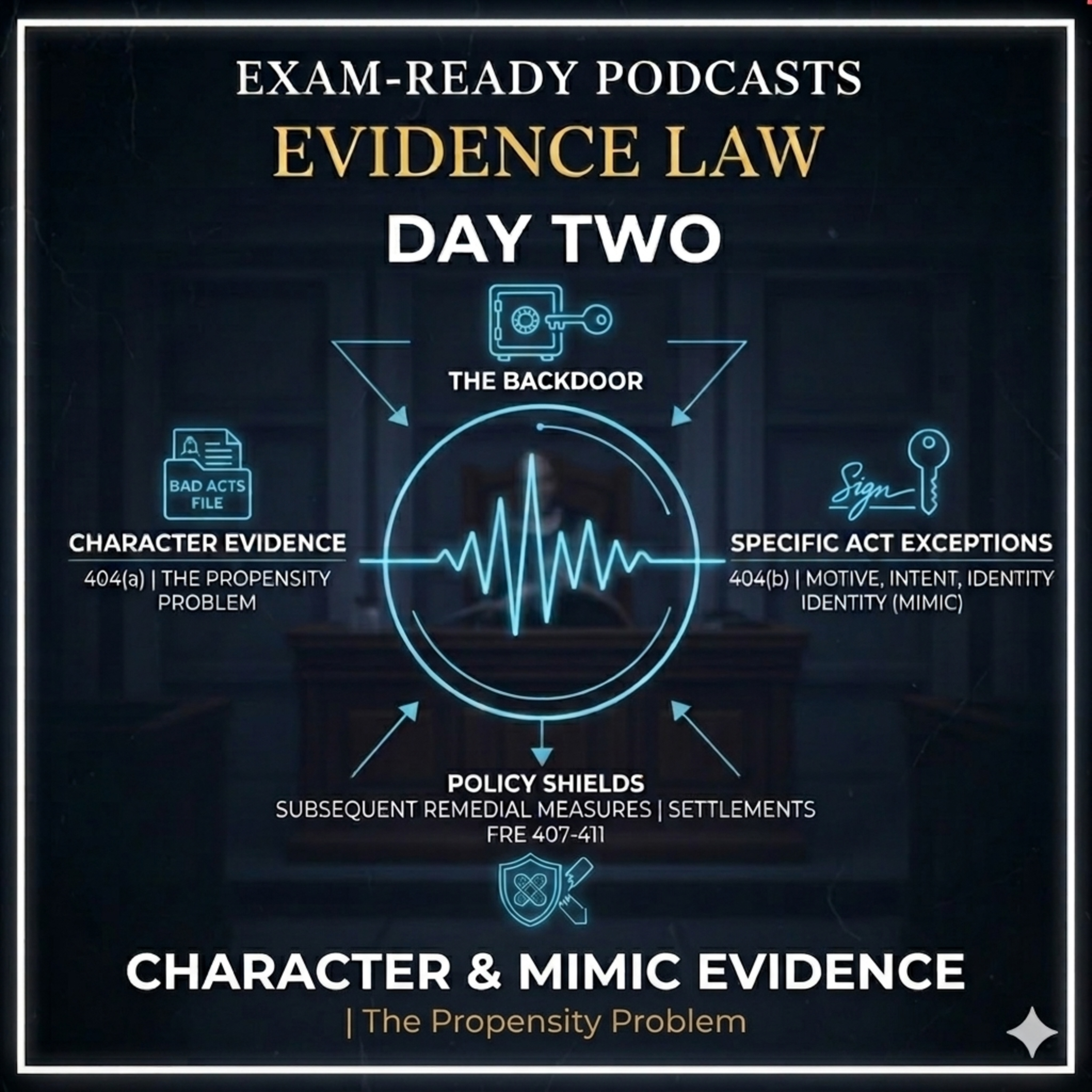
Evidence Day Two: The Character Assassination Clinic [not-audio_url] [/not-audio_url]

Duration: 1:01:41
In this episode, we explore the intricate landscape of character evidence within U.S. law, emphasizing how rules and exceptions are designed to balance fairness with societal interests. Whether you're a law student or a…