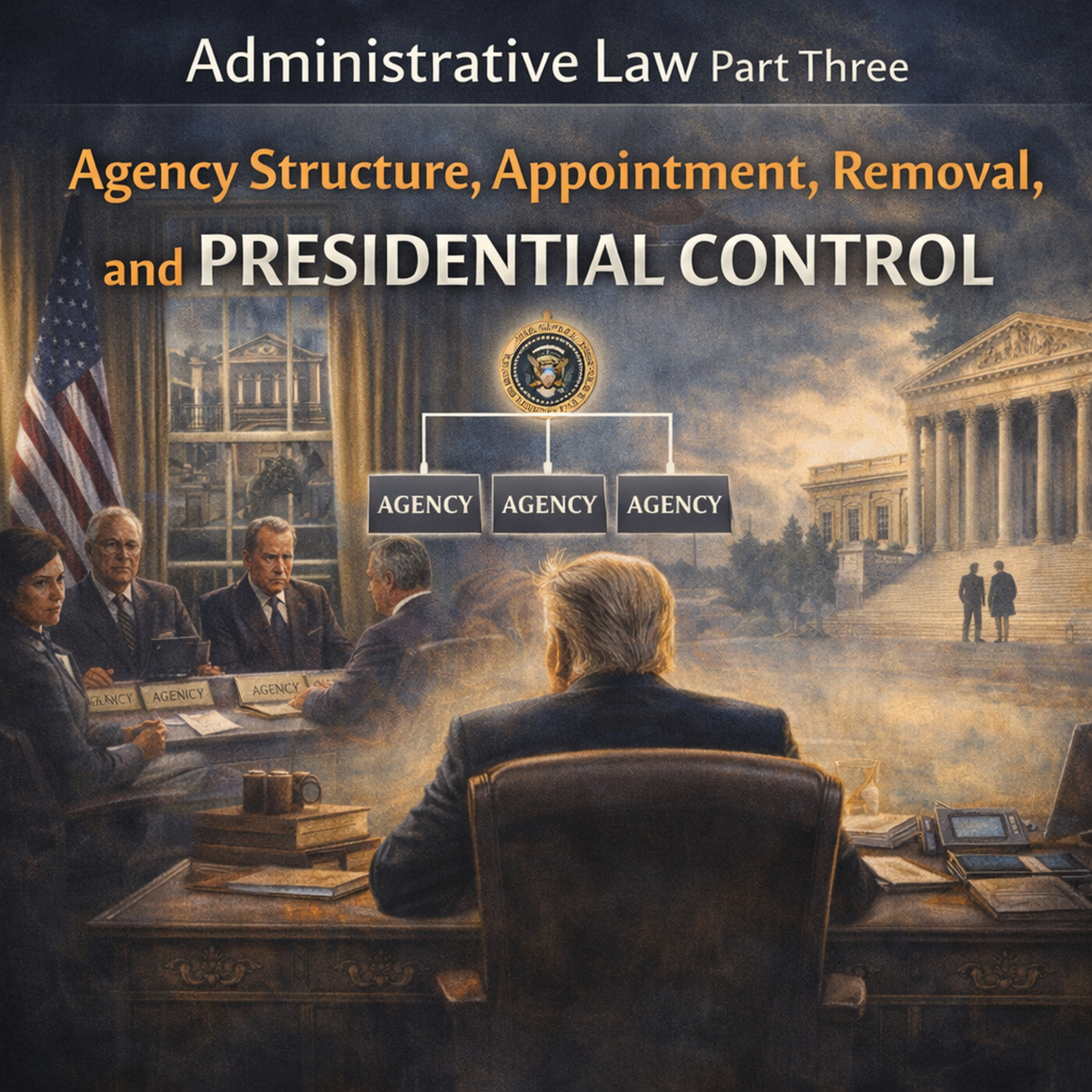
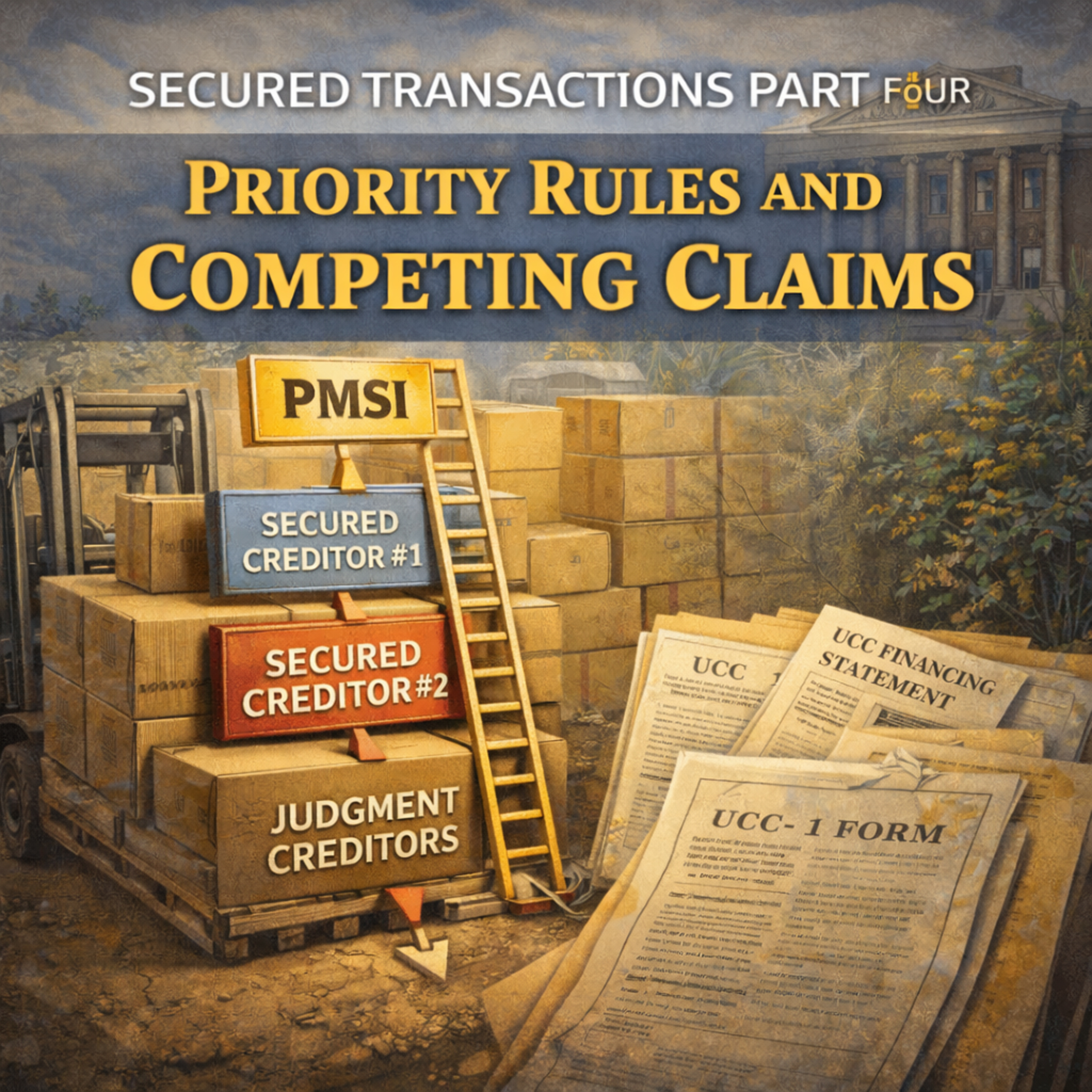
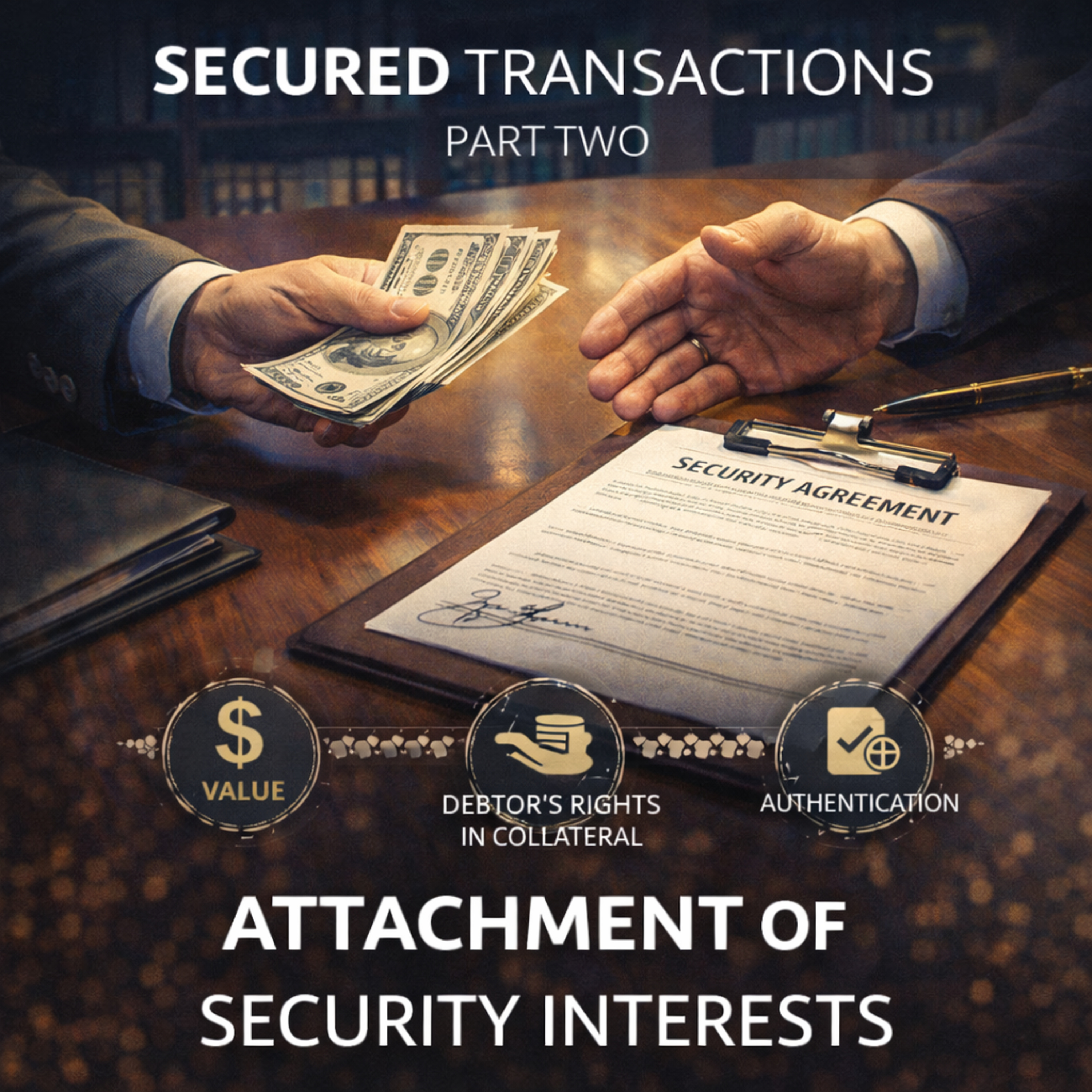
Most Americans believe federal agencies operate in straightforward, binary ways—either you have the authority or you don’t. But behind the scenes, agency structure is a complex constitutional plumbing system, rife with legal traps that can unravel entire cases. When a federal agency’s design is flawed, even a single constitutional error can invalidate decades of regulation, or even the agency’s entire existence. This episode pulls back the curtain on the real mechanics of agency power, revealing how appointment, removal, and control are hotly contested legal battlegrounds that shape U.S. governance.
Imagine you’re a business owner threatened with multimillion-dollar fines or facing a licensure ban. You might assume the law is clear—an agency acts within its authority or it doesn’t. But beneath that surface, courts scrutinize whether agency officials were constitutionally appointed, how they can be lawfully fired, and whether their organizational structure satisfies the strict limits of the Constitution. You’ll discover how landmark Supreme Court cases like Lucia v. SEC and Free Enterprise Fund set the boundaries. These rulings expose how stacking protections or creating insulated agencies can violate the President’s Article II power, and why some agency officials, like ALJs and inspectors, are actually officers of the United States, not just civil servants.
We break down the core doctrine: the Buckley v. Vallejo test for significant authority, the Edmund v. United States supervision criteria for inferior officers, and the subtle distinctions between independent agencies and executive departments. You’ll learn how the Appointments Clause is a constitutional gatekeeper—who can be appointed where, and how failure to comply renders decisions voidable. The episode reveals the crucial difference between “full control” and “independent insulation,” illustrating how modern courts draw the line, especially in cases like the CFPB’s single-director structure or multi-layered insulation, which courts increasingly find unconstitutional.
But it’s not just about who’s appointed properly—it's about whether agencies are structured so that the President can effectively control them. We explore how the “unitary executive” theory—the idea that all executive power resides in the President—drives recent Supreme Court decisions. You’ll see how the Court zigs when agencies try to wall off decision-making with multi-layer protections, and zag when it demands that the President must wield the power to remove and supervise key officials. The case law is stark: stacking dual layers of for-cause protections or creating unreviewable adjudicators can threaten the President’s constitutional duty, but so can making officials completely removable at will.
Timing and process matter—especially in the vital realm of agency personnel and rulemaking. You’ll learn how the Office of Information and Regulatory Affairs (OIRA) operates as the president’s secret weapon, scrutinizing regulations before they’re issued, and how the Supreme Court has ruled on the limits of White House pressure that violate statutory procedures. We reveal the trap: White House demands aren’t illegal per se, but they cannot override Congress’s statutory authority or bypass the Administrative Procedure Act.
This episode also dives into practical remedies—when courts find structural flaws, they prefer surgical fixes like severing unconstitutional parts rather than dismantling agencies altogether. Whether it’s removing a four-cause removal protection or reclassifying an agency’s structure, the courts aim to preserve regulatory stability while enforcing constitutional safeguards.
Perfectly suited for anyone preparing for the bar exam or deepening their understanding of administrative law, this episode offers a step-by-step analytical roadmap. From classifying officers with Buckley and Edmund tests, to mapping chains of command, and understanding how courts fix unconstitutional structures.