Most Americans think the power to make laws resides solely with Congress — but recent cases reveal a seismic shift in how courts enforce the constitutional limits on administrative agencies' authority. Behind the scenes, a silent battle is shaping the future of federal power, with Supreme Court rulings demanding explicit congressional approval for major, transformative actions. If you’re a law student, policymaker, or legal enthusiast trying to decode the complex boundary between delegation and overreach, this episode is your ultimate guide.
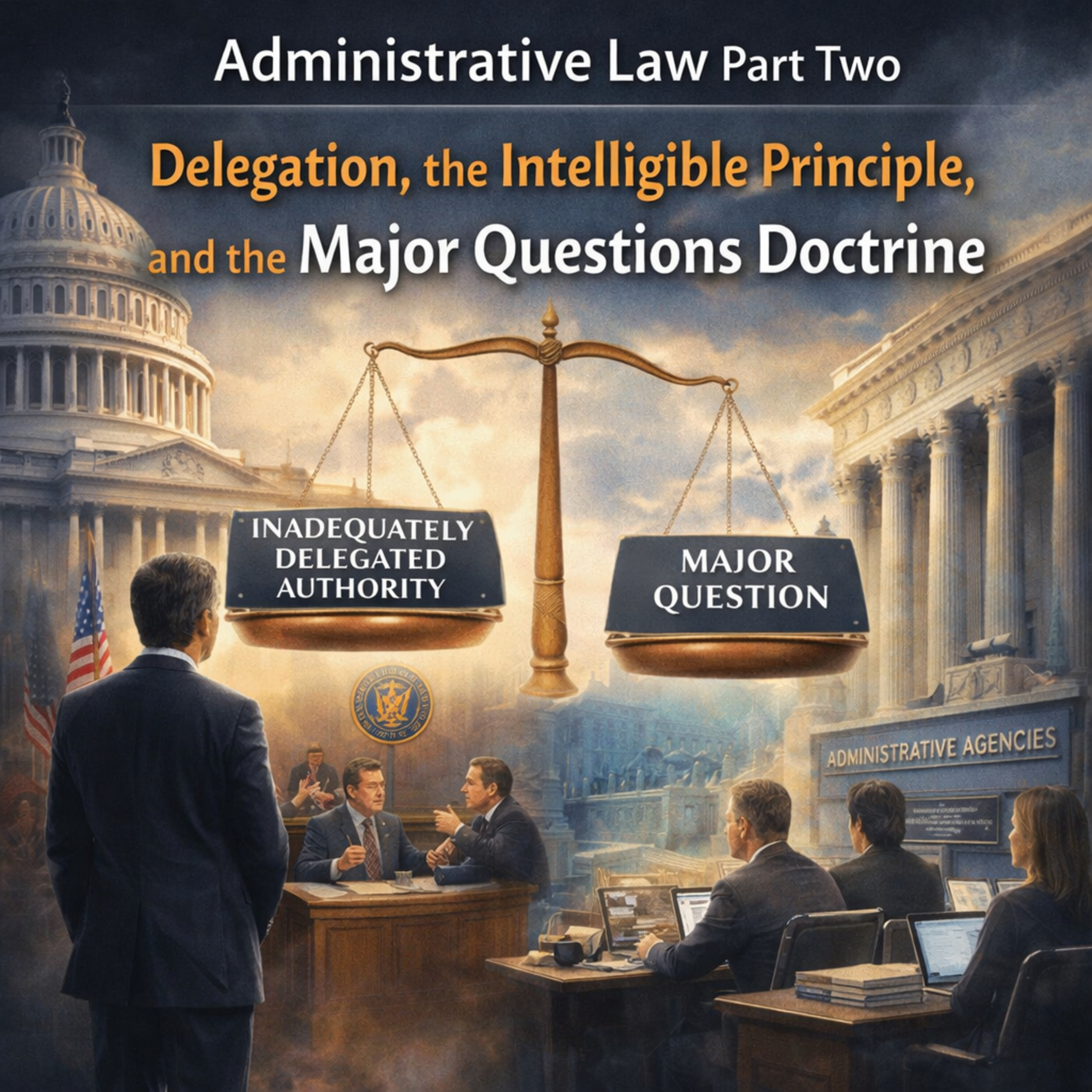
In 2020, a sudden, seemingly miraculous legal change allowed the CDC to halt evictions nationwide — an agency originally created to control pests and diseases. This bold move sparked a constitutional firestorm: How did a health agency acquire such sweeping powers without new legislation? We unravel this high-stakes story and explore how courts are now scrutinizing whether agencies operate within clear statutory boundaries, or overstep into legislative territory. Using key cases like West Virginia v. EPA, OSHA’s COVID mandates, and the CDC eviction moratorium, we dive into the modern doctrine that courts use to rein in agency power.
Discover how the Supreme Court’s major questions doctrine (MQD) shifts the way legal challenges are analyzed—requiring explicit, clear congressional authority for extremely consequential policies. We break down the five unmistakable indicators that signal when an agency’s action ventures into transformative policy and how courts respond. You’ll learn the hidden rules governing federalism, criminal penalties, and emergency powers, plus the nuanced ways contextual interpretation constrains broad language like “public interest” or “appropriate and necessary.” From complicated energy regulations to public health mandates, the patterns are crystal clear: agencies can only act boldly if Congress explicitly authorizes it.
Why does this matter? Because the rising wave of formalism in administrative law means the courts are increasingly demanding that agency powers be transparently and explicitly granted—holding the vast machinery of government accountable to fundamental constitutional principles. Mastering this doctrine isn’t just about passing exams; it’s about understanding who truly wields power in the modern state, and how legal guardrails protect our constitutional order.
Perfect for final exam prep, legal policymakers, or anyone eager to understand the sharply shifting landscape of administrative authority, this episode arms you with a step-by-step analytical blueprint. Grasp the historical evolution from the intelligible principle to the major questions doctrine, and see how the courts pin down the boundaries of administrative power in the 21st century. Don’t miss this essential deep dive into the core of constitutional law — where law, politics, and power collide.