Constitution Law Part Seven: Freedom of Religion and Grand Synthesis

Constitution Law Part Seven: Freedom of Religion and Grand Synthesis

Author: The Law School of America April 5, 2026 Duration: 58:44

This episode offers a comprehensive guide to approaching complex constitutional law questions on the bar exam. It breaks down the core filters and analyses needed to decode messy fact patterns, ensuring you’re equipped to identify issues efficiently and confidently.

Most law students stumble over the nuanced boundaries of the First Amendment’s religion clauses. This episode cuts through the confusion, revealing the precise diagnostic machine you need to master to navigate them—an analytical protocol that turns chaos into clarity. Whether you're staring down the bar exam or preparing for a complex constitutional law class, understanding this framework is your key to confidently dissecting even the messiest fact patterns.

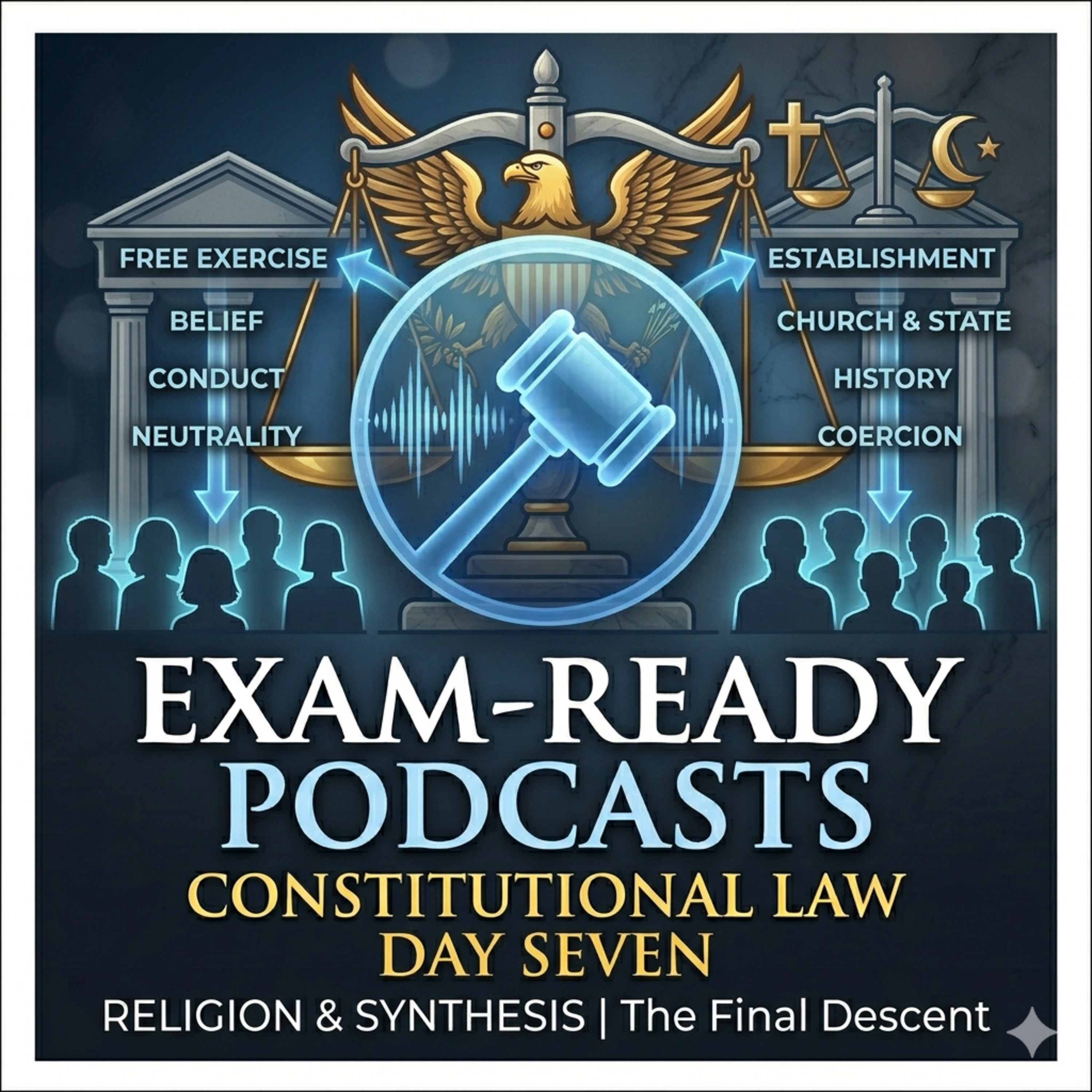
We dive deep into the core tension between the Establishment and Free Exercise Clauses—how the government can’t help religion without risking favoritism, but also can't hurt it without crossing constitutional lines. You’ll discover the modern Supreme Court’s rejection of the Lemon Test, replacing it with a historical and tradition-based approach. This shift makes the analysis more straightforward: ask if the law has a secular purpose, fits historical practices, and avoids coercion—especially in digital or virtual spaces.

We break down the Smith Rule, which lets neutral, generally applicable laws pass muster—even if they incidentally burden religious conduct—plus the critical targeting exception that triggers strict scrutiny. You’ll learn to identify when laws are secretly designed to target or discriminate against religion, and how to spot the “administrative discretion trap,” where formal mechanisms allow favoritism that invalidates otherwise neutral laws.

Plus, we explore the labyrinth of structural filters—standing, federalism, state action—and how they set the stage before rights issues even come into play. From procedural due process to equal protection and substantive due process, we show you how to methodically run each case through the right sequence, preventing common pitfalls and maximizing your exam points.

Finally, we synthesize everything into a unified, step-by-step protocol. This mental model transforms seemingly disconnected doctrines into a cohesive analytic machine—your ultimate weapon for every constitutional problem. Whether it’s a church display, a prayer in school, or a discriminatory law, you’ll be equipped to diagnose and analyze with precision and confidence.

Ideal for anyone facing the complexities of the First Amendment, this episode empowers you to see constitutional law as an integrated system—one you can master and deploy on exam day with laser focus. Prepare to walk the constitutional tightrope effortlessly, armed with the clarity and discipline needed to excel.

Ever wondered how the law really works but felt intimidated by dense textbooks and jargon? Law School, from The Law School of America, is here to change that. This podcast approaches legal education like a series of engaging conversations, breaking down the foundational principles of the American legal system into clear, manageable segments. Each episode focuses on a specific concept or area, building your comprehension step-by-step without overwhelming you. You'll hear straightforward explanations that connect theory to real-world application, making complex topics accessible whether you're a student, a professional in a related field, or simply a curious citizen. The goal is to demystify the law, transforming it from an abstract subject into a practical understanding you can use. By consistently tuning in, you gradually construct a solid framework of legal knowledge. This isn't about quick tricks; it's about dedicated, cumulative learning. The structure of the podcast is designed for steady progress, allowing listeners to absorb information at their own pace and truly integrate it. Think of it as an audio companion for your intellectual journey into jurisprudence, offering clarity and insight one episode at a time.
Author: Language: en-us Episodes: 100

Law School
Podcast Episodes
Family Law Part Two - Divorce, Annulment, and Separation [not-audio_url] [/not-audio_url]

Duration: 40:08
This conversation delves into the complexities of family law, specifically focusing on the dissolution of marriage. It covers essential topics such as jurisdiction, grounds for divorce, annulment, legal separation, and t…
Property Law Part Seven: Transfers of Property [not-audio_url] [/not-audio_url]

Duration: 47:17
This conversation delves into the intricate life cycle of real estate transactions, exploring the various phases from contract signing to closing and recording. It emphasizes the importance of understanding the chronolog…
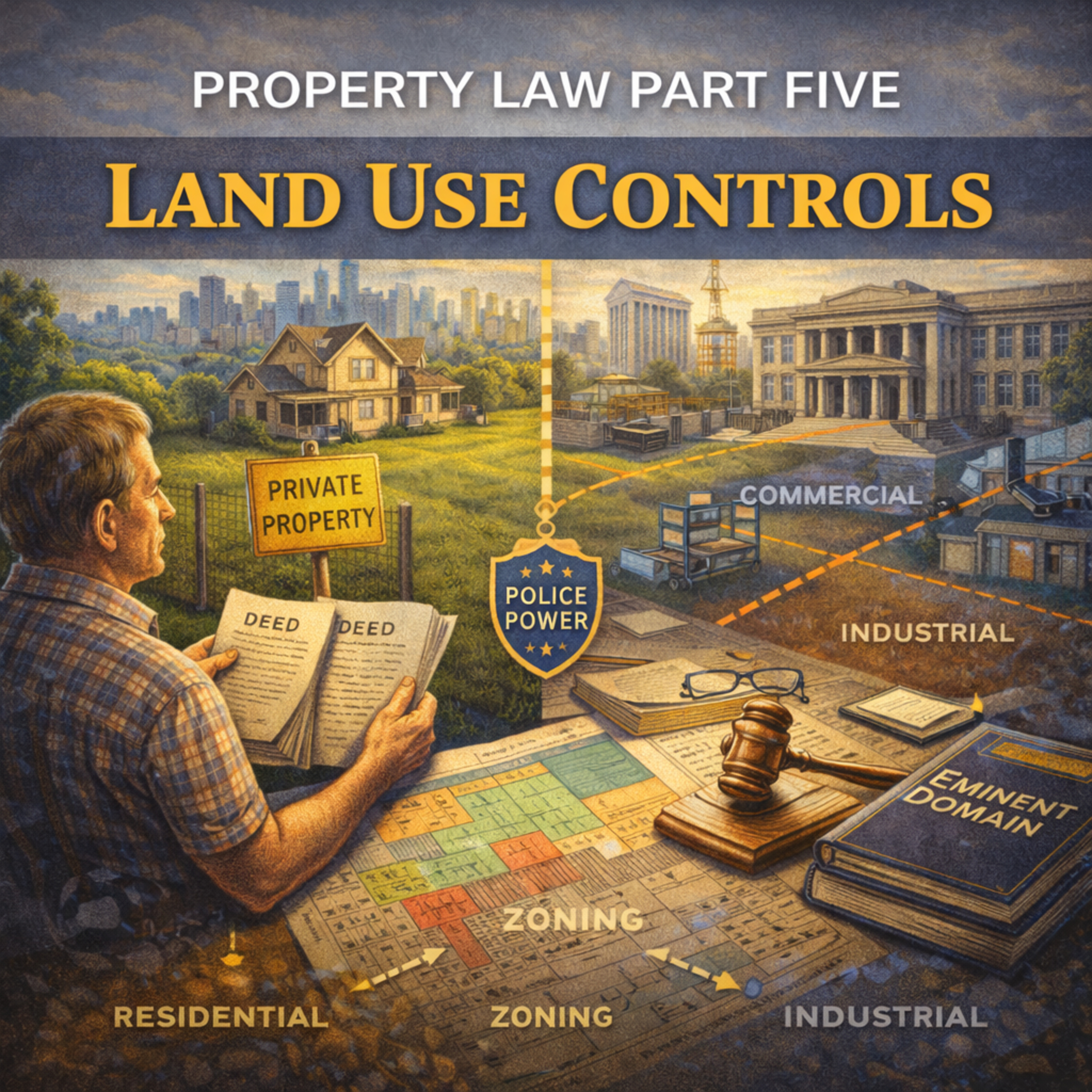
Property Law Part Five: Land Use Controls [not-audio_url] [/not-audio_url]

Duration: 50:06
This conversation delves into the complexities of land use controls, focusing on the interplay between individual property rights and government regulations. It explores the concept of police power, zoning laws, eminent…
Property Law Part Four: Landlord–Tenant Law [not-audio_url] [/not-audio_url]

Duration: 54:12
Property Law Chapter Four: Landlord–Tenant LawThis conversation delves into the complexities of landlord-tenant law, exploring the evolution of property law, the various types of leasehold estates, and the rights and res…
Property Law Part Three: Concurrent Ownership [not-audio_url] [/not-audio_url]

Duration: 41:40
Most people assume owning property together is simple—until the law reveals its chaotic, high-stakes complexity. If you think co-ownership is just "my house or yours," think again. One wrong step or misunderstood rule ca…
Property Law Part Two: Estates and Future Interest [not-audio_url] [/not-audio_url]

Duration: 50:39
This conversation delves into the complexities of property law, focusing on estates and future interests. It explores the foundational concepts of ownership, the intricacies of defeasible fees, life estates, and the rule…