Navigating the Complexities of the First Amendment's Religion Clauses
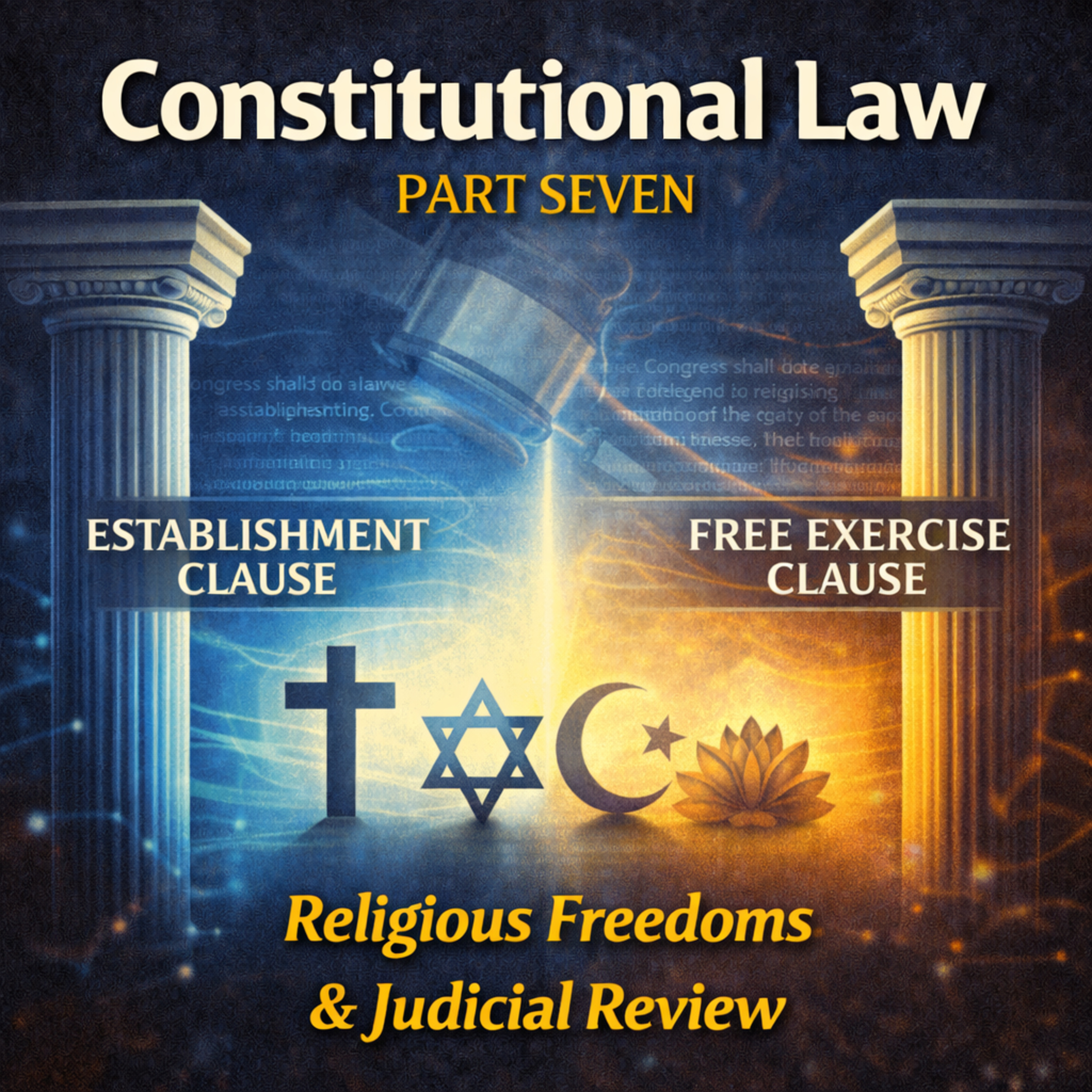
In this episode of the deep dive, we explore the complexities of the First Amendment's religion clauses, focusing on the Establishment Clause and the Free Exercise Clause. The discussion begins with the historical context and the evolving interpretations of these clauses, particularly the shift from the Lemon Test to a more historical analysis in modern jurisprudence. The hosts emphasized the importance of understanding the tension between government non-involvement in religion and the protection of individual religious practices, highlighting key cases that illustrate this dynamic.
The conversation delves into significant Supreme Court rulings, including the implications of Employment Division v. Smith, which altered the standard of review for free exercise claims, and the subsequent legislative responses like the Religious Freedom Restoration Act (RFRA) and the Religious Land Use and Institutionalized Persons Act (RLUIPA). The episode concludes with a discussion on the current landscape of religious freedoms, the shrinking 'play in the joints' between the two clauses, and the potential future of government involvement in religious matters, leaving listeners with thought-provoking questions about the balance of these constitutional rights.
The First Amendment's religion clauses, the Establishment Clause and the Free Exercise Clause, form a cornerstone of constitutional law, presenting a complex interplay between government neutrality and religious freedom. This blog post delves into the historical and modern interpretations of these clauses, exploring key legal tests like the Lemon Test and significant court cases that have shaped the current legal landscape.
Understanding the Establishment Clause
Historically, the Establishment Clause was interpreted through the lens of strict separation between church and state, epitomized by the Lemon Test. This three-pronged test evaluated whether a law had a secular purpose, its primary effect neither advanced nor inhibited religion, and it avoided excessive government entanglement with religion. However, modern jurisprudence has shifted towards a historical practices approach, examining whether government actions align with practices common at the nation's founding.
The Free Exercise Clause: A Roller Coaster of Legal Standards
The Free Exercise Clause has undergone significant changes, from the protective Sherbert-Yoder framework to the more restrictive Employment Division v. Smith decision. The latter established that neutral laws of general applicability do not violate the Free Exercise Clause, even if they incidentally burden religious practices. However, recent cases have introduced exceptions, allowing for strict scrutiny when laws target religion or provide secular exemptions but not religious ones.
Balancing Act: The Courts' Role
Courts are tasked with balancing the Establishment and Free Exercise Clauses, ensuring government neutrality while protecting religious freedom. This delicate act involves navigating the "play in the joints," the space where government action is neither required nor prohibited by the clauses. As legal interpretations evolve, the tension between these principles continues to shape the landscape of religious freedom in the United States.
The First Amendment's religion clauses remain a dynamic and challenging area of constitutional law. Understanding the historical context, key legal tests, and significant court cases is essential for navigating this complex field. As the legal landscape continues to evolve, the balance between government neutrality and religious freedom will remain a pivotal issue for courts and legal scholars alike.
First Amendment, Establishment Clause, Free Exercise Clause, Lemon Test, RFRA, constitutional law, Supreme Court, religious freedoms, legal analysis, law exam