Understanding the Mechanics of First Amendment Scrutiny
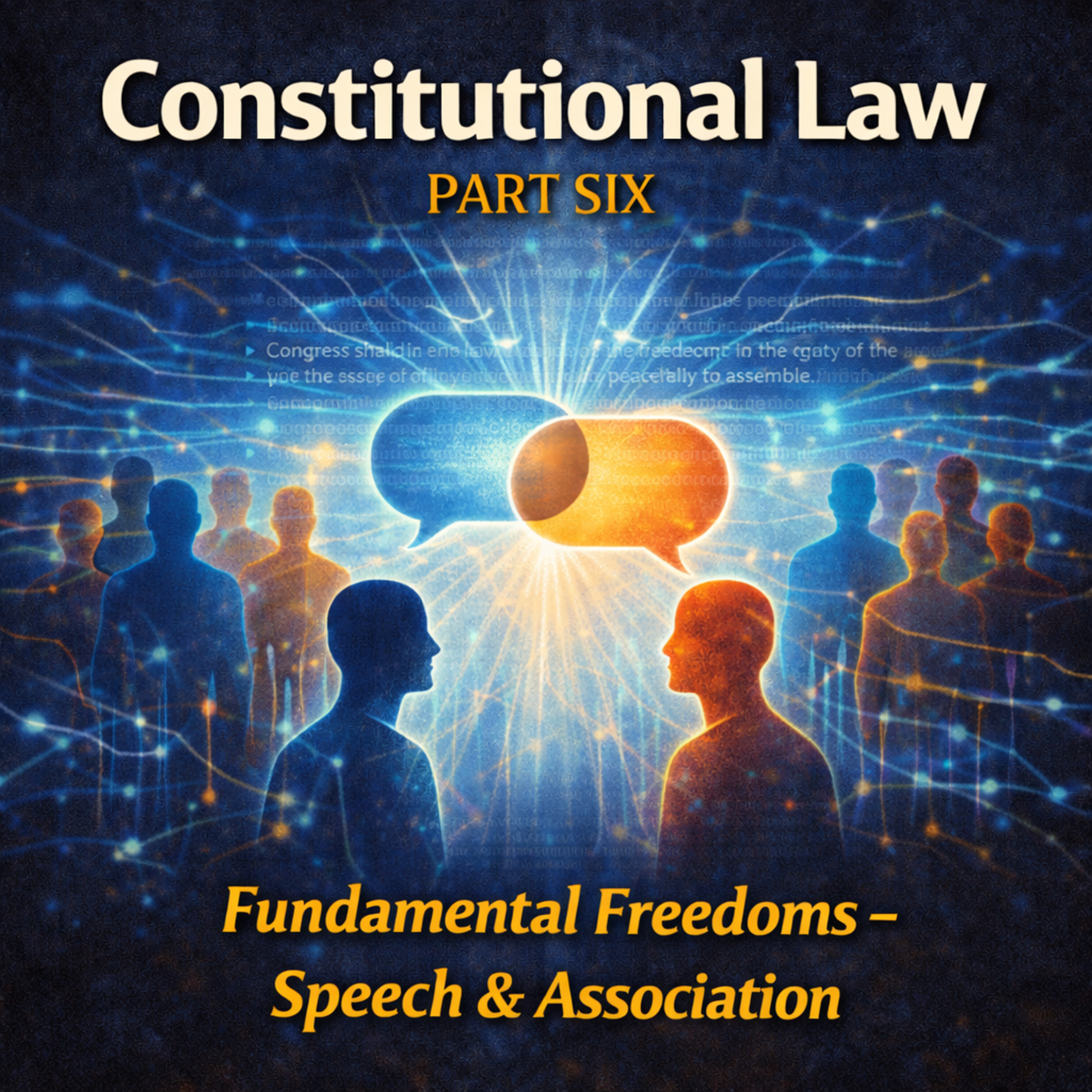
In this episode of "The Deep Dive," the hosts tackle the complexities of the First Amendment, focusing on fundamental freedoms of speech and association. He emphasizes that while the text of the Constitution appears absolute, the reality is far more intricate, requiring a mechanical understanding of legal principles. The hosts introduced a structured approach to analyzing speech-related cases, breaking down the process into modules that cover general principles, unprotected categories, symbolic speech, and the forum doctrine.They highlight the importance of distinguishing between content-based and content-neutral regulations, explaining the levels of scrutiny that apply to each. Throughout the discussion, they provide practical examples and case law to illustrate these concepts, ultimately aiming to equip listeners with a solid framework for understanding and applying First Amendment principles in legal contexts.
In the realm of constitutional law, the First Amendment stands as a beacon of freedom, yet its application is anything but straightforward. As we delve into the intricacies of First Amendment scrutiny, we uncover a labyrinth of doctrines that govern speech and association.
The Complexity of Free Speech: Many approach the First Amendment with the belief that it grants absolute freedom of speech. However, the reality is far more nuanced. The Supreme Court has established a framework that categorizes speech and applies varying levels of scrutiny based on content and context. This diagnostic approach is akin to a flowchart, guiding legal minds through the maze of constitutional analysis.
Content-Based vs. Content-Neutral: A pivotal distinction in First Amendment scrutiny is whether a law is content-based or content-neutral. Content-based laws, which target the message itself, are subject to strict scrutiny—a rigorous test that few laws survive. In contrast, content-neutral laws, which regulate the mechanics of speech, face intermediate scrutiny, allowing for more governmental leeway.
Unprotected Categories: Certain types of speech, such as incitement, obscenity, and true threats, fall outside the protective umbrella of the First Amendment. These unprotected categories allow the government to regulate speech that poses a direct threat to public safety or morality.
The Role of Expressive Association: The right to associate, though not explicitly stated in the Constitution, is a fundamental aspect of free speech. This right encompasses both the freedom to join with others to amplify a message and the freedom to exclude those who might dilute that message. The balance between association rights and anti-discrimination laws remains a contentious issue in constitutional law.
Navigating the complexities of First Amendment scrutiny requires a structured approach. By understanding the distinctions between content-based and content-neutral laws, recognizing unprotected categories, and appreciating the role of expressive association, legal practitioners can effectively analyze and argue First Amendment cases. As we continue to explore the boundaries of free speech, the principles of tolerance and robust debate remain at the heart of our constitutional framework.
Takeaways
'You have to treat it like a flow chart.'
'The government needs a really, really good reason.'
'The cardinal sin of the First Amendment is viewpoint discrimination.'
'The First Amendment prefers tolerance over coercion.'
'If you follow that path, you won't get lost in the weeds of your own feelings about the speech.'
First Amendment, freedom of speech, freedom of association, legal analysis, constitutional law, speech regulation, unprotected speech, case law, legal framework, exam strategy