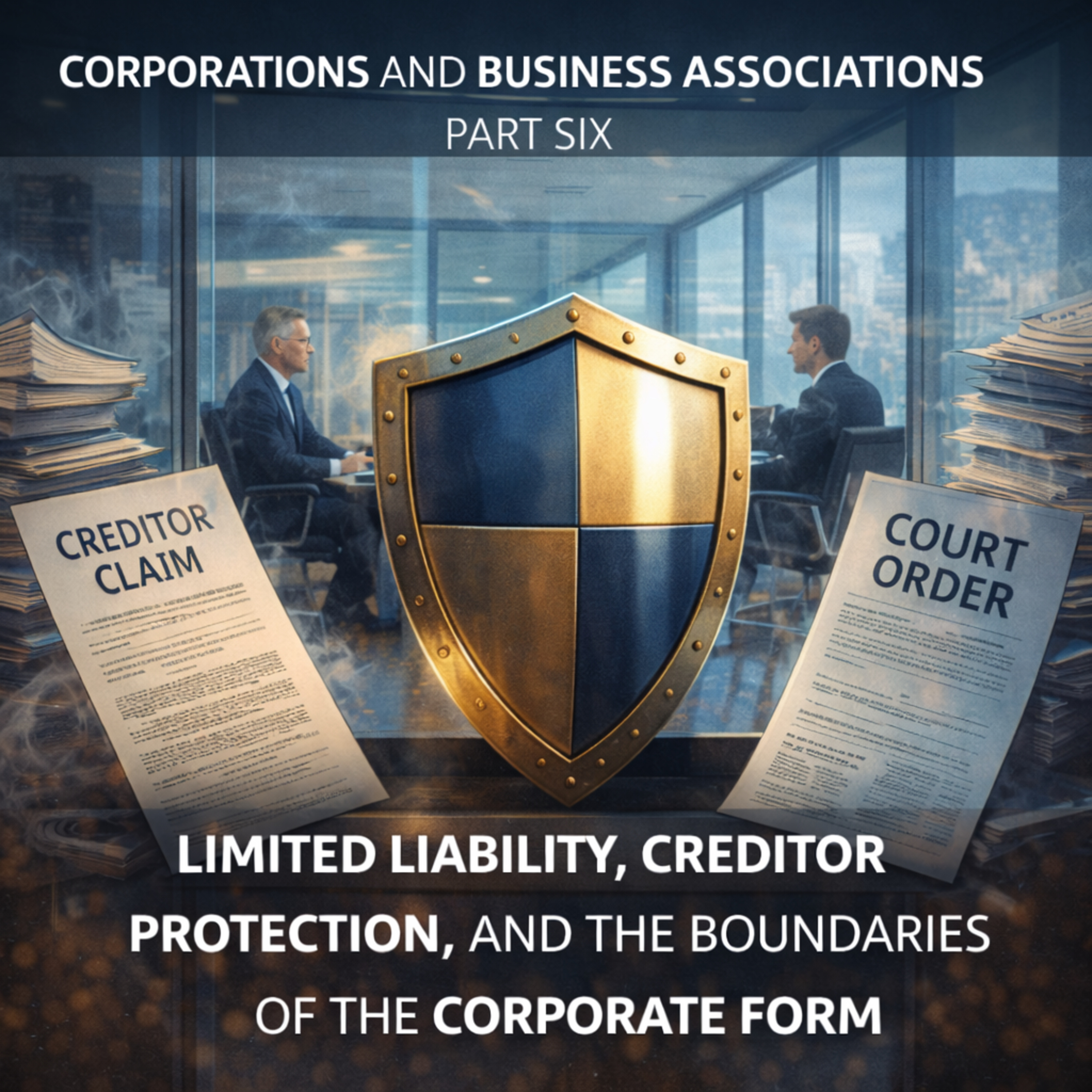
Corporations and Business Associations Part Six: Limited Liability, Creditor Protection, and the Boundaries of the Corporate Form

Corporations and Business Associations Part Six: Limited Liability, Creditor Protection, and the Boundaries of the Corporate Form

Author: The Law School of America February 7, 2026 Duration: 46:09

Limited Liability, Creditor Protection, and the Boundaries of the Corporate Form.


1. Philosophical and Legal Foundations

Federal securities regulation in the United States is anchored in a disclosure-based regulatory philosophy. Rather than mandating business outcomes (merit review), the law aims to ensure that investors receive accurate and timely information to make informed decisions. This dual regime divides authority: state law governs internal corporate governance (fiduciary duties like loyalty and care), while federal law regulates the corporation's interface with the market.

The primary federal statutes are the Securities Act of 1933, which focuses on the initial issuance and registration of securities (the primary market), and the Securities Exchange Act of 1934, which governs ongoing reporting and trading (the secondary market). At the issuance stage, companies must file registration statements (e.g., Form S-1) detailing their business, financial health, and risk factors. Once public, they must provide periodic updates via annual (10-K) and quarterly (10-Q) reports.

2. The Blurring Line Between Corporate and Securities Law

While the two fields were traditionally separate, the boundary has eroded due to federal legislative responses to corporate crises.

• Structural Regulation: Statutes like the Sarbanes-Oxley Act of 2002 (SOX) and the Dodd-Frank Act of 2010 shifted federal law into the "internal affairs" of the corporation. For example, SOX mandated independent audit committees and internal control certifications, while Dodd-Frank introduced "say-on-pay" advisory votes on executive compensation.

• Ownership vs. Trading: Some scholars argue that the distinction is better defined by the phase of investment: securities law protects investors while they are "traders" (ensuring fair valuation), while corporate law protects them as "owners" (protecting them from midstream misconduct that reduces firm value).

3. Insider Trading and Materiality

Federal law prohibits insider trading—trading on material non-public information in breach of a duty of trust. Two primary theories exist:

• Classical Theory: A breach of duty to the corporation's own shareholders.

• Misappropriation Theory: A breach of duty to the source of the information, even if that source is not the issuer of the traded security.

The unifying principle in these cases is materiality, defined from the perspective of a "reasonable investor". Information is material if there is a substantial likelihood that its disclosure would significantly alter the "total mix" of information available.

4. Enforcement and Detection

The enforcement architecture relies on both public action by the SEC and private litigation.

• Litigation Reform: Due to concerns over "frivolous" class actions, Congress passed the Private Securities Litigation Reform Act of 1995 (PSLRA) and the Securities Litigation Uniform Standards Act of 1998 (SLUSA) to heighten pleading standards and limit the use of state courts for securities fraud claims.

• Technological Detection: Modern surveillance uses machine learning and dimensionality reduction (such as Principal Component Analysis and Autoencoders) to identify anomalous trading profiles that deviate from peer behavior around Price Sensitive Events (PSEs), such as takeover bids.

5. Corporate Governance and Power Imbalances

The sources highlight a systemic imbalance of power in favor of management over shareholders and boards.

• Agency Costs: Dispersed ownership leads to "costs of agency," where managers may prioritize their own interests (such as short-term share price maximization for bonuses) over long-term shareholder value.

• Board Independence: Reform efforts have sought to empower independent directors and audit committees to act as guardians of accountability, though critics argue that as long as management controls the nomination process, true independence remains difficult to achieve.

Ever wondered how the law really works but felt intimidated by dense textbooks and jargon? Law School, from The Law School of America, is here to change that. This podcast approaches legal education like a series of engaging conversations, breaking down the foundational principles of the American legal system into clear, manageable segments. Each episode focuses on a specific concept or area, building your comprehension step-by-step without overwhelming you. You'll hear straightforward explanations that connect theory to real-world application, making complex topics accessible whether you're a student, a professional in a related field, or simply a curious citizen. The goal is to demystify the law, transforming it from an abstract subject into a practical understanding you can use. By consistently tuning in, you gradually construct a solid framework of legal knowledge. This isn't about quick tricks; it's about dedicated, cumulative learning. The structure of the podcast is designed for steady progress, allowing listeners to absorb information at their own pace and truly integrate it. Think of it as an audio companion for your intellectual journey into jurisprudence, offering clarity and insight one episode at a time.
Author: Language: en-us Episodes: 100

Law School
Podcast Episodes
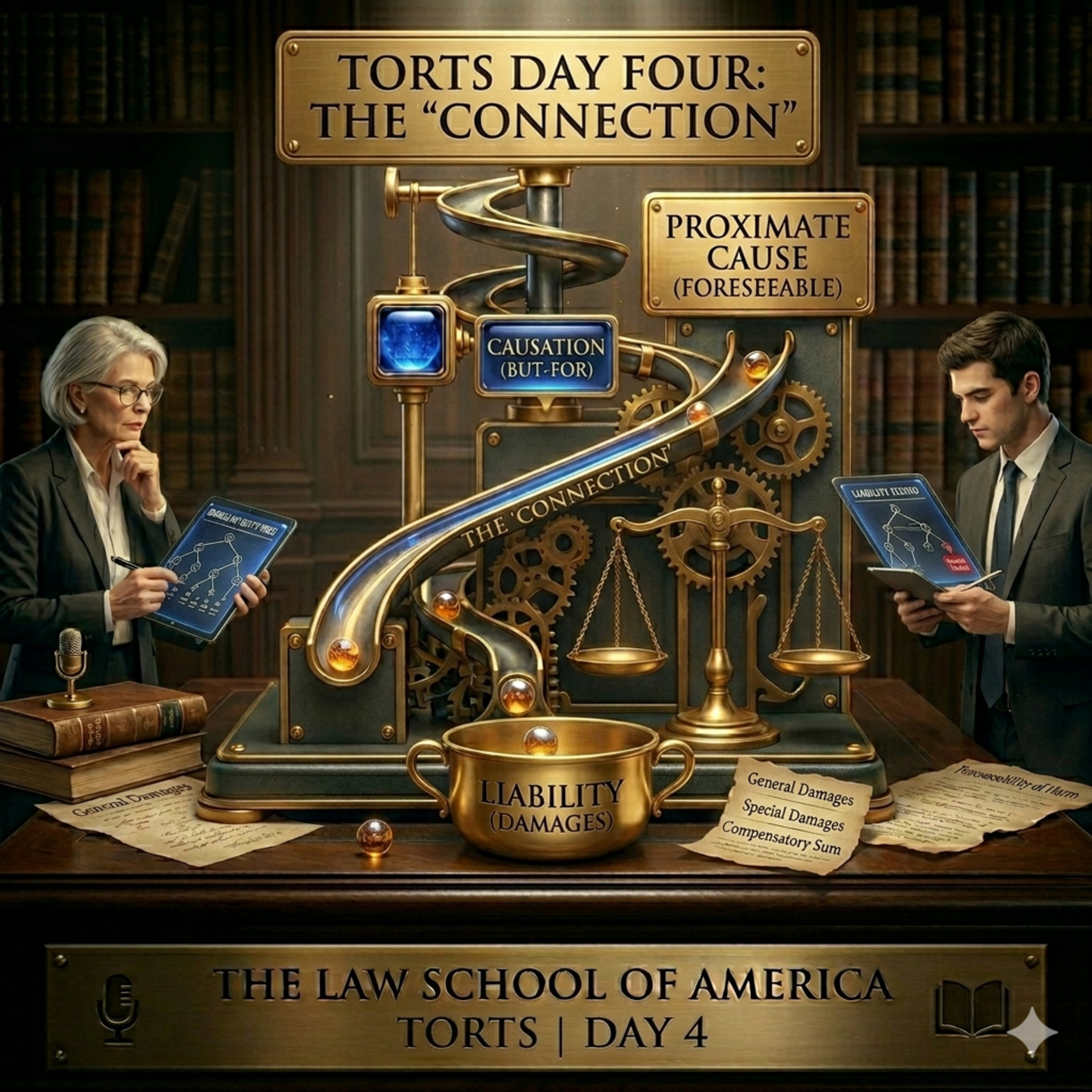
Torts Day Four: The "Connection" [not-audio_url] [/not-audio_url]

Duration: 58:32
In this episode, we explore the core principles and intricate mechanics of tort law, focusing on how courts connect careless acts to injuries and assign responsibility. From the factual causation to the nuanced doctrines…
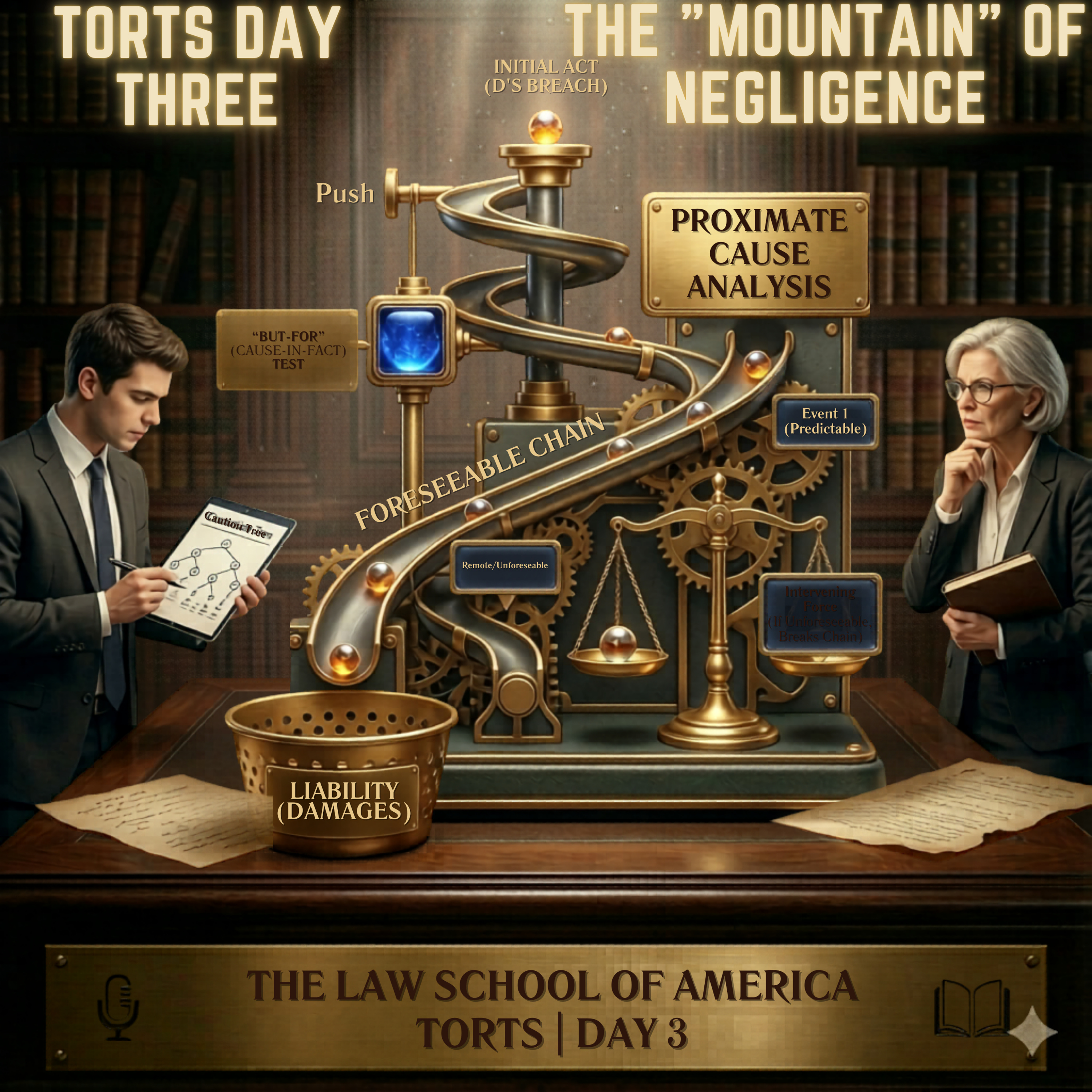
Torts Day Three: The "Mountain" of Negligence [not-audio_url] [/not-audio_url]

Duration: 1:01:53
In this episode, we explore the fundamental doctrines of negligence—the most crucial foundation of personal injury law—and decode how courts determine fault through duty and breach analysis. Whether you're a law student,…
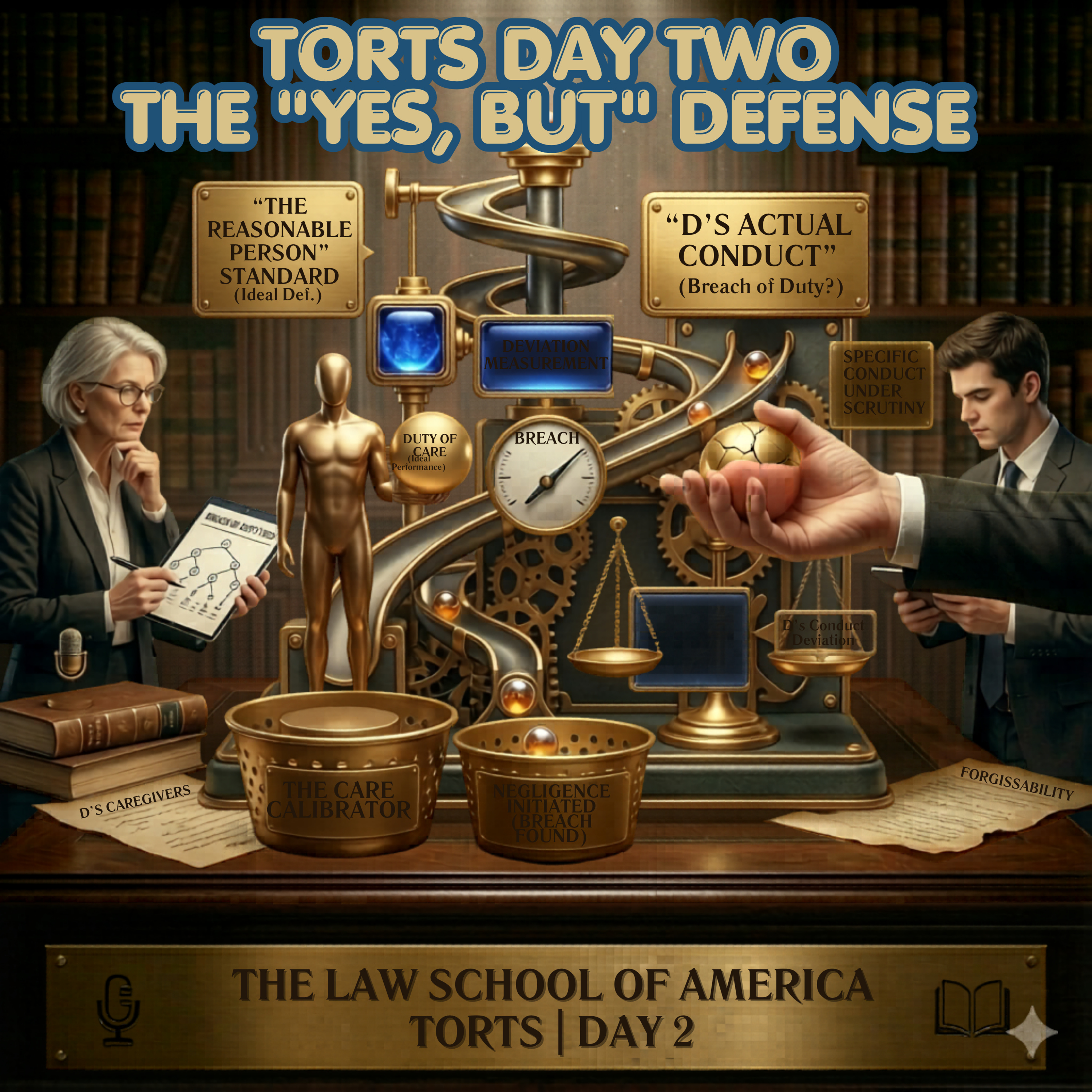
Torts Day Two: The "Yes, But" Defense [not-audio_url] [/not-audio_url]

Duration: 1:03:03
In this episode, we delve into the strategic complexity of affirmative defenses in tort law. Understanding how and when these shields apply can turn a losing case into a victory, or vice versa. We explore key defenses li…
Torts Day One: The Power of Intent [not-audio_url] [/not-audio_url]

Duration: 58:52
This episode breaks down the core principles of intentional torts, from the foundational engine of volitional acts and intent to the nuanced doctrine of transferred intent. Whether you're preparing for law school exams o…
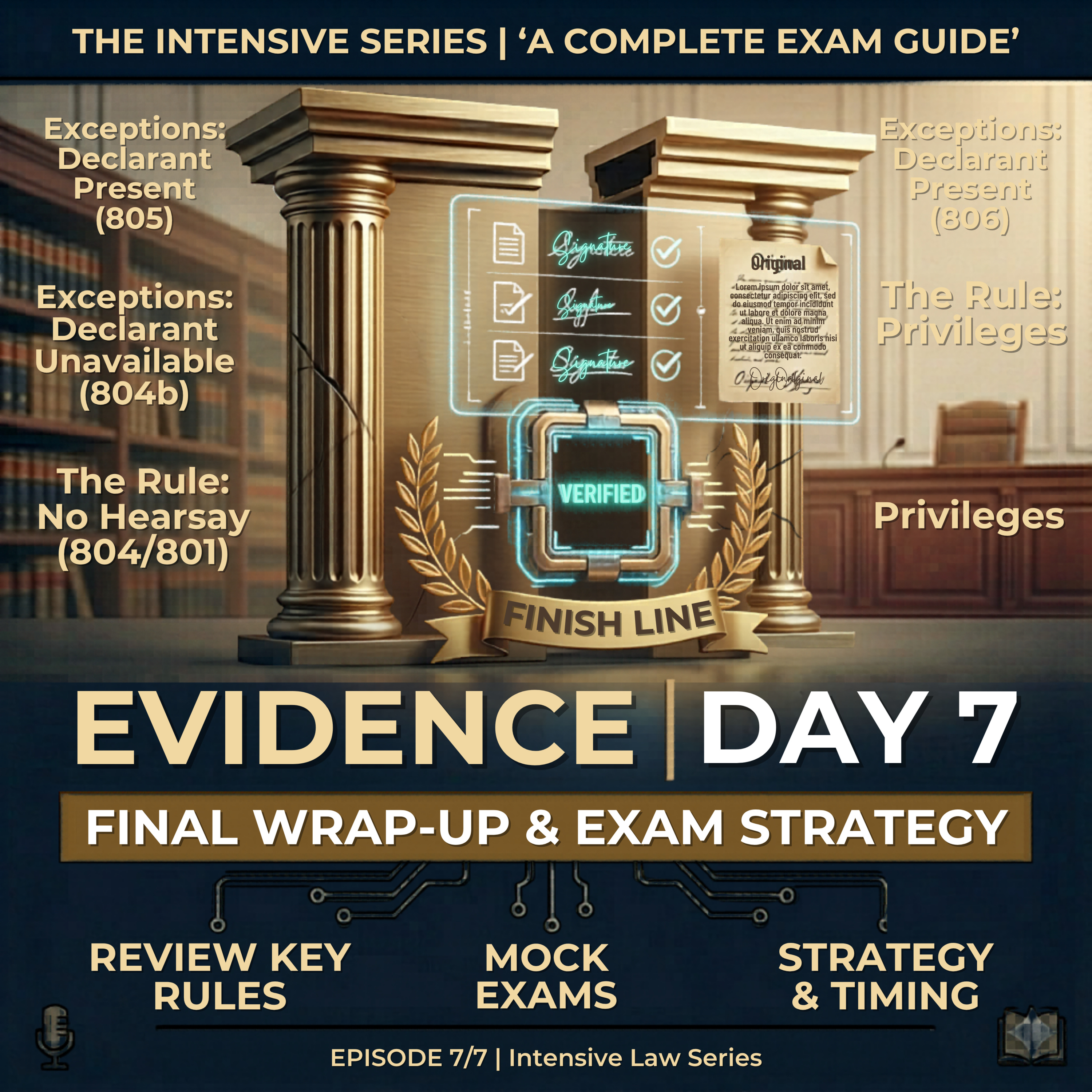
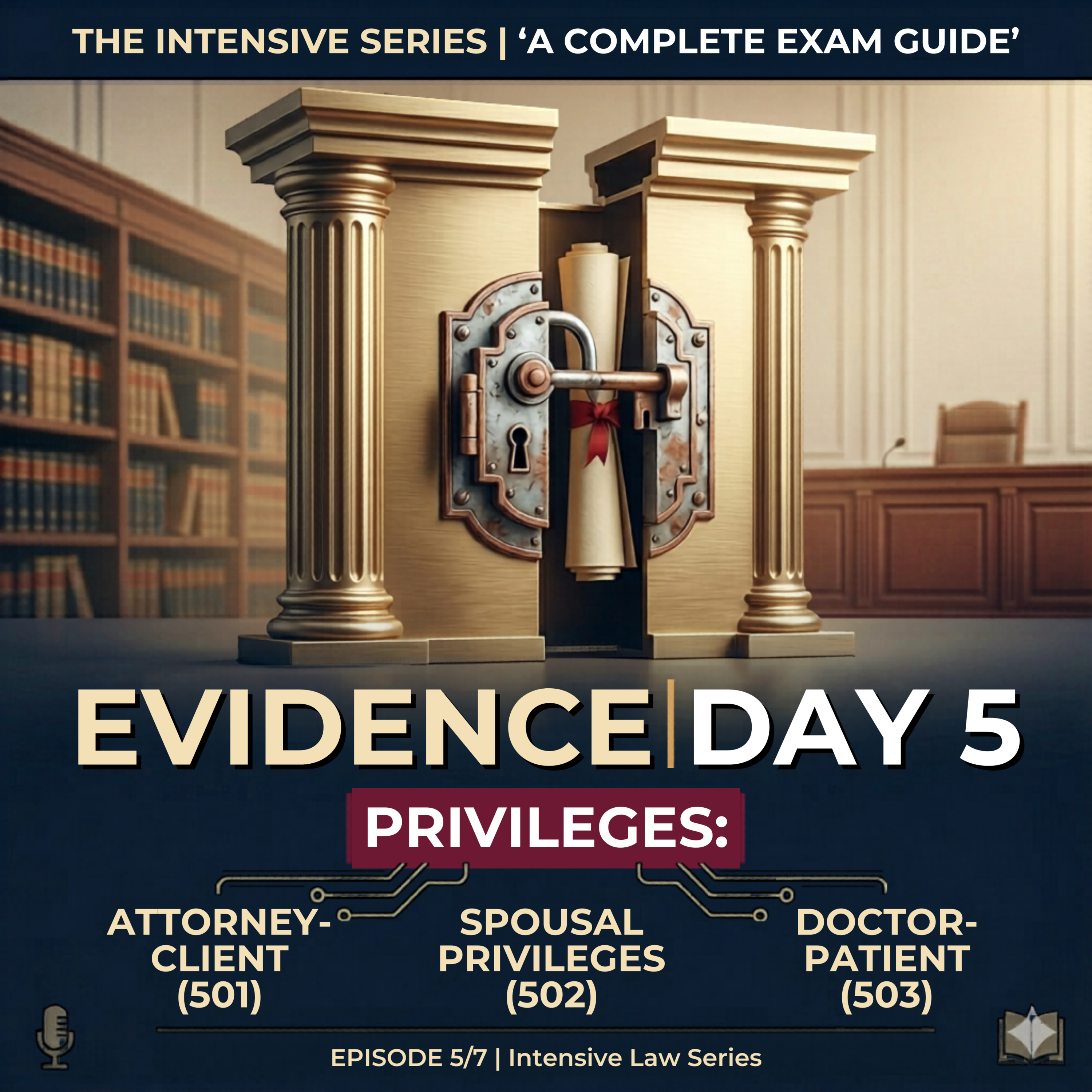
Evidence Day Seven: The Vault and the Final Machine [not-audio_url] [/not-audio_url]

Duration: 1:26:54
Prepare for your next exam or courtroom with a systematic framework that demystifies the complexity of evidence law. In this episode, we dissect the layered process of evaluating evidence—from privileges and presumptions…
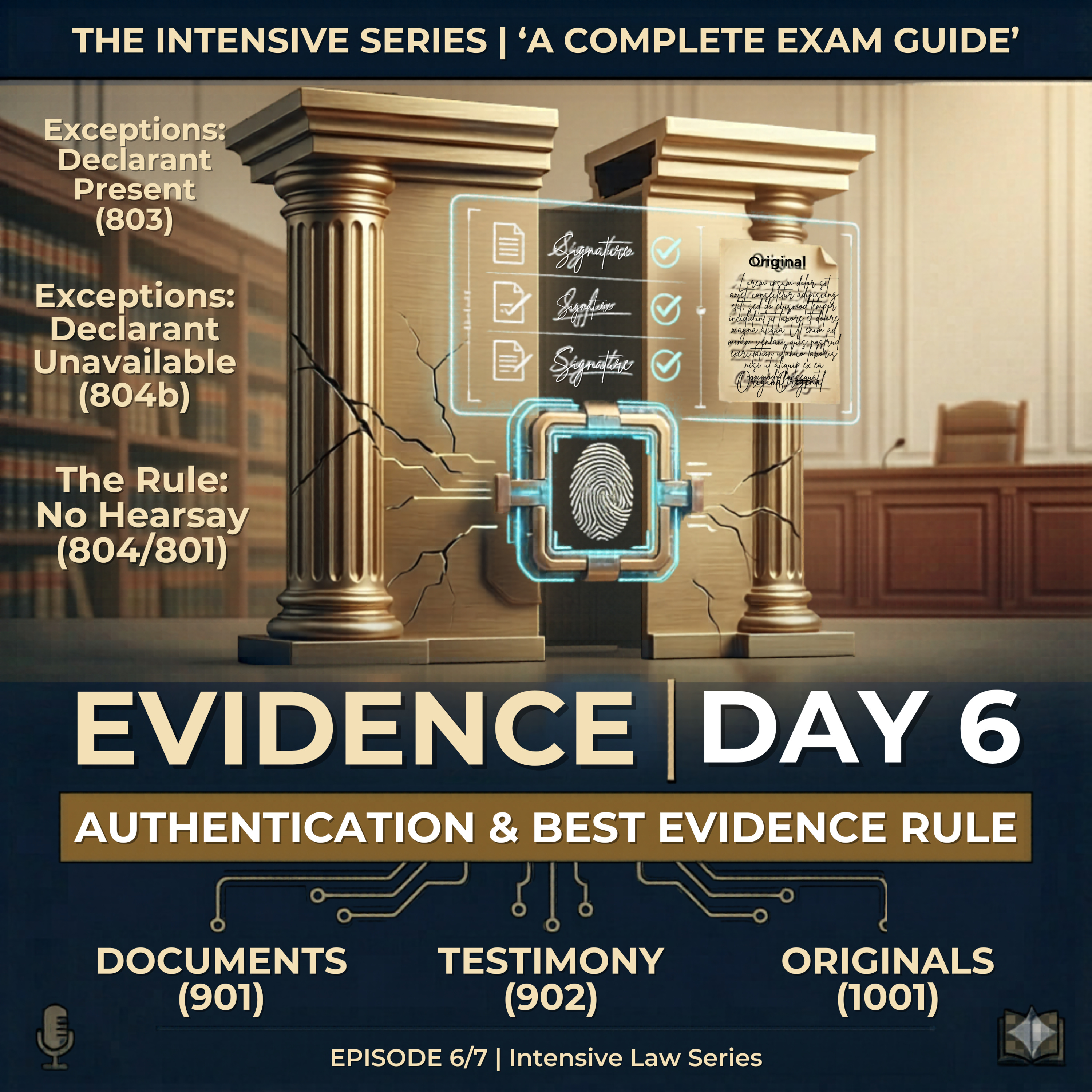
Evidence Day Six: The Container and the Key [not-audio_url] [/not-audio_url]

Duration: 57:07
This episode takes you through the rigorous process of introducing physical evidence in court, breaking down complex rules with clear analogies and real-world examples. Whether you're preparing for the bar exam or seekin…
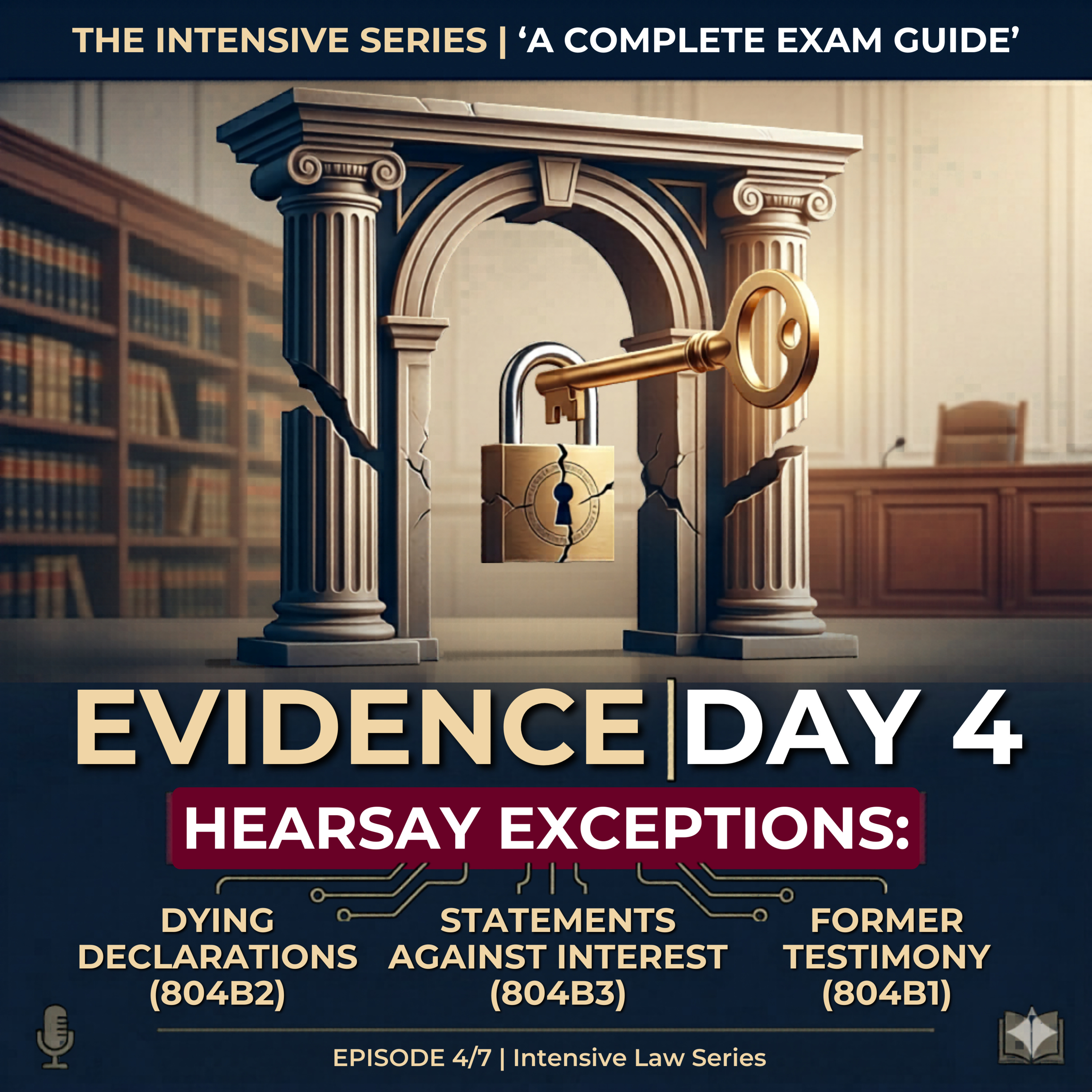
Evidence Day Five: The Hearsay Exceptions [not-audio_url] [/not-audio_url]

Duration: 1:07:12
In this deep dive into evidence law, we explore how courts differentiate between trustworthy and unreliable out-of-court statements through rules, doctrines, and constitutional safeguards. If you're preparing for a law e…
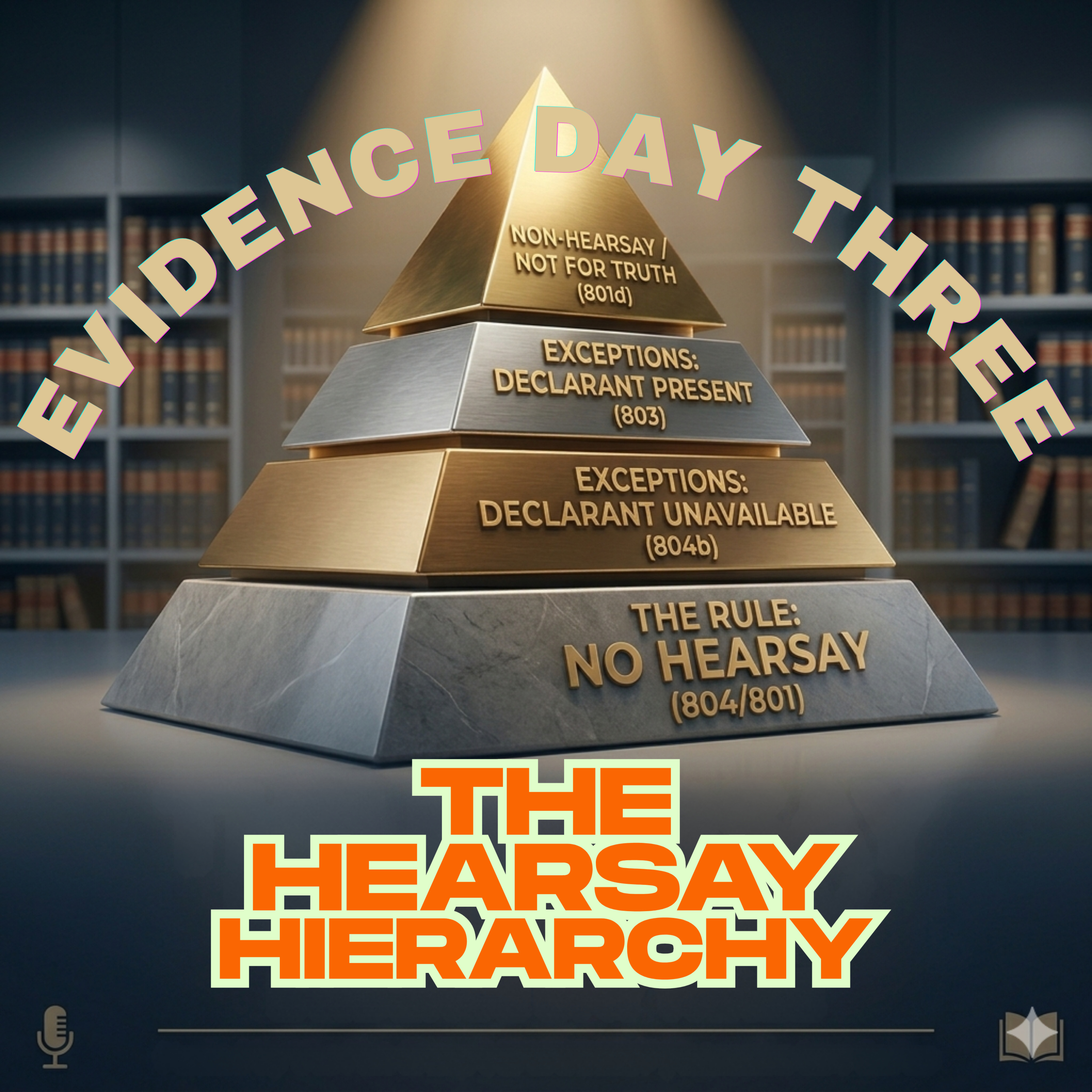
Evidence Day Four: The Hearsay Gauntlet [not-audio_url] [/not-audio_url]

Duration: 1:01:34
In this episode, we demystify the complex world of hearsay evidence, turning what often feels like an insurmountable maze into a clear, actionable framework. Whether you're a law student, a lawyer, or just a curious mind…
Evidence Day Three: The Witness Clinic [not-audio_url] [/not-audio_url]

Duration: 1:06:48
In this episode, we delve into the foundational pillars of witness testimony, unraveling the complexities of competency, memory, and the art of impeachment. Designed to equip law students and future lawyers, this session…
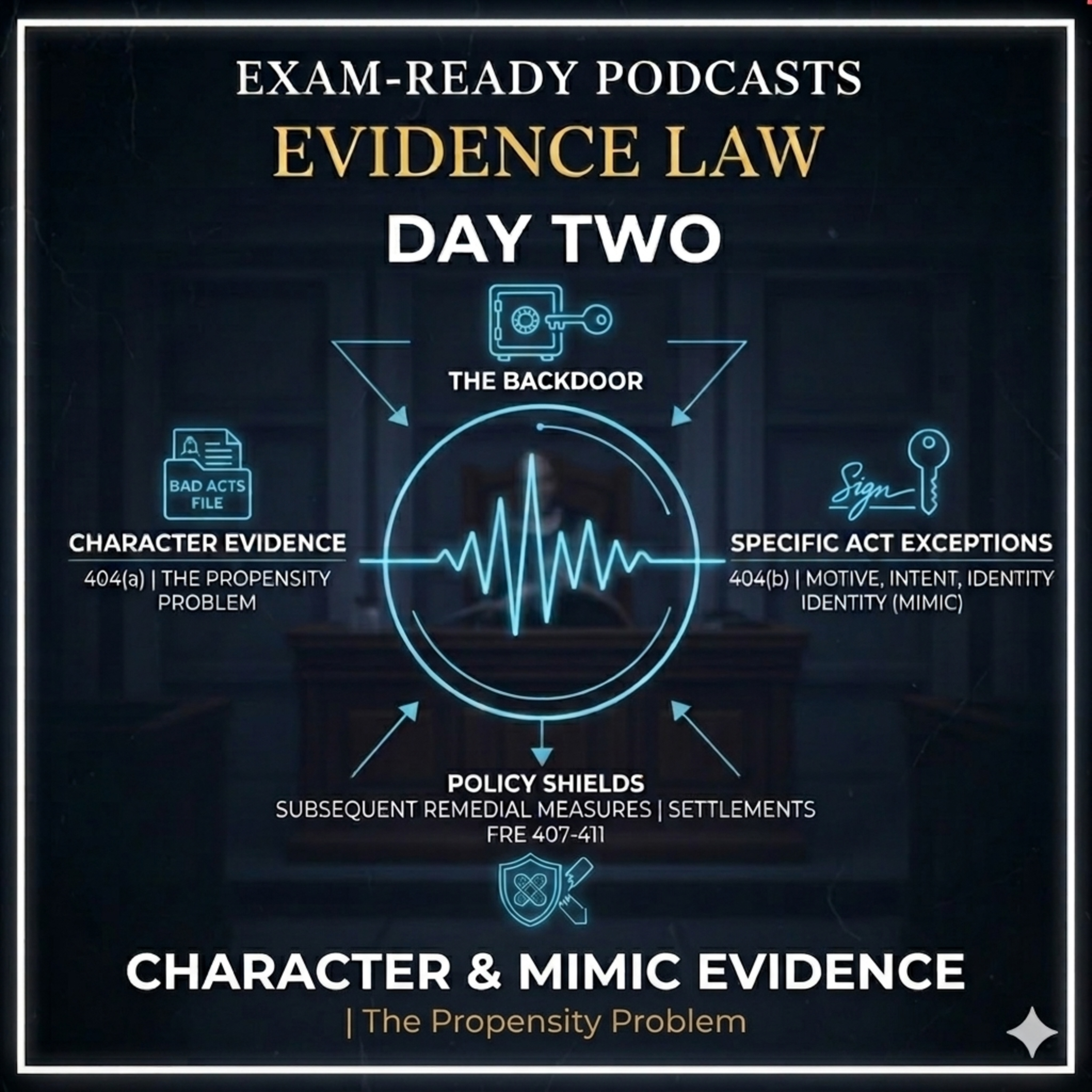
Evidence Day Two: The Character Assassination Clinic [not-audio_url] [/not-audio_url]

Duration: 1:01:41
In this episode, we explore the intricate landscape of character evidence within U.S. law, emphasizing how rules and exceptions are designed to balance fairness with societal interests. Whether you're a law student or a…