Corporations and Business Associations Part Two: Fiduciary Duties of Directors and Officers

Corporations and Business Associations Part Two: Fiduciary Duties of Directors and Officers

Author: The Law School of America February 3, 2026 Duration: 45:58

Understanding Fiduciary Duties and the Business Judgment Rule: A Deep Dive


This conversation delves into the intricate framework of fiduciary duties in corporate law, focusing on the duties of care, loyalty, and oversight. It explores the implications of these duties for directors and officers, the standards of review applied by courts, and the evolving landscape of corporate governance, particularly in light of recent legal developments. The discussion emphasizes the importance of process, the handling of conflicts of interest, and the responsibilities of controlling stockholders, providing a comprehensive overview for law students and practitioners alike.


In the world of corporate law, fiduciary duties form the backbone of governance, ensuring that directors and officers act in the best interests of the corporation and its shareholders. These duties are the legal glue that aligns the interests of managers (agents) with those of the shareholders (principals), addressing the classic agency problem.


The Duty of Care and the Business Judgment Rule

The duty of care requires directors to act with the diligence of a reasonably prudent person. It's not about being right all the time but about being informed and deliberative. The business judgment rule (BJR) serves as a protective shield, presuming that directors act on an informed basis, in good faith, and in the best interest of the company. This presumption encourages risk-taking, essential for innovation and growth, by protecting directors from liability for honest mistakes.


The Duty of Loyalty and Conflicts of Interest

The duty of loyalty demands that directors avoid conflicts of interest and self-dealing. When a director's loyalty is questioned, the court applies the stringent "entire fairness" standard. However, conflicted transactions can be "cleansed" through approval by disinterested directors or shareholders, shifting the burden back to the plaintiff.


Oversight and the Caremark Standard

The duty of oversight, highlighted in the Caremark case, focuses on a board's responsibility to monitor corporate affairs. This duty is notoriously difficult to breach, requiring proof of bad faith or a conscious disregard of duty. Recent cases like Marchand v. Barnhill have shown that courts are willing to hold boards accountable for failing to monitor mission-critical risks.


Conclusion

Navigating fiduciary duties requires a keen understanding of the standards of review and the procedural safeguards available. As corporate law evolves, striking a balance between managerial freedom and accountability remains a dynamic and fascinating challenge.


Takeaways

Fiduciary duties are essential to corporate governance.

The separation of ownership and control creates agency problems.

Directors owe duties of care and loyalty to the corporation.

The business judgment rule protects directors from liability for honest mistakes.

Gross negligence is the standard for duty of care breaches.

Conflicts of interest must be disclosed and can be cleansed through proper procedures.

The duty of oversight requires active monitoring of corporate affairs.

Controlling stockholders have fiduciary duties to minority shareholders.

Recent cases have tightened standards for directors and controlling shareholders.

A strategic framework is crucial for analyzing corporate law issues.


fiduciary duties, corporate law, duty of care, duty of loyalty, business judgment rule, oversight, controlling stockholders, MFW framework, Delaware law, corporate governance

Ever wondered how the law really works but felt intimidated by dense textbooks and jargon? Law School, from The Law School of America, is here to change that. This podcast approaches legal education like a series of engaging conversations, breaking down the foundational principles of the American legal system into clear, manageable segments. Each episode focuses on a specific concept or area, building your comprehension step-by-step without overwhelming you. You'll hear straightforward explanations that connect theory to real-world application, making complex topics accessible whether you're a student, a professional in a related field, or simply a curious citizen. The goal is to demystify the law, transforming it from an abstract subject into a practical understanding you can use. By consistently tuning in, you gradually construct a solid framework of legal knowledge. This isn't about quick tricks; it's about dedicated, cumulative learning. The structure of the podcast is designed for steady progress, allowing listeners to absorb information at their own pace and truly integrate it. Think of it as an audio companion for your intellectual journey into jurisprudence, offering clarity and insight one episode at a time.
Author: Language: en-us Episodes: 100

Law School
Podcast Episodes
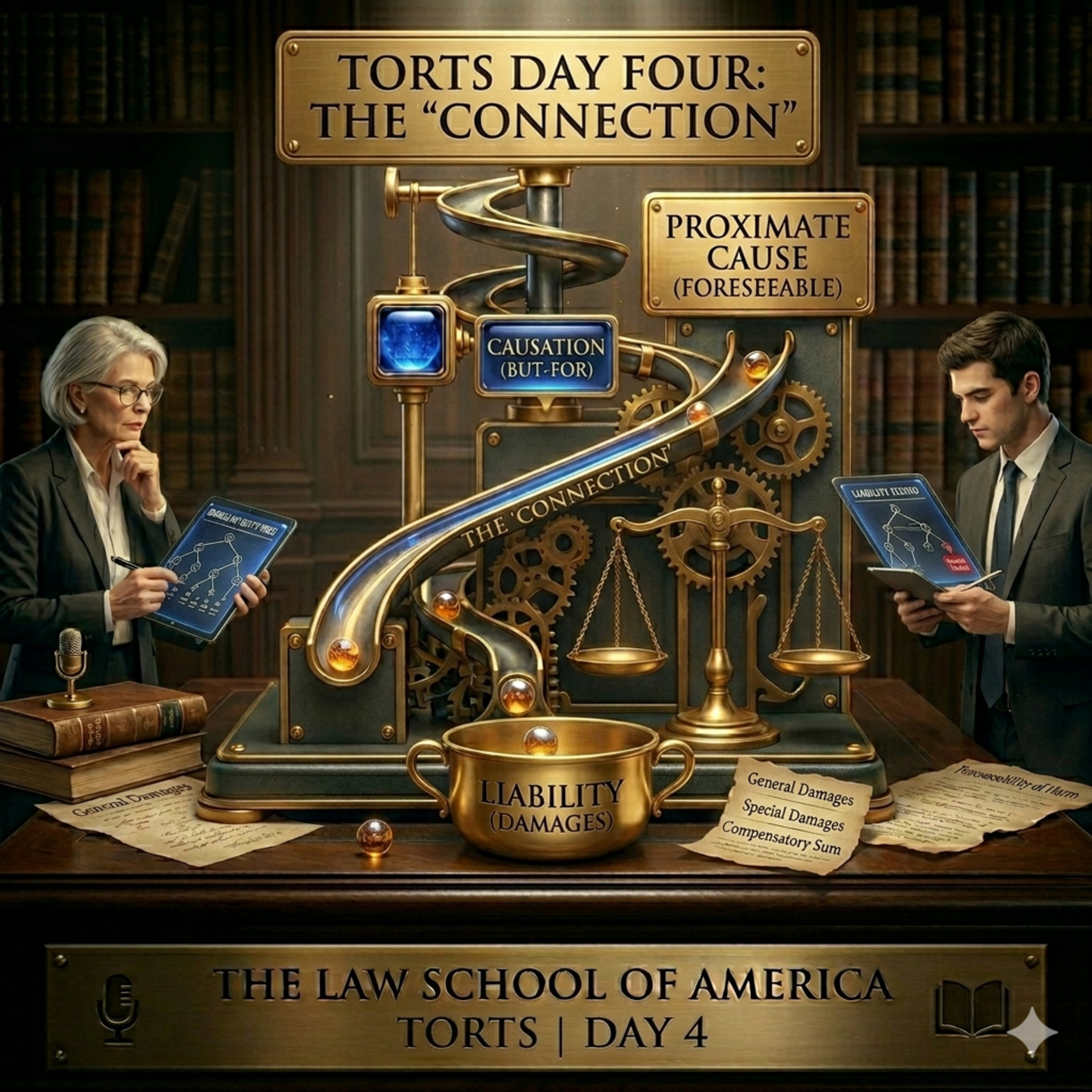
Torts Day Four: The "Connection" [not-audio_url] [/not-audio_url]

Duration: 58:32
In this episode, we explore the core principles and intricate mechanics of tort law, focusing on how courts connect careless acts to injuries and assign responsibility. From the factual causation to the nuanced doctrines…
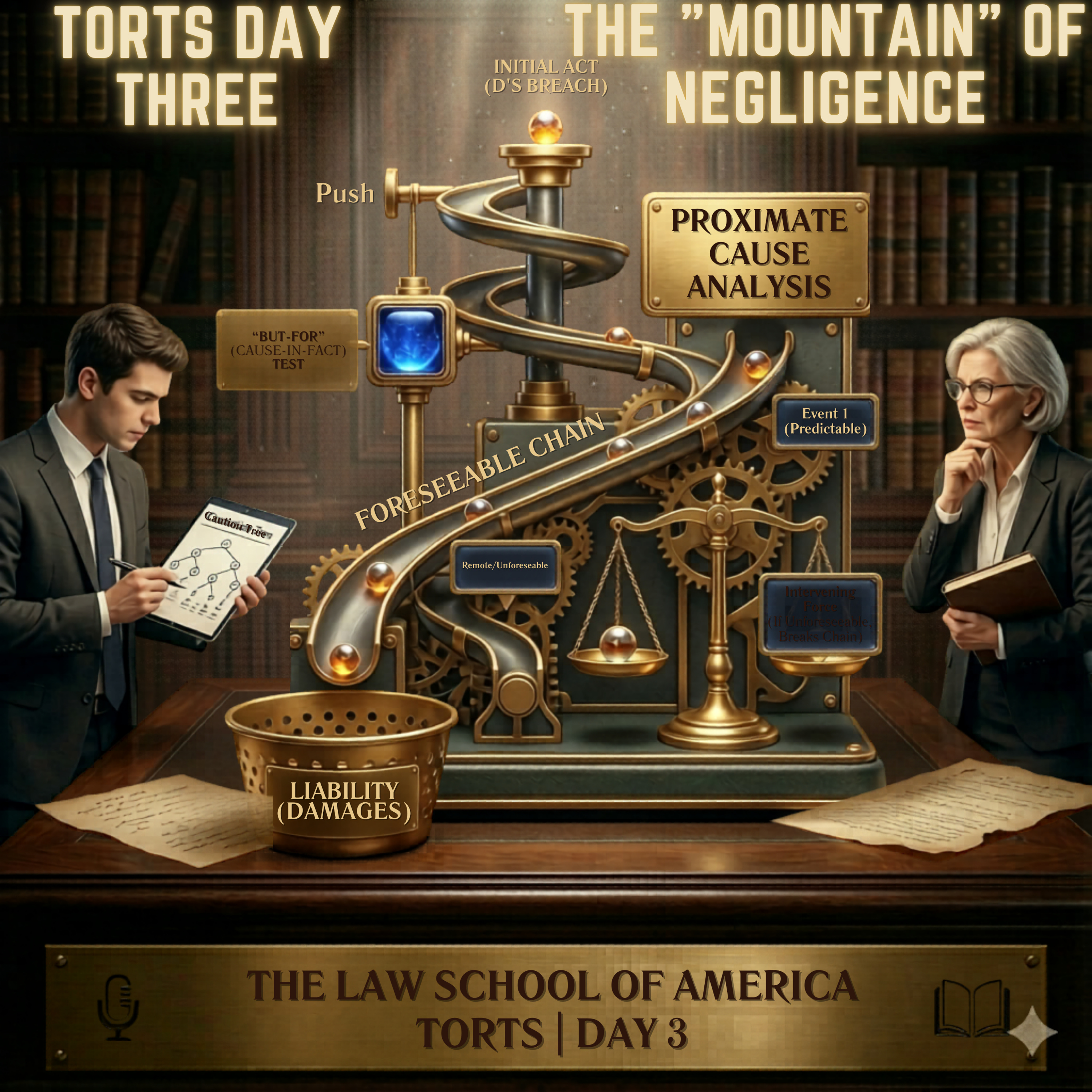
Torts Day Three: The "Mountain" of Negligence [not-audio_url] [/not-audio_url]

Duration: 1:01:53
In this episode, we explore the fundamental doctrines of negligence—the most crucial foundation of personal injury law—and decode how courts determine fault through duty and breach analysis. Whether you're a law student,…
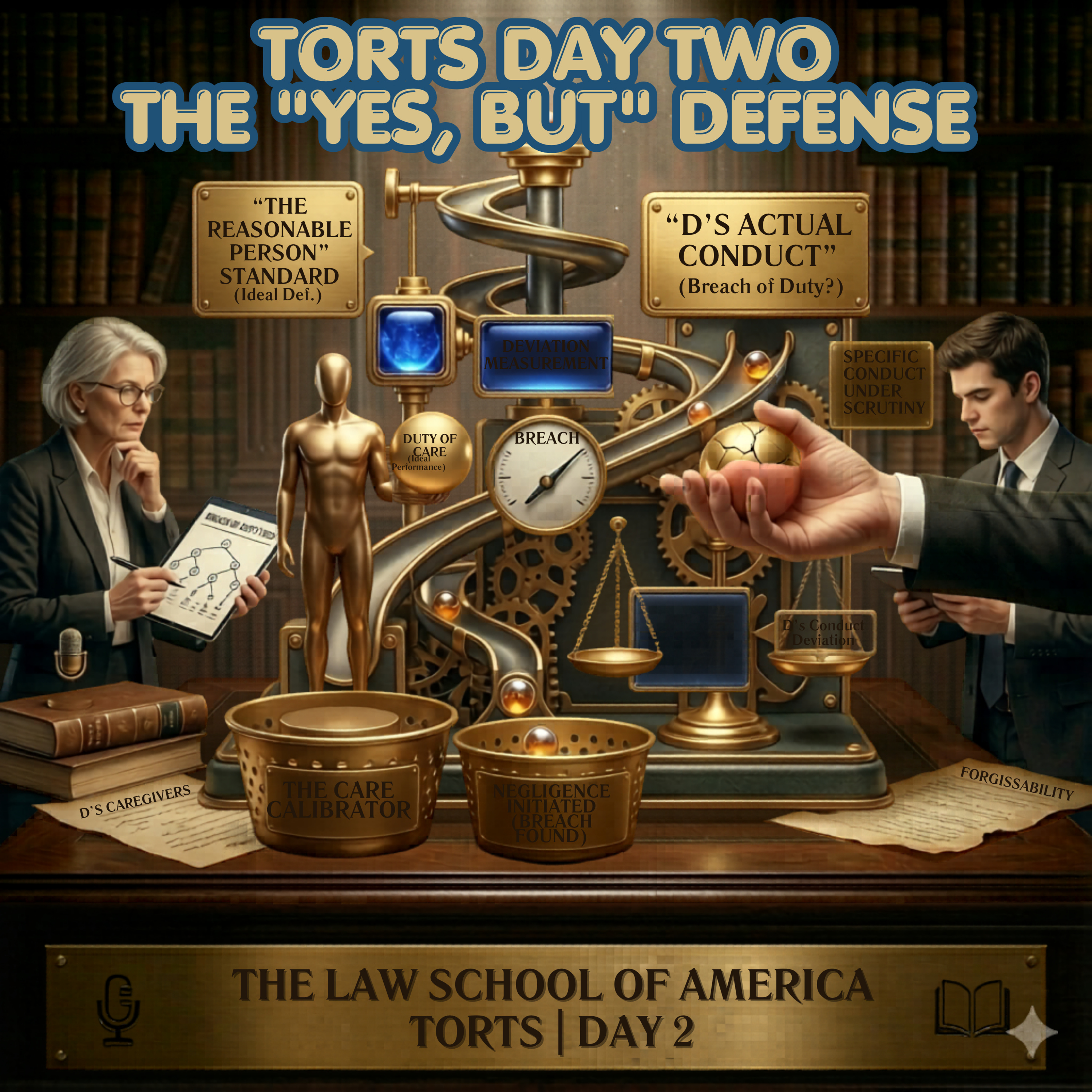
Torts Day Two: The "Yes, But" Defense [not-audio_url] [/not-audio_url]

Duration: 1:03:03
In this episode, we delve into the strategic complexity of affirmative defenses in tort law. Understanding how and when these shields apply can turn a losing case into a victory, or vice versa. We explore key defenses li…
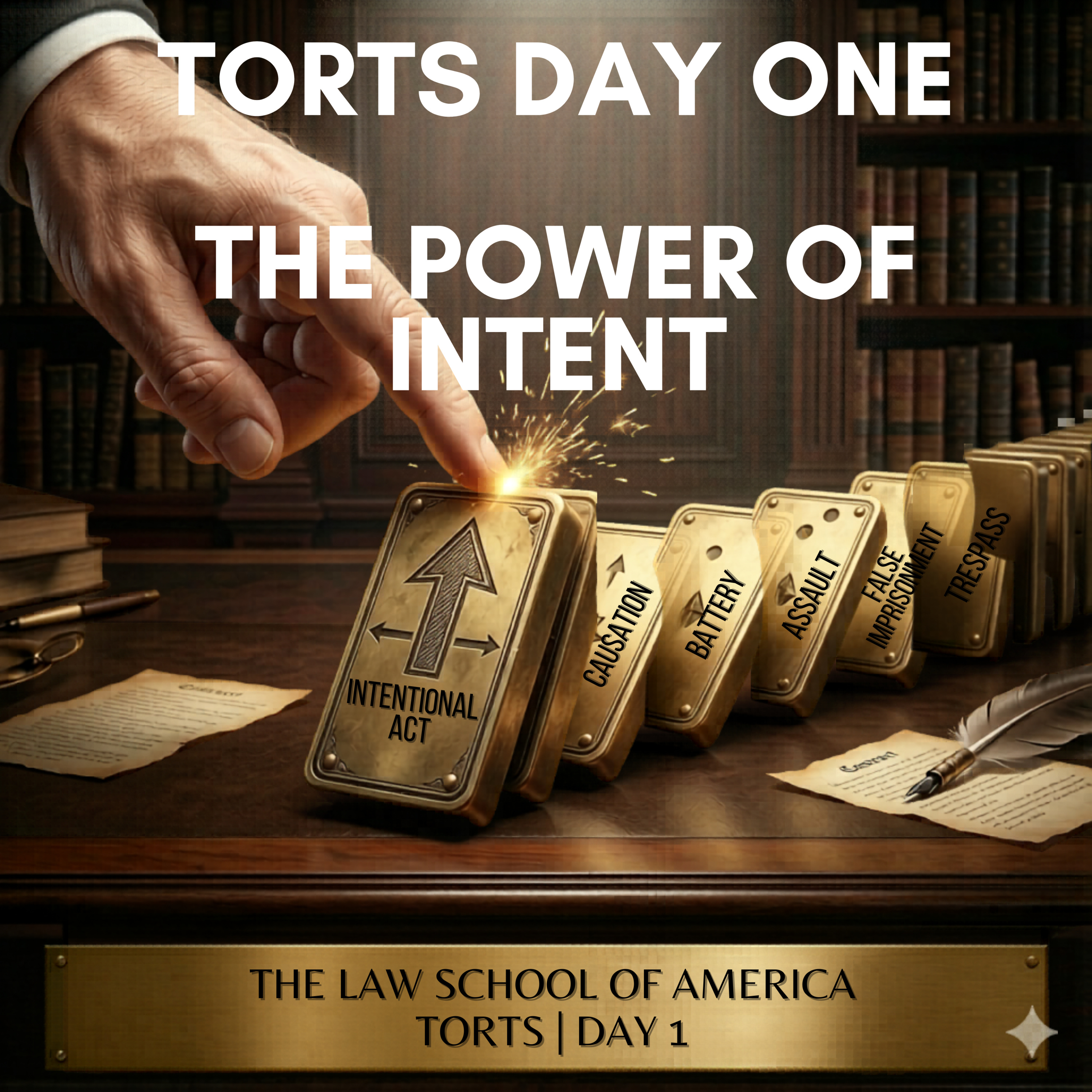
Torts Day One: The Power of Intent [not-audio_url] [/not-audio_url]

Duration: 58:52
This episode breaks down the core principles of intentional torts, from the foundational engine of volitional acts and intent to the nuanced doctrine of transferred intent. Whether you're preparing for law school exams o…
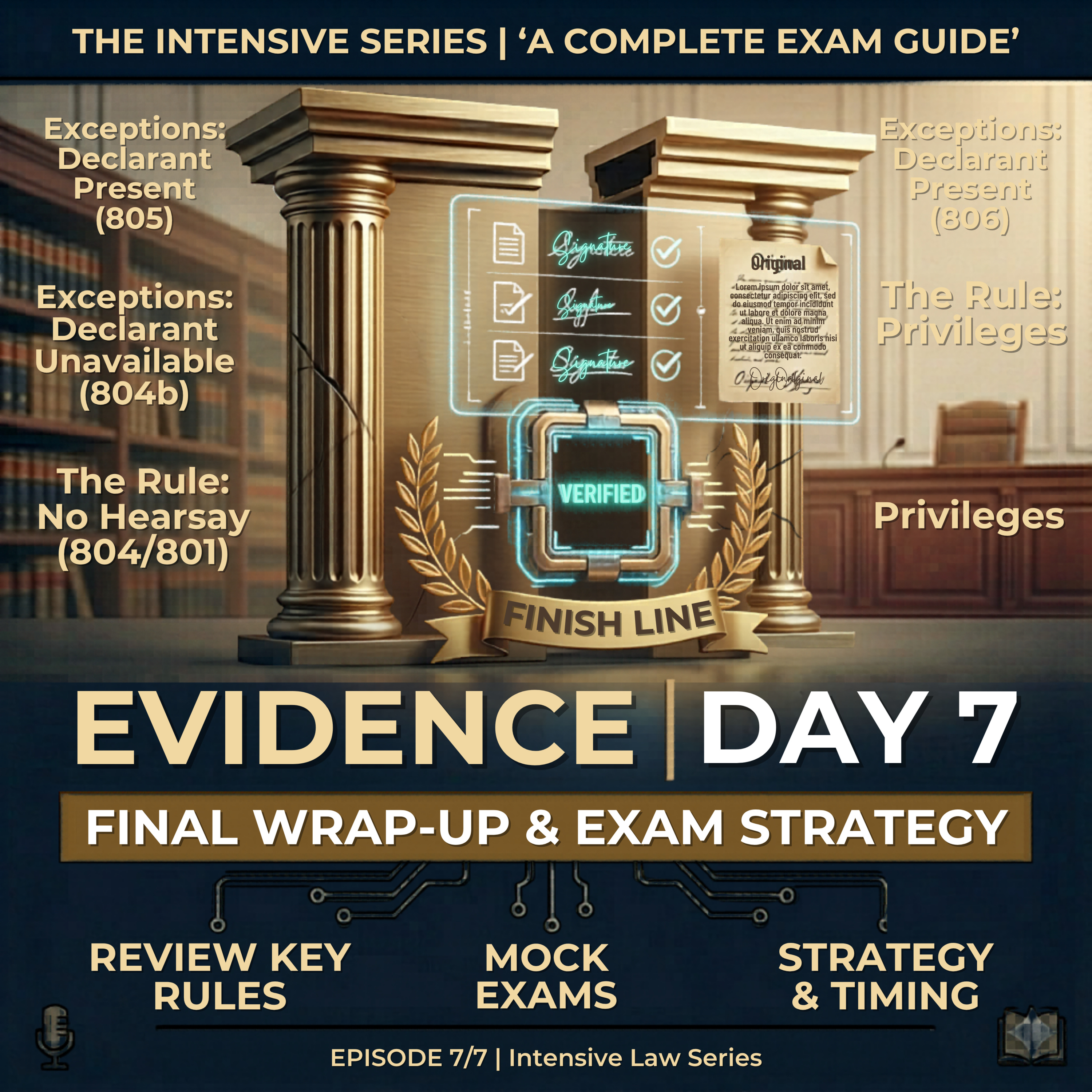
Evidence Day Seven: The Vault and the Final Machine [not-audio_url] [/not-audio_url]

Duration: 1:26:54
Prepare for your next exam or courtroom with a systematic framework that demystifies the complexity of evidence law. In this episode, we dissect the layered process of evaluating evidence—from privileges and presumptions…
Evidence Day Six: The Container and the Key [not-audio_url] [/not-audio_url]

Duration: 57:07
This episode takes you through the rigorous process of introducing physical evidence in court, breaking down complex rules with clear analogies and real-world examples. Whether you're preparing for the bar exam or seekin…
Evidence Day Five: The Hearsay Exceptions [not-audio_url] [/not-audio_url]

Duration: 1:07:12
In this deep dive into evidence law, we explore how courts differentiate between trustworthy and unreliable out-of-court statements through rules, doctrines, and constitutional safeguards. If you're preparing for a law e…
Evidence Day Four: The Hearsay Gauntlet [not-audio_url] [/not-audio_url]

Duration: 1:01:34
In this episode, we demystify the complex world of hearsay evidence, turning what often feels like an insurmountable maze into a clear, actionable framework. Whether you're a law student, a lawyer, or just a curious mind…
Evidence Day Three: The Witness Clinic [not-audio_url] [/not-audio_url]

Duration: 1:06:48
In this episode, we delve into the foundational pillars of witness testimony, unraveling the complexities of competency, memory, and the art of impeachment. Designed to equip law students and future lawyers, this session…
Evidence Day Two: The Character Assassination Clinic [not-audio_url] [/not-audio_url]

Duration: 1:01:41
In this episode, we explore the intricate landscape of character evidence within U.S. law, emphasizing how rules and exceptions are designed to balance fairness with societal interests. Whether you're a law student or a…