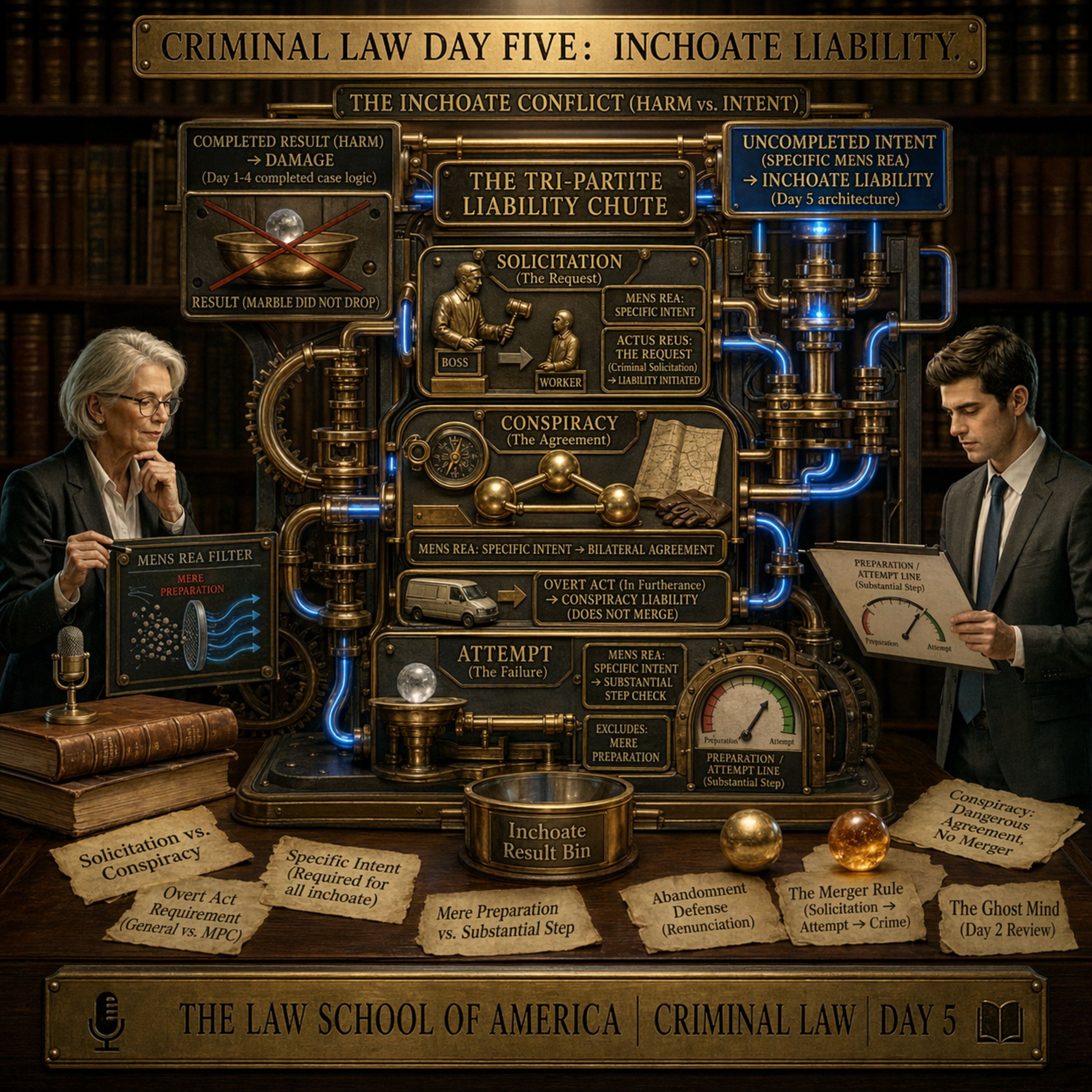
This episode explores the complex legal architecture behind uncompleted crimes, highlighting how law balances prevention with individual liberty. We unpack key concepts like solicitation, conspiracy, attempt, and the crucial merger doctrine — all vital for mastering criminal liability.
Most crimes start with a thought—yet the law only fuels the fire once actions follow. This episode uncovers the hidden architecture of inchoate liability, revealing how legal systems choose who to punish before the harm even happens. If you’re a law student, a criminal justice enthusiast, or just curious about how society prevents disasters at the earliest possible moment, this deep dive is essential listening.
You’ll discover the precise moment a legal line is crossed with concepts like solicitation, conspiracy, and attempt—and why each is treated differently by the law. We break down the specific intent needed for each stage, including how buying gloves or renting a van can unwittingly lock you into a conspiracy, even if you do nothing more afterward. Gain clarity on the infamous Pinkerton rule, which makes co-conspirators vicariously liable for foreseeable crimes committed in furtherance of their plan.
You’ll see how the law draws a boundary between mere preparation and punishable attempt, navigating the treacherous terrain of factual versus legal impossibility, and why changing your mind isn’t always enough to escape liability. Plus, we explore the critical merger doctrine—how lesser charges like solicitation and attempt are absorbed once the main crime is complete, and why conspiracy often defies this rule, standing as a separate, more dangerous threat.
In a world racing toward digital and autonomous crimes, understanding this architecture becomes even more vital. As technology blurs traditional lines, the challenge will be to apply these principles to algorithms, AI, and cyber threats—prompting society to ask: When does a dark thought become a catastrophe?
Perfect for law students preparing for exams, criminal justice professionals, or anyone interested in the hidden mechanics of pre-crime liability, this episode arms you with the insights to navigate one of the most complex and consequential areas of law. Don’t just understand the rules—see how they protect society, balance liberty, and sometimes, catch mistakes before they turn deadly.
In this discussion:
The foundational principles of inchoate liability and why society wants to intervene before harm occurs
The detailed elements of solicitation and how specific intent and communication establish the crime
How conspiracy transforms a solitary request into a dangerous team effort, including the significance of overt acts and Pinkerton liability
The rigorous standards for attempt, focusing on the substantial step and the strict mental state requirements
The difference between factual and legal impossibility as defenses, and the narrow scope for voluntary abandonment
The merger doctrine and why conspiracy charges usually do not merge with completed crimes, creating strategic advantages for prosecutors