Criminal Law Day Four: The Foreseeable Chain (Causation)

Criminal Law Day Four: The Foreseeable Chain (Causation)

Author: The Law School of America April 23, 2026 Duration: 47:49

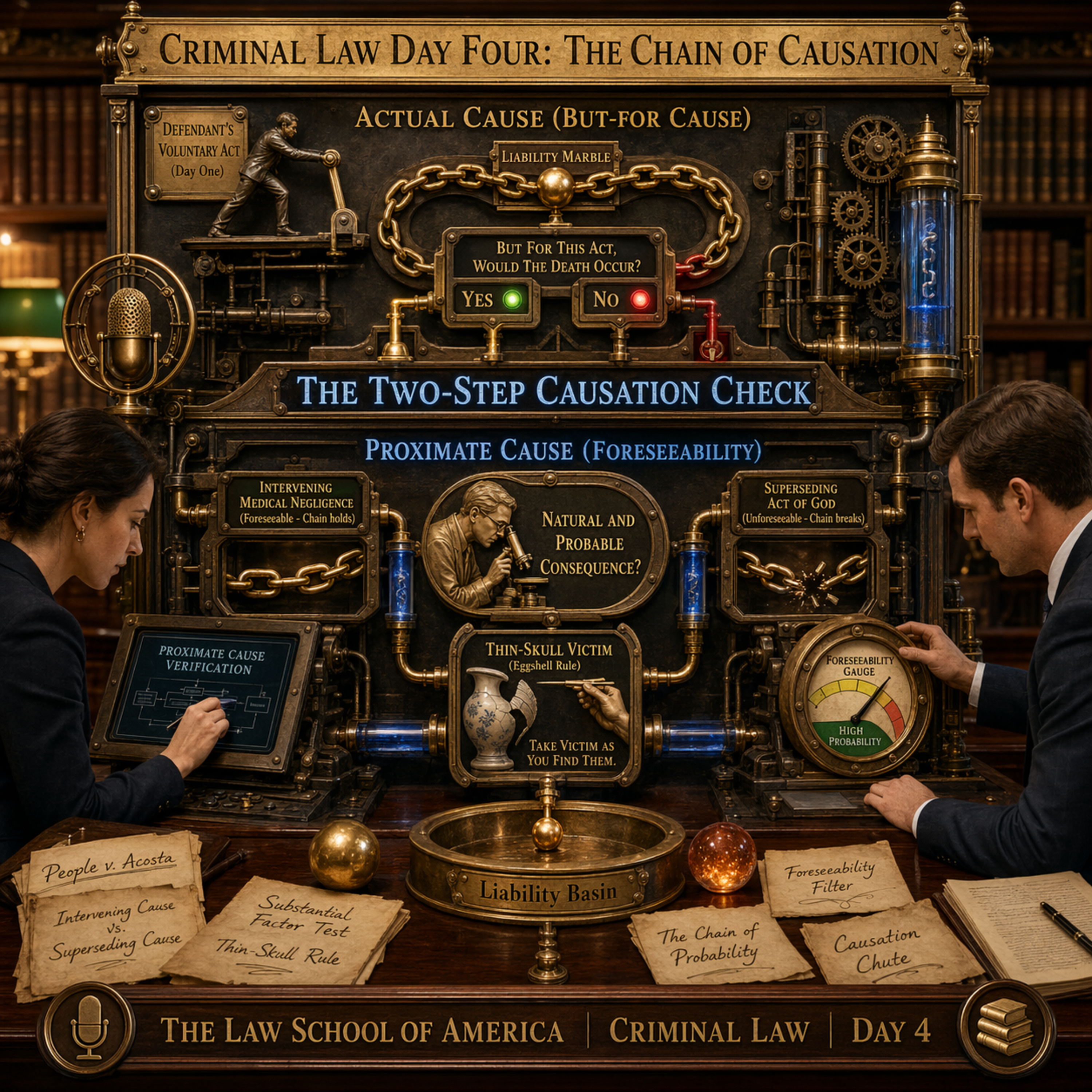
Understanding causation is crucial in criminal law because it connects the defendant’s actions to the harm that occurs. This episode provides a clear, detailed roadmap to navigate the complex doctrines of actual cause and proximate cause, equipping you to craft compelling exam answers and argue confidently in court.

Most criminal cases hinge on one critical question: did the defendant’s actions actually cause the final harm? But understanding causation isn’t just about connecting dots—it's about mastering a precise legal architecture that distinguishes science from subjective judgment. This episode takes you deep into the complex, often counterintuitive world of criminal causation, revealing how the law maps the physical reality of actions onto society’s notions of fairness and justice.

Imagine two men at trial: one fires a bullet but walks free because of legal technicalities, while another’s minor act unexpectedly results in a death that seems impossible to link. These paradoxes expose the core challenge—how does the law draw the line between cause and blame? We break down the golden chain model, a sophisticated mental framework that visualizes liability from the initial act to the final harm, emphasizing its fragile, tension-filled nature. You’ll discover:

Why the but-for test often catches everyone but fails to deliver moral clarity

How legal doctrines like substantial factor and specific result tests refine the chain in multi-defendant scenarios

The crucial difference between intervening acts, superseding causes, and natural environmental factors like lightning

How the eggshell skull rule makes defendants liable for all consequences, regardless of the victim’s hidden vulnerabilities

Why the debate over factual science versus societal morality raises profound questions about whether causation is law’s objective backbone or just a societal mirror reflecting bias

This episode is essential listening for law students, criminal justice enthusiasts, or anyone grappling with the question of who’s really responsible—because the stakes extend beyond the courtroom. You’ll come away with a clear, step-by-step strategy to dissect complex causation questions on exams and in court: start with the physics, then evaluate foreseeability, classify intervening acts, and always account for the eggshell plaintiff principle. Mastering these principles ensures you understand that causation in law is as much about fairness and societal values as it is about science.

If you want to see through the legal façade and understand whether causation is objective law or societal storytelling, this episode is your definitive guide. It’s legal insight that challenges you to see causation not just as a rule but as an ongoing moral conversation—one that determines life, death, and justice itself.

Ever wondered how the law really works but felt intimidated by dense textbooks and jargon? Law School, from The Law School of America, is here to change that. This podcast approaches legal education like a series of engaging conversations, breaking down the foundational principles of the American legal system into clear, manageable segments. Each episode focuses on a specific concept or area, building your comprehension step-by-step without overwhelming you. You'll hear straightforward explanations that connect theory to real-world application, making complex topics accessible whether you're a student, a professional in a related field, or simply a curious citizen. The goal is to demystify the law, transforming it from an abstract subject into a practical understanding you can use. By consistently tuning in, you gradually construct a solid framework of legal knowledge. This isn't about quick tricks; it's about dedicated, cumulative learning. The structure of the podcast is designed for steady progress, allowing listeners to absorb information at their own pace and truly integrate it. Think of it as an audio companion for your intellectual journey into jurisprudence, offering clarity and insight one episode at a time.
Author: Language: en-us Episodes: 100

Law School
Podcast Episodes
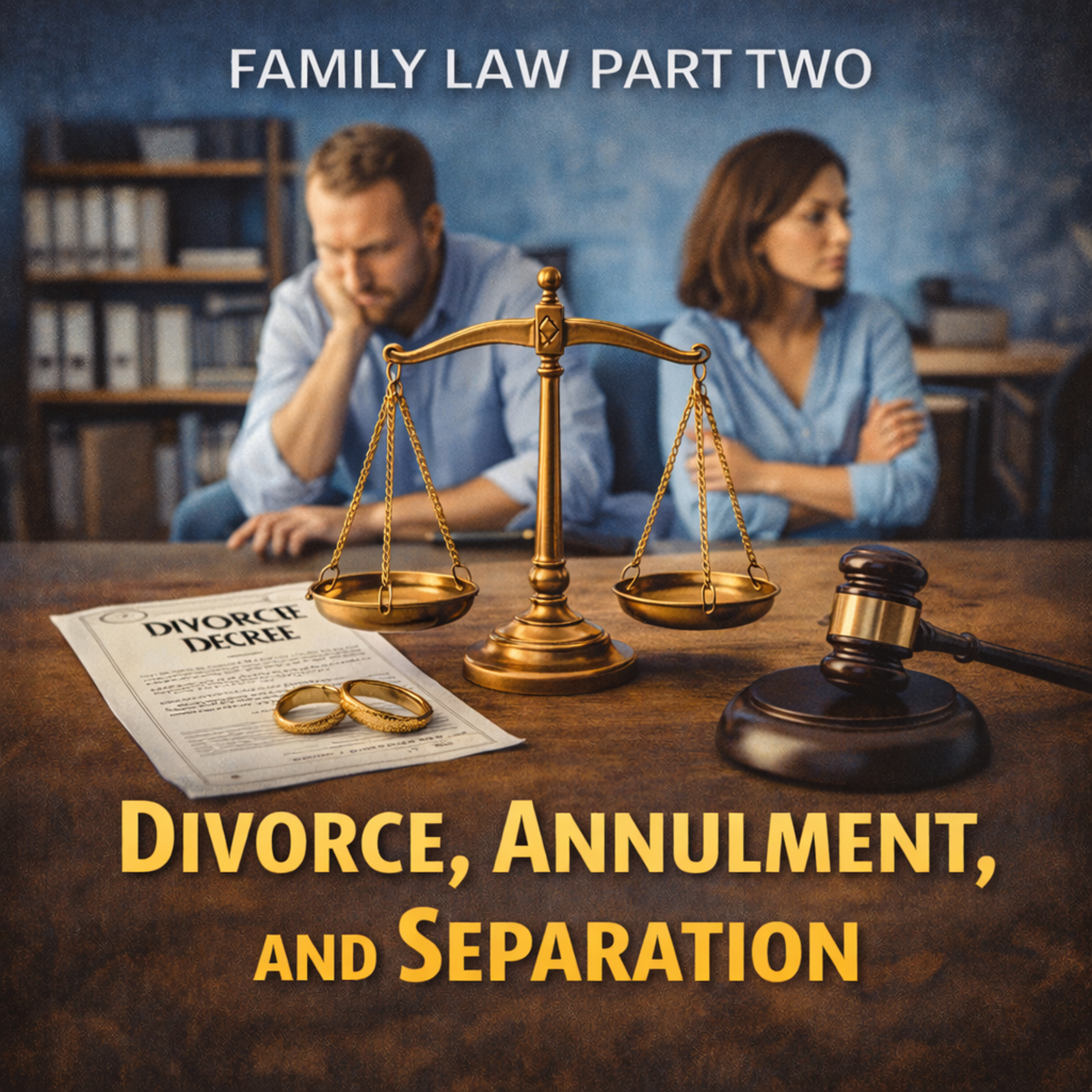
Family Law Part Two - Divorce, Annulment, and Separation [not-audio_url] [/not-audio_url]

Duration: 40:08
This conversation delves into the complexities of family law, specifically focusing on the dissolution of marriage. It covers essential topics such as jurisdiction, grounds for divorce, annulment, legal separation, and t…
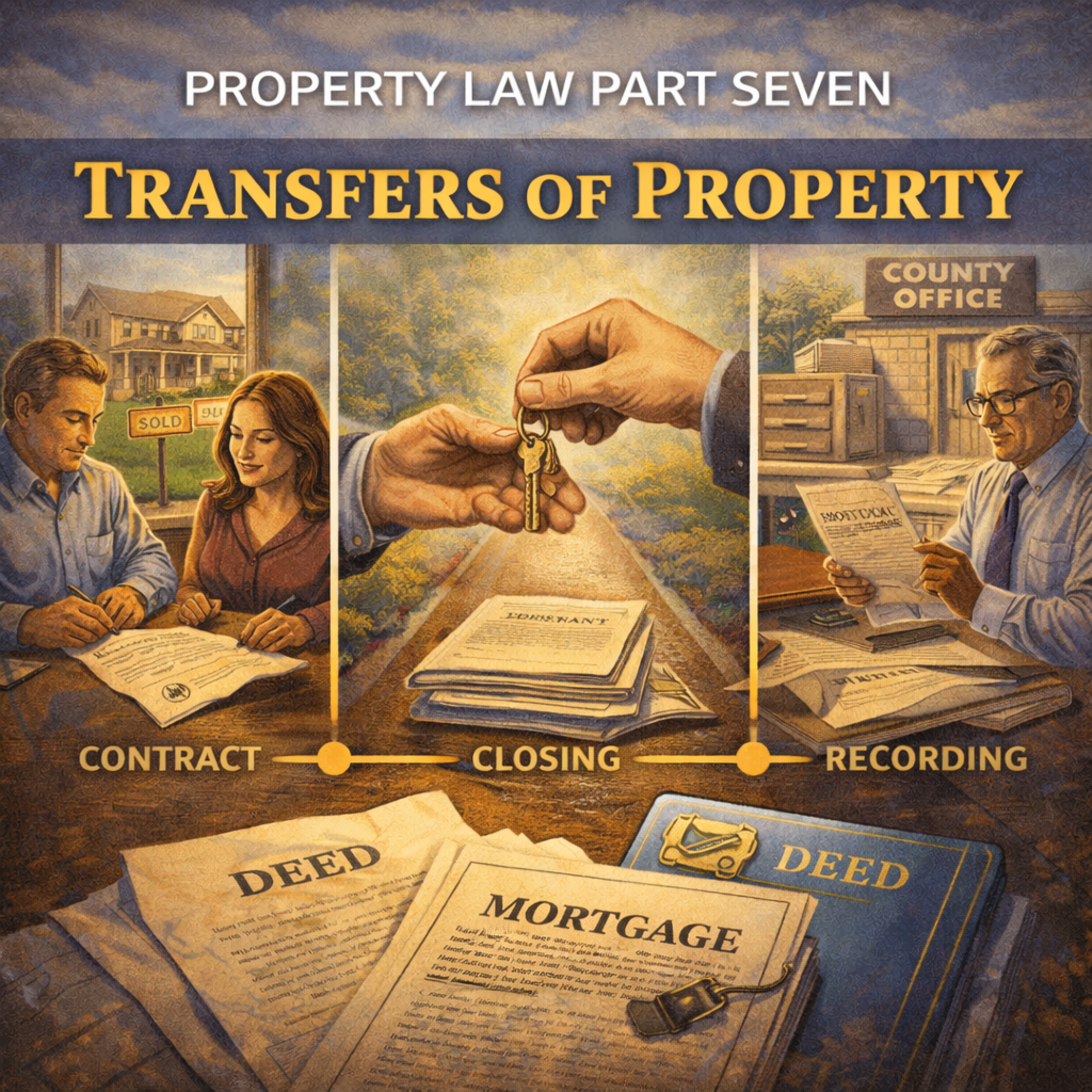
Property Law Part Seven: Transfers of Property [not-audio_url] [/not-audio_url]

Duration: 47:17
This conversation delves into the intricate life cycle of real estate transactions, exploring the various phases from contract signing to closing and recording. It emphasizes the importance of understanding the chronolog…
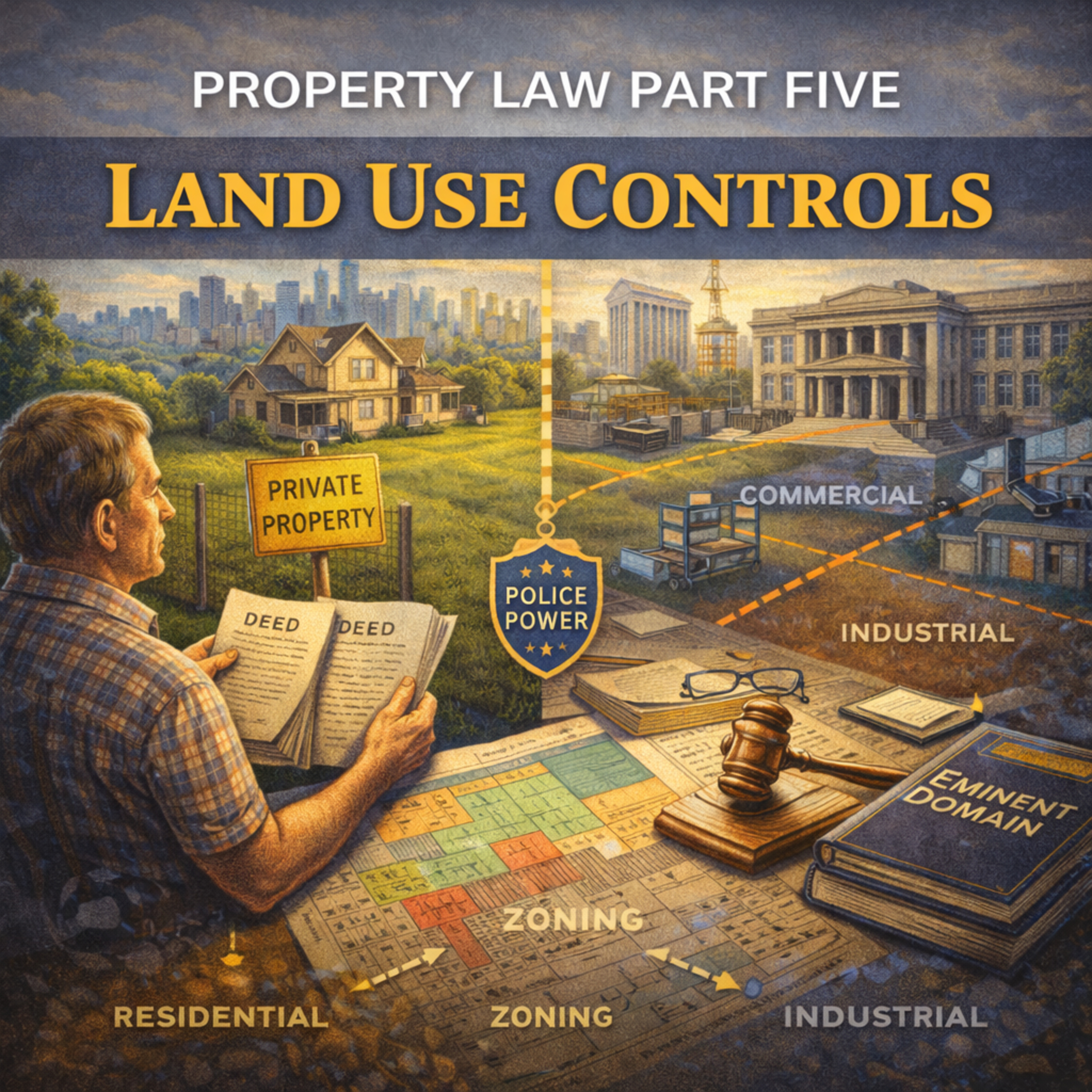
Property Law Part Five: Land Use Controls [not-audio_url] [/not-audio_url]

Duration: 50:06
This conversation delves into the complexities of land use controls, focusing on the interplay between individual property rights and government regulations. It explores the concept of police power, zoning laws, eminent…
Property Law Part Four: Landlord–Tenant Law [not-audio_url] [/not-audio_url]

Duration: 54:12
Property Law Chapter Four: Landlord–Tenant LawThis conversation delves into the complexities of landlord-tenant law, exploring the evolution of property law, the various types of leasehold estates, and the rights and res…
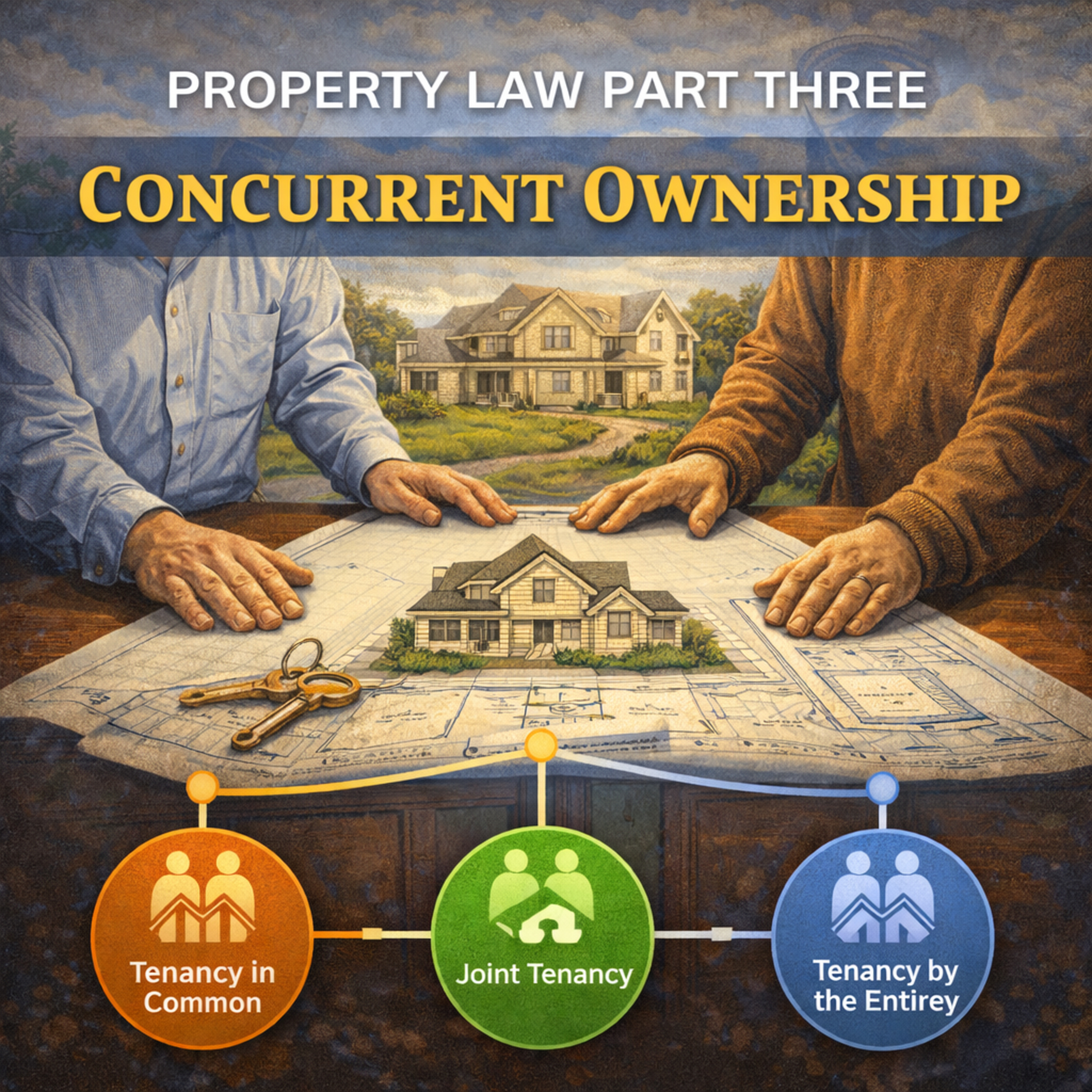
Property Law Part Three: Concurrent Ownership [not-audio_url] [/not-audio_url]

Duration: 41:40
Most people assume owning property together is simple—until the law reveals its chaotic, high-stakes complexity. If you think co-ownership is just "my house or yours," think again. One wrong step or misunderstood rule ca…
Property Law Part Two: Estates and Future Interest [not-audio_url] [/not-audio_url]

Duration: 50:39
This conversation delves into the complexities of property law, focusing on estates and future interests. It explores the foundational concepts of ownership, the intricacies of defeasible fees, life estates, and the rule…