Criminal Law Day Three: Homicide & The Allocation Chute

Criminal Law Day Three: Homicide & The Allocation Chute

Author: The Law School of America April 22, 2026 Duration: 48:57

In this episode, we break down the complex landscape of homicide offenses, focusing on how the law sorts accidental deaths, intentional killings, and everything in between. This is essential listening for anyone preparing for the bar exam, as understanding these categories can be the difference between passing and failing.

Most criminal law topics are complex, but homicide is a biochemical puzzle wrapped in legal doctrine. Why? Because understanding whether a defendant’s mental state at the moment of death elevates their crime from manslaughter to murder is everything—and it’s far more nuanced than you might think.

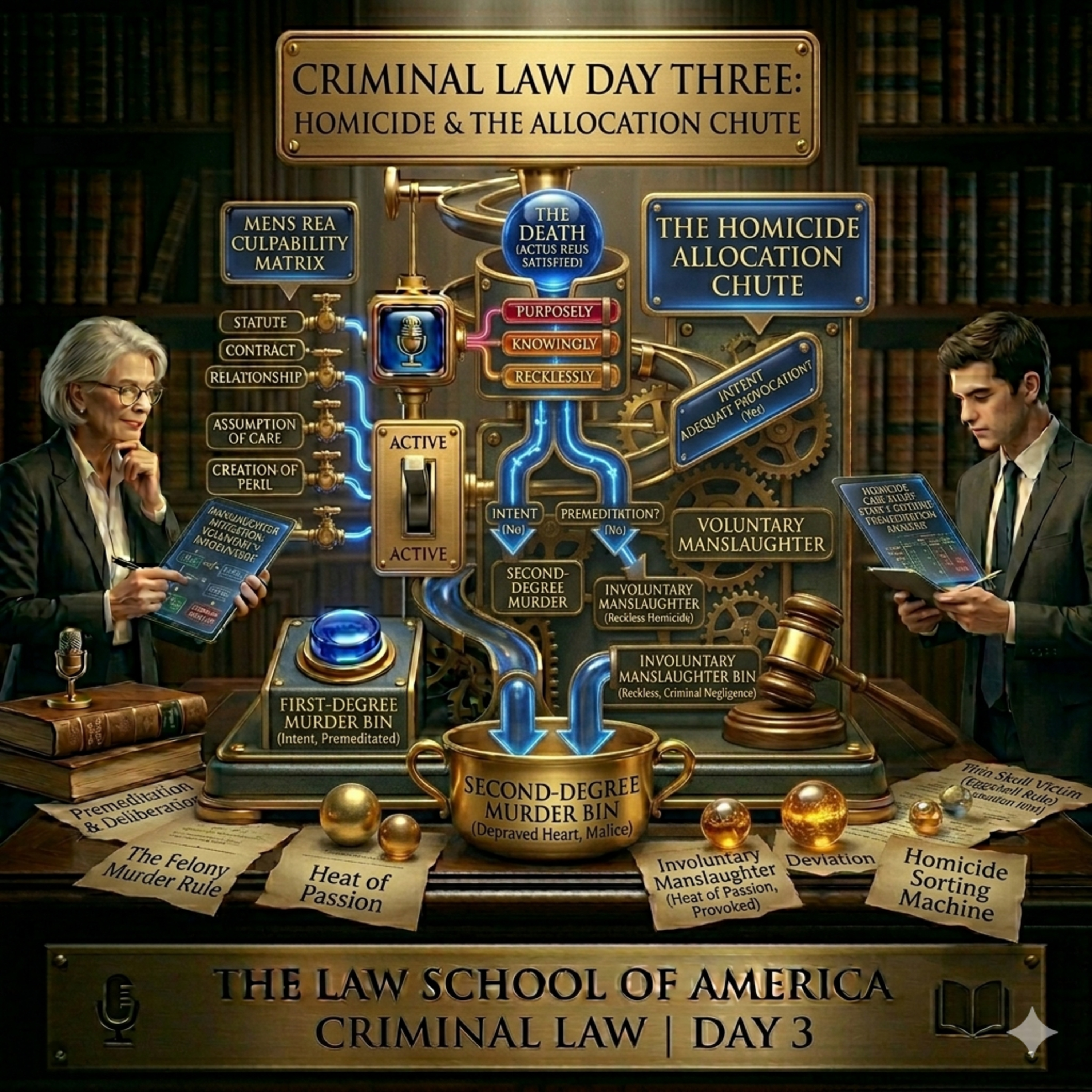
Imagine a towering glass machine, structurally simple but loaded with critical decision points. The outcome? Life in prison or a short sentence. The key to this machine? The defendant’s mens rea—their mental state—as it shifts along sliders from purpose, knowledge, recklessness, to negligence. This episode unlocks the hidden mechanisms of homicide law, demystifying the rules that weigh emotional outbursts against cold calculation.

You'll discover:

How the law separates murder types through the “sorting machine” framework, with concrete examples like State v. Guthrie and Barry.

The core differences between premeditated murder, felony murder, depraved heart, and voluntary manslaughter, with practical tips on spotting trap scenarios.

The importance of timing, especially the cooling-off period, and how courts interpret impulsive acts versus calculated killings.

Why strict standards like the "words alone rule" protect society from chaos and the dangerous limitations of emotional provocation defenses.

How to apply the static “marble” metaphor to quickly classify facts and craft compelling arguments, whether pushing claims of intentional murder or defenses of heat of passion.

Without this clarity, students often fall into common trap questions and lose crucial points. But mastering this process means you see beyond the gruesome details into the mind behind the act—an approach that transforms chaotic courtroom realities into a logical, manageable framework.

Perfect for law students, bar exam candidates, and anyone serious about understanding the true mechanics of criminal homicide. If you want to avoid the pitfalls and confidently navigate the intricacies of homicide law, this episode is your essential guide.

Quiz yourself: How does the legal definition of premeditation differ from cinematic expectations? When does reckless behavior become criminal, and why does the law assign blame based on the defendant’s mental sliders? This episode connects the dots with precision, empowering you to argue both sides and crush every homicide question that comes your way.

This is not just theory—it’s the difference between passing and excelling on your exam, or even, saving a life by truly understanding these vital legal distinctions. Hit play and operate your own mental sorting machine with confidence.

Why this works:


The hook immediately teases the paradox of homicide law—where emotional outrage must be separated from legal standards—piquing curiosity. The episode’s detailed breakdown of legal doctrines, real case studies, and practical exam strategies make complex concepts approachable, promising transformation from confusion to mastery. The focus on argumentation and categorization ensures listeners see the material as both intellectually rigorous and highly applicable, motivating them to listen all the way through.

Key Topics:

The law’s inverted approach: how homicide is sorted via mens rea rather than building cases

The significance of actus reus and mens rea in categorizing a homicide

Visualizing the legal classification as a multi-tiered sorting machine

The four sliders of mens rea: purpose, knowledge, recklessness, negligence

Detailed analysis of first degree murder: premeditation, deliberation, and the role of cool reflection

How the felony murder rule functions as a shortcut to first degree murder

The distinction between depra

Ever wondered how the law really works but felt intimidated by dense textbooks and jargon? Law School, from The Law School of America, is here to change that. This podcast approaches legal education like a series of engaging conversations, breaking down the foundational principles of the American legal system into clear, manageable segments. Each episode focuses on a specific concept or area, building your comprehension step-by-step without overwhelming you. You'll hear straightforward explanations that connect theory to real-world application, making complex topics accessible whether you're a student, a professional in a related field, or simply a curious citizen. The goal is to demystify the law, transforming it from an abstract subject into a practical understanding you can use. By consistently tuning in, you gradually construct a solid framework of legal knowledge. This isn't about quick tricks; it's about dedicated, cumulative learning. The structure of the podcast is designed for steady progress, allowing listeners to absorb information at their own pace and truly integrate it. Think of it as an audio companion for your intellectual journey into jurisprudence, offering clarity and insight one episode at a time.
Author: Language: en-us Episodes: 100

Law School
Podcast Episodes
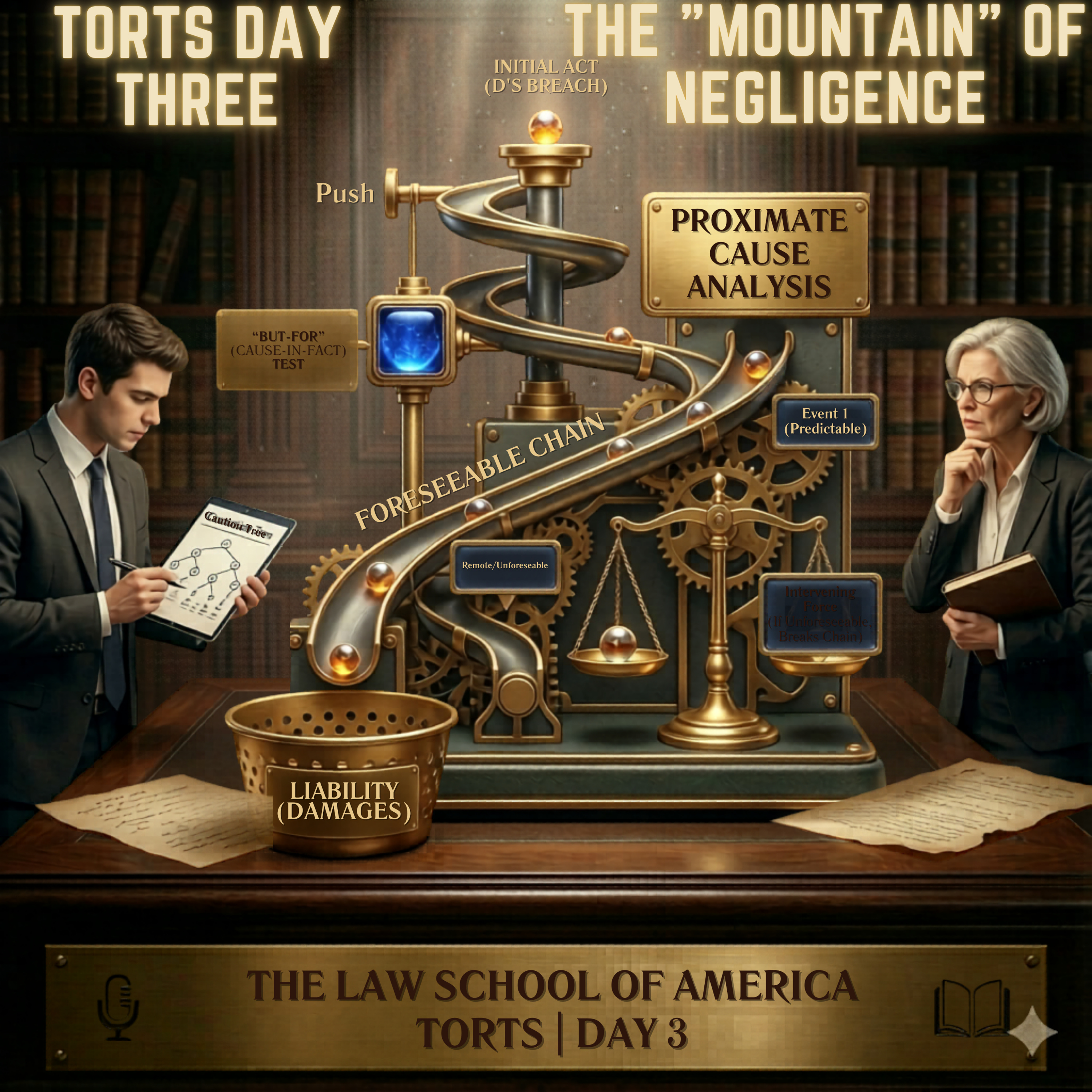
Torts Day Three: The "Mountain" of Negligence [not-audio_url] [/not-audio_url]

Duration: 1:01:53
In this episode, we explore the fundamental doctrines of negligence—the most crucial foundation of personal injury law—and decode how courts determine fault through duty and breach analysis. Whether you're a law student,…
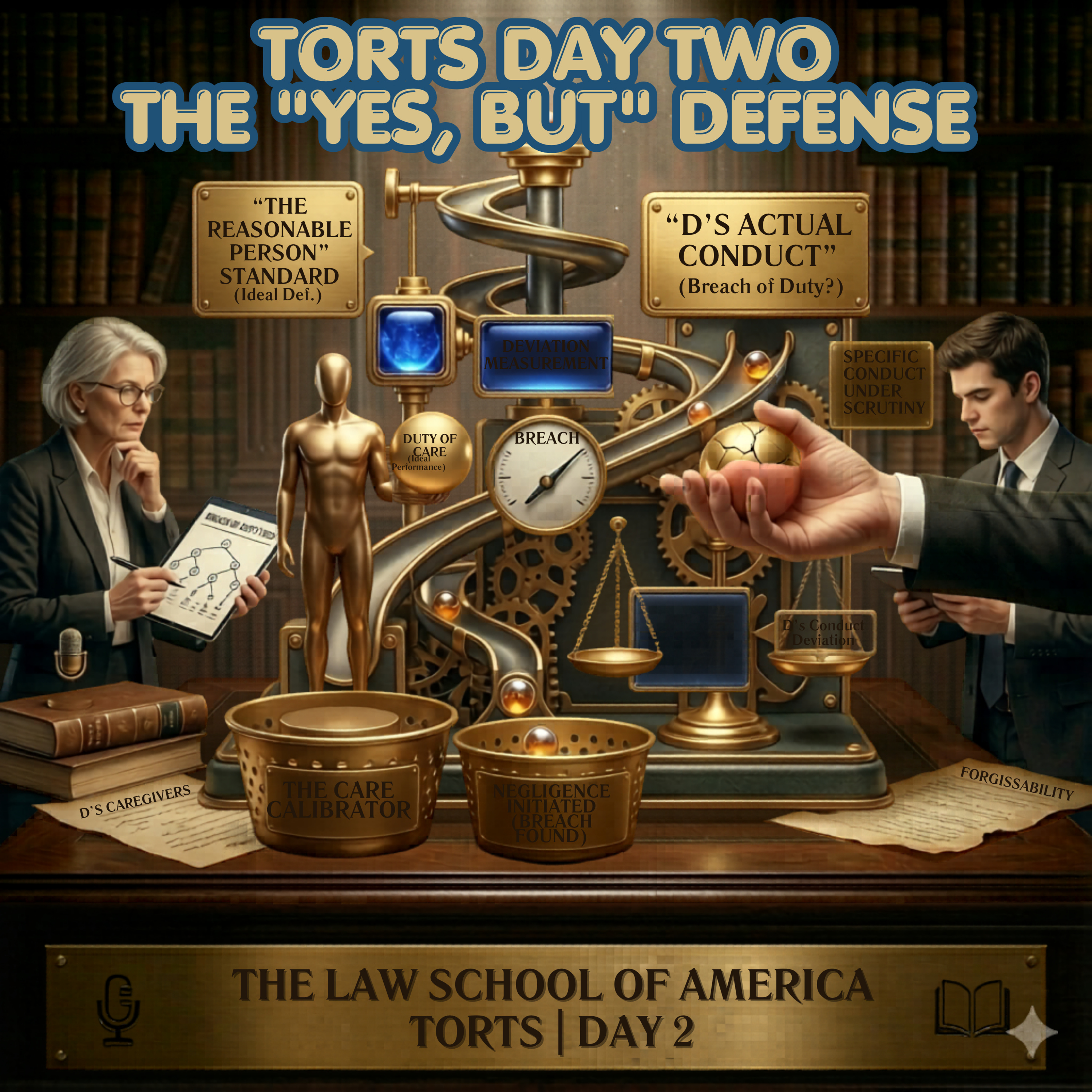
Torts Day Two: The "Yes, But" Defense [not-audio_url] [/not-audio_url]

Duration: 1:03:03
In this episode, we delve into the strategic complexity of affirmative defenses in tort law. Understanding how and when these shields apply can turn a losing case into a victory, or vice versa. We explore key defenses li…
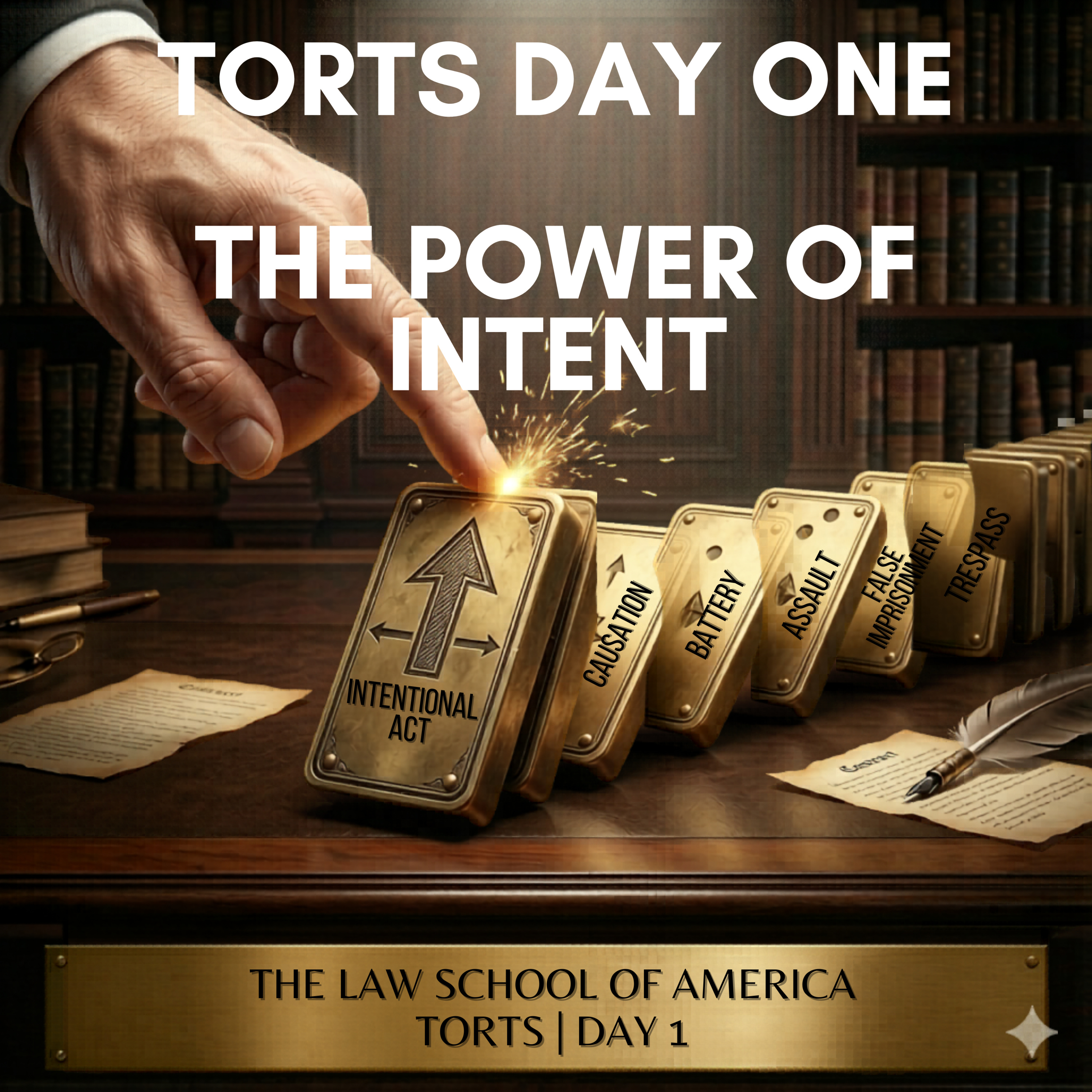
Torts Day One: The Power of Intent [not-audio_url] [/not-audio_url]

Duration: 58:52
This episode breaks down the core principles of intentional torts, from the foundational engine of volitional acts and intent to the nuanced doctrine of transferred intent. Whether you're preparing for law school exams o…
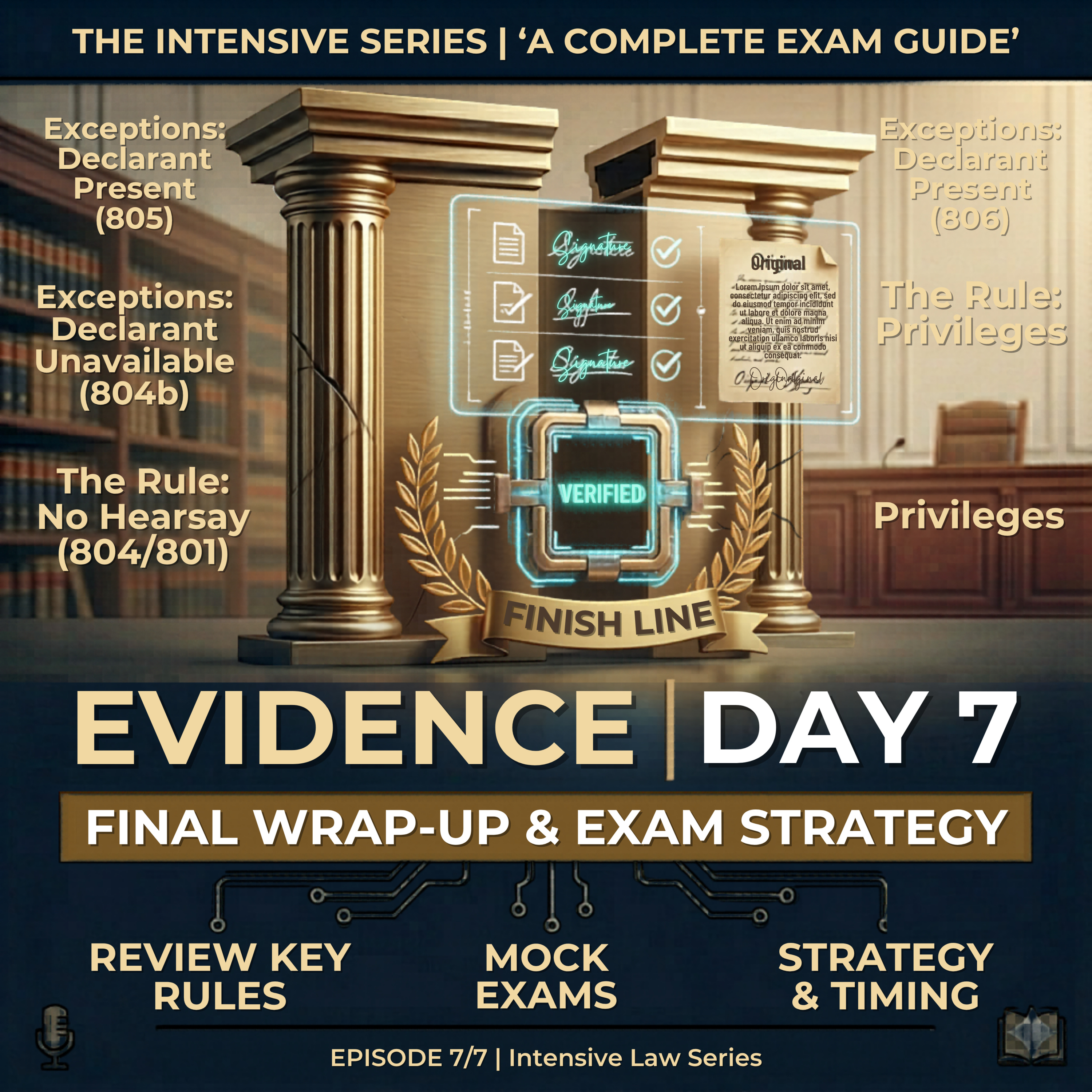
Evidence Day Seven: The Vault and the Final Machine [not-audio_url] [/not-audio_url]

Duration: 1:26:54
Prepare for your next exam or courtroom with a systematic framework that demystifies the complexity of evidence law. In this episode, we dissect the layered process of evaluating evidence—from privileges and presumptions…
Evidence Day Six: The Container and the Key [not-audio_url] [/not-audio_url]

Duration: 57:07
This episode takes you through the rigorous process of introducing physical evidence in court, breaking down complex rules with clear analogies and real-world examples. Whether you're preparing for the bar exam or seekin…
Evidence Day Five: The Hearsay Exceptions [not-audio_url] [/not-audio_url]

Duration: 1:07:12
In this deep dive into evidence law, we explore how courts differentiate between trustworthy and unreliable out-of-court statements through rules, doctrines, and constitutional safeguards. If you're preparing for a law e…
Evidence Day Four: The Hearsay Gauntlet [not-audio_url] [/not-audio_url]

Duration: 1:01:34
In this episode, we demystify the complex world of hearsay evidence, turning what often feels like an insurmountable maze into a clear, actionable framework. Whether you're a law student, a lawyer, or just a curious mind…
Evidence Day Three: The Witness Clinic [not-audio_url] [/not-audio_url]

Duration: 1:06:48
In this episode, we delve into the foundational pillars of witness testimony, unraveling the complexities of competency, memory, and the art of impeachment. Designed to equip law students and future lawyers, this session…
Evidence Day Two: The Character Assassination Clinic [not-audio_url] [/not-audio_url]

Duration: 1:01:41
In this episode, we explore the intricate landscape of character evidence within U.S. law, emphasizing how rules and exceptions are designed to balance fairness with societal interests. Whether you're a law student or a…