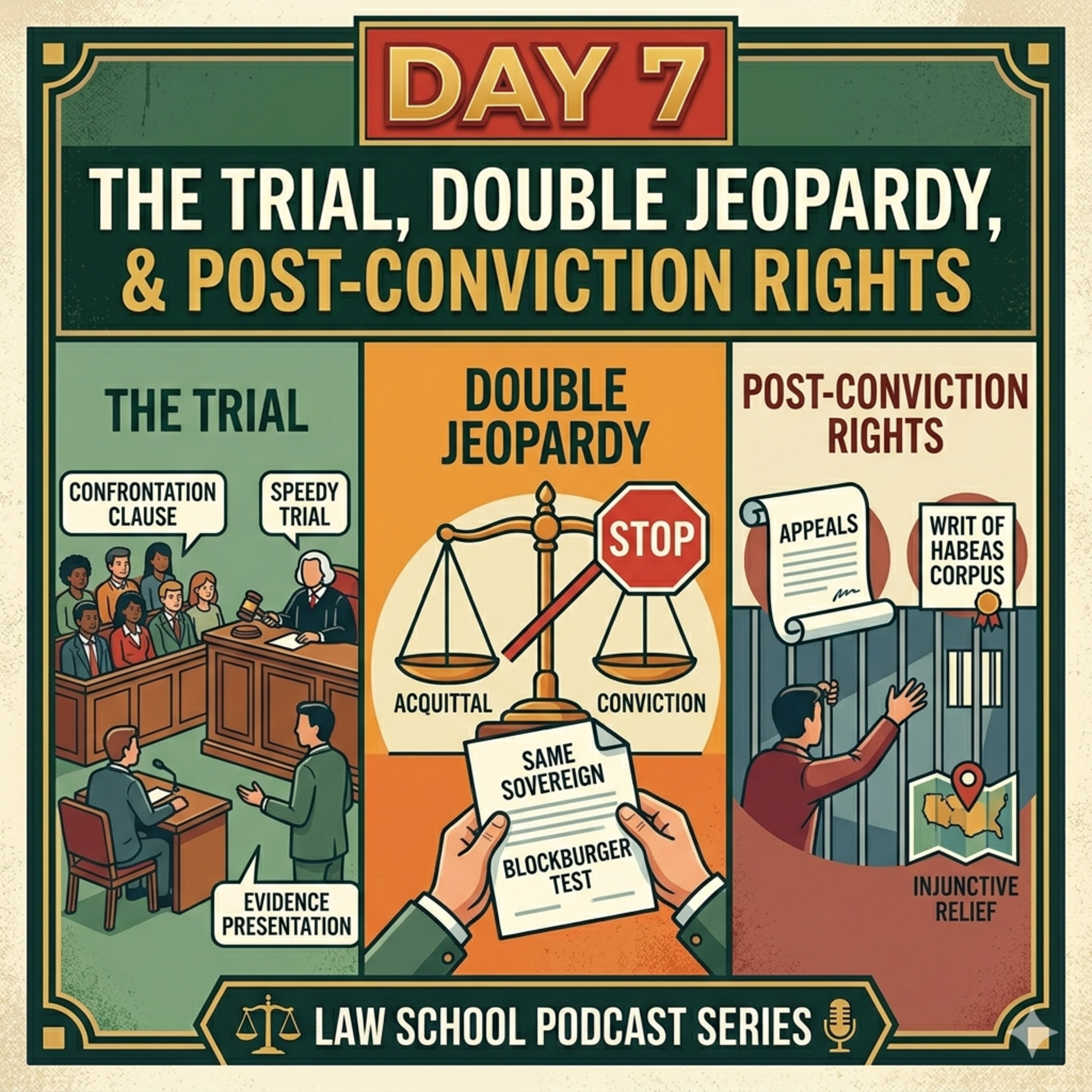
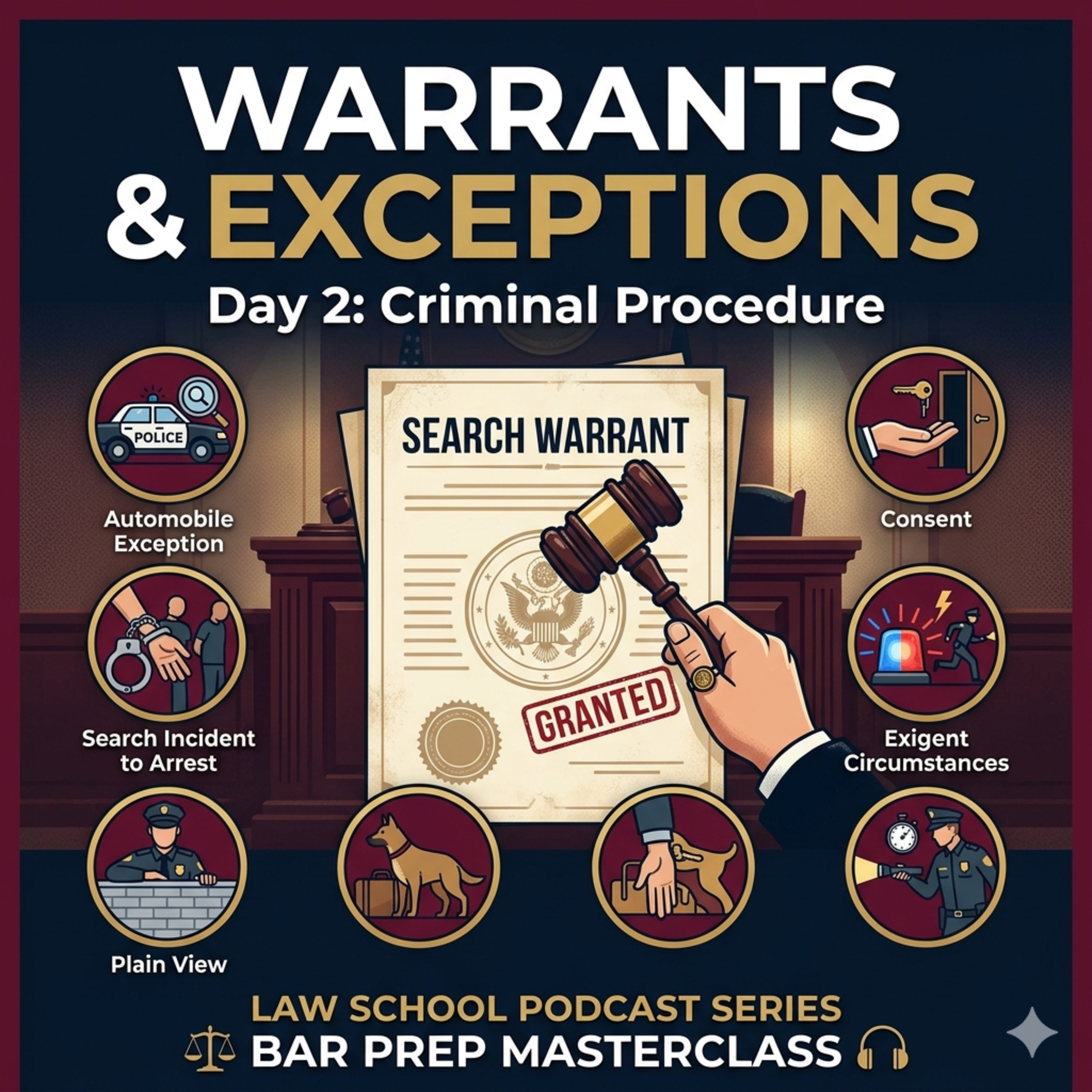
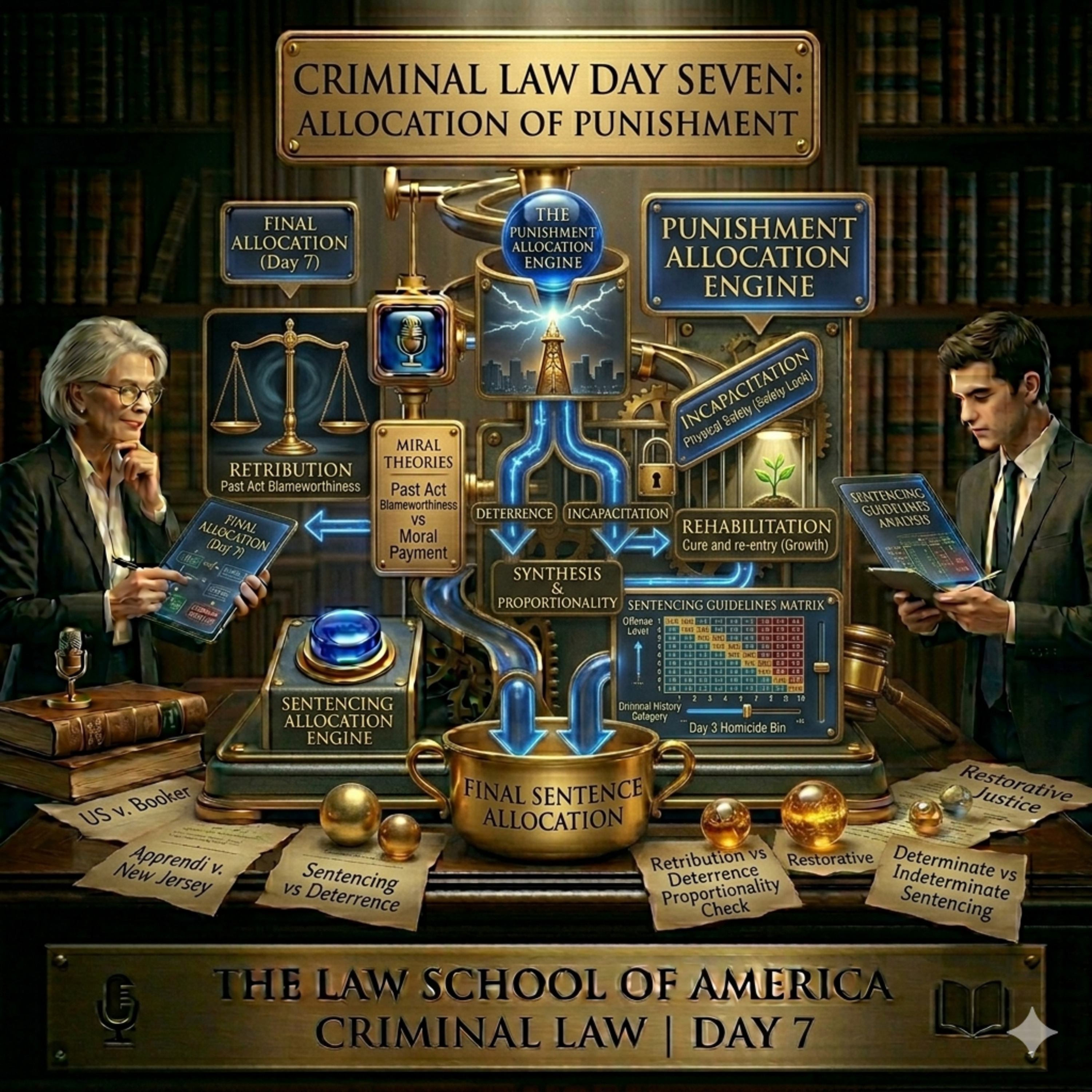
Reference Material: Day 7 Confrontation, Double Jeopardy, and Habeas Corpus
Criminal Procedure Final Exam Prep — Mastering Justice and Fairness
This episode offers a comprehensive walkthrough of core criminal procedure concepts, essential for law students and exam takers alike. From the nuances of the Sixth Amendment's rights to speedy trial, impartial jury, and confrontation clause, to the complexities of double jeopardy and evidentiary rules—every doctrinal pillar is analyzed with clarity and practical insight.
Most students overlook one crucial fact: in criminal procedure, the rules governing fairness often overshadow the pursuit of truth itself. This episode extracts the core doctrine from seven days of dense law—clarifying when procedural protections fail or succeed—and reveals why the system sometimes sacrifices facts to safeguard liberty.
Step into the courtroom of constitutional criminal procedure as we unravel deeply interconnected protections: the speedy trial clock, the impartial jury mandate, the confrontation rights, and double jeopardy barriers. We break down Barker’s four-factor test—showing how vague notions of “speedy” become a precise legal balancing act—and reveal the major trap students always miss: confusing statutory deadlines with constitutional standards. You’ll discover how a constitutional violation rarely just results in a do-over; it often leads to outright dismissal with prejudice, emphasizing finality over accuracy.
We explore the recent explosion of jury-selection rules, from voir dire challenges to systemic exclusions, culminating in Ramos v. Louisiana’s victory for unanimity—an unmissable landmark. You’ll learn how the Supreme Court shifted against non-unanimous verdicts and how the Batson challenge exposes the subtle dance of race- and gender-neutral jury strikes.
Beyond the jury, we dissect the landmark Crawford doctrine—showing how testimonial hearsay, even highly reliable lab reports, can be excluded if cross-examination isn’t possible. The episode reveals the high stakes of assigning “testimonial” labels and how the entire evidence landscape hinges on simple, but often misunderstood, definitions.
Finally, we reveal how the double jeopardy protection, once thought absolute, hinges on exact timing—when jeopardy “attaches” and what makes two offenses the “same” under the strict Blockburger test—exposing the legal boundaries that stop endless prosecution. Always emphasized: the importance of understanding when the protections activate, and how exceptions like dual sovereignty or mistrials reshape the landscape.
This episode isn’t just a review; it’s a blueprint for understanding the procedural fences that protect liberty and ensure a fair fight, even at the expense of factual certainty. Perfect for exam prep, inspired litigators, or anyone who needs to see how procedural rules serve a higher purpose: safeguarding individual rights against the immense power of the state.
Are you ready to see the courtroom through a lawyer’s most powerful doctrinal lens? Hit play and master the procedural pillars that uphold justice—because in the courtroom, the lines are never as clear as they seem.
In this episode:
Understand the constitutional standards for a speedy trial under Barker v. Wingo, including the four-factor balancing test
Clarify when and how the Sixth Amendment's right to a jury trial attaches, and the significance of Ramos v. Louisiana on jury unanimity
Learn how the challenge process works during jury selection, especially Batson challenges and peremptory strikes
Grasp the framework for analyzing testimonial statements under Crawford v. Washington and the importance of cross-examination for admissibility
Dive deep into the double jeopardy protections, including when jeopardy attaches and the blockburger test for same offenses
Explore the differences between harmless and structural errors on appeal, and the broader question of procedural fairness versus justice