Family Law Part Three - Spousal Support (Alimony)

Family Law Part Three - Spousal Support (Alimony)

Author: The Law School of America February 26, 2026 Duration: 44:08

Most law students and practitioners stumble over the complex world of spousal support—also known as alimony—where logic collides with human emotion. What if you could decode the hidden frameworks that determine whether support is awarded, for how long, and on what basis? In this episode of "Best in the World," we peel back the layers of family law's most misunderstood terrain to reveal the secrets behind support law’s biggest debates.

This isn’t about reading statutes. It’s about understanding the fundamental distinction: property division is a final, retrospective process, while spousal support is an ongoing, flexible obligation. Property division celebrates the past—who owns what—generally final with little room for modification. Support, by contrast, is about the future needs of a spouse, adjusting to life’s unpredictable shifts: job loss, health issues, or new relationships. Recognizing this critical difference is the first step for any law student aiming to master family law.

We break down the core support typologies—pendente lite, rehabilitative, permanent, and reimbursement support—each serving a distinct policy purpose and dictating different durations and modifiability. Want a temporary safety net during the divorce process? Pendente lite support is your answer. Need a structured pathway back to independence? Rehabilitative support, grounded in the Gavron warning, requires the supported spouse to actively pursue self-sufficiency. Facing long-term incapacity or age? The overwhelming trend leans against indefinite alimony, with many states capping or phasing out permanent support, reflecting a modern push toward clean breaks.

Key to support analysis are the well-known but often misunderstood factors: the length of the marriage, standard of living during the union, and the economic contributions—monetary or non-monetary. Imputed income becomes critical when a high-earning spouse intentionally underemploys or quits a lucrative career to shirk obligations, triggering courts to treat potential earnings as actual income. Similarly, contributions that aren’t monetary—childcare, homemaking—are now credited as vital support pillars, influencing property shares and alimony awards.

Among the episode's most compelling insights is the ongoing debate over the professional degree dilemma. Unlike traditional property, degrees are generally not considered assets—yet their immense future income potential makes them a de facto kind of property in some states. Landmark cases like Gram v. Gram in Colorado established a hard line against calling degrees property, citing transferability as a key criterion. But states like New Jersey—with Mahoney v. Mahoney—have innovatively remedied this gap with reimbursements, allowing courts to order support that refunds the spouse’s investment in education, akin to a business investment gone awry.

The episode also reveals modern shifts away from life-long alimony, especially permanent or indefinite awards, exemplified by recent reforms in Florida. Now, legislatures favor formulas or caps, reflecting a broader move towards ending lifelong dependency—though this raises societal questions about fairness, especially for those who sacrificed careers decades ago under old social contracts.

Understanding fault is equally crucial. Today’s courts emphasize economic need over morality—cheating spouses can still receive alimony unless their misconduct directly dissipated marital assets. Conversely, cohabitation—living with a new partner—can trigger automatic termination or require courts to scrutinize financial interdependence. This social evolution underscores a legal landscape striving for fairness, transparency, and long-term sustainability.

Tax considerations have also transformed. Prior to 2019, payers enjoyed tax deductions; payees paid income tax on support. After the Tax Cuts and Jobs Act, support has become tax-neutral—less tax benefit for payers, more pressure on negotiation leverage.


Ever wondered how the law really works but felt intimidated by dense textbooks and jargon? Law School, from The Law School of America, is here to change that. This podcast approaches legal education like a series of engaging conversations, breaking down the foundational principles of the American legal system into clear, manageable segments. Each episode focuses on a specific concept or area, building your comprehension step-by-step without overwhelming you. You'll hear straightforward explanations that connect theory to real-world application, making complex topics accessible whether you're a student, a professional in a related field, or simply a curious citizen. The goal is to demystify the law, transforming it from an abstract subject into a practical understanding you can use. By consistently tuning in, you gradually construct a solid framework of legal knowledge. This isn't about quick tricks; it's about dedicated, cumulative learning. The structure of the podcast is designed for steady progress, allowing listeners to absorb information at their own pace and truly integrate it. Think of it as an audio companion for your intellectual journey into jurisprudence, offering clarity and insight one episode at a time.
Author: Language: en-us Episodes: 100

Law School
Podcast Episodes
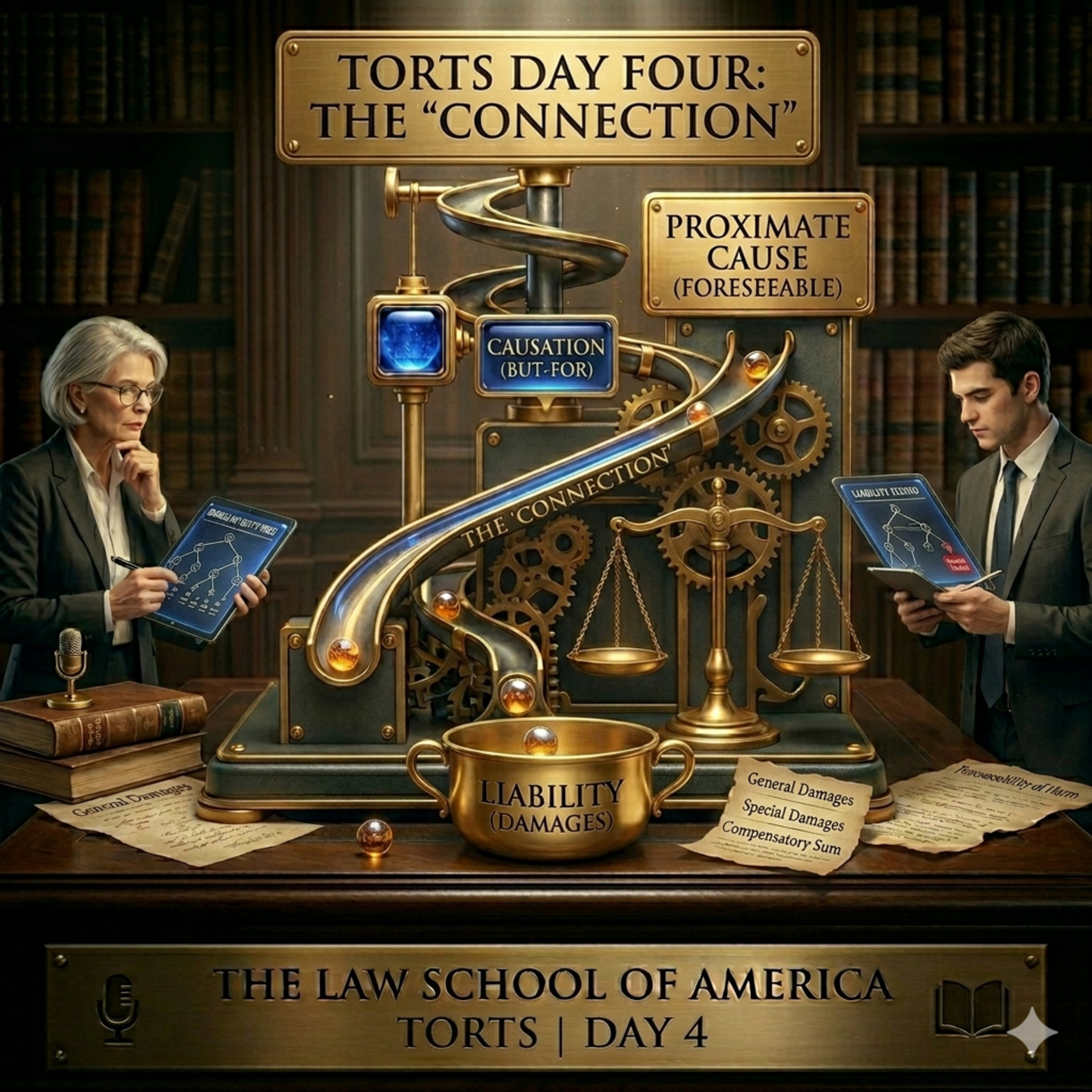
Torts Day Four: The "Connection" [not-audio_url] [/not-audio_url]

Duration: 58:32
In this episode, we explore the core principles and intricate mechanics of tort law, focusing on how courts connect careless acts to injuries and assign responsibility. From the factual causation to the nuanced doctrines…
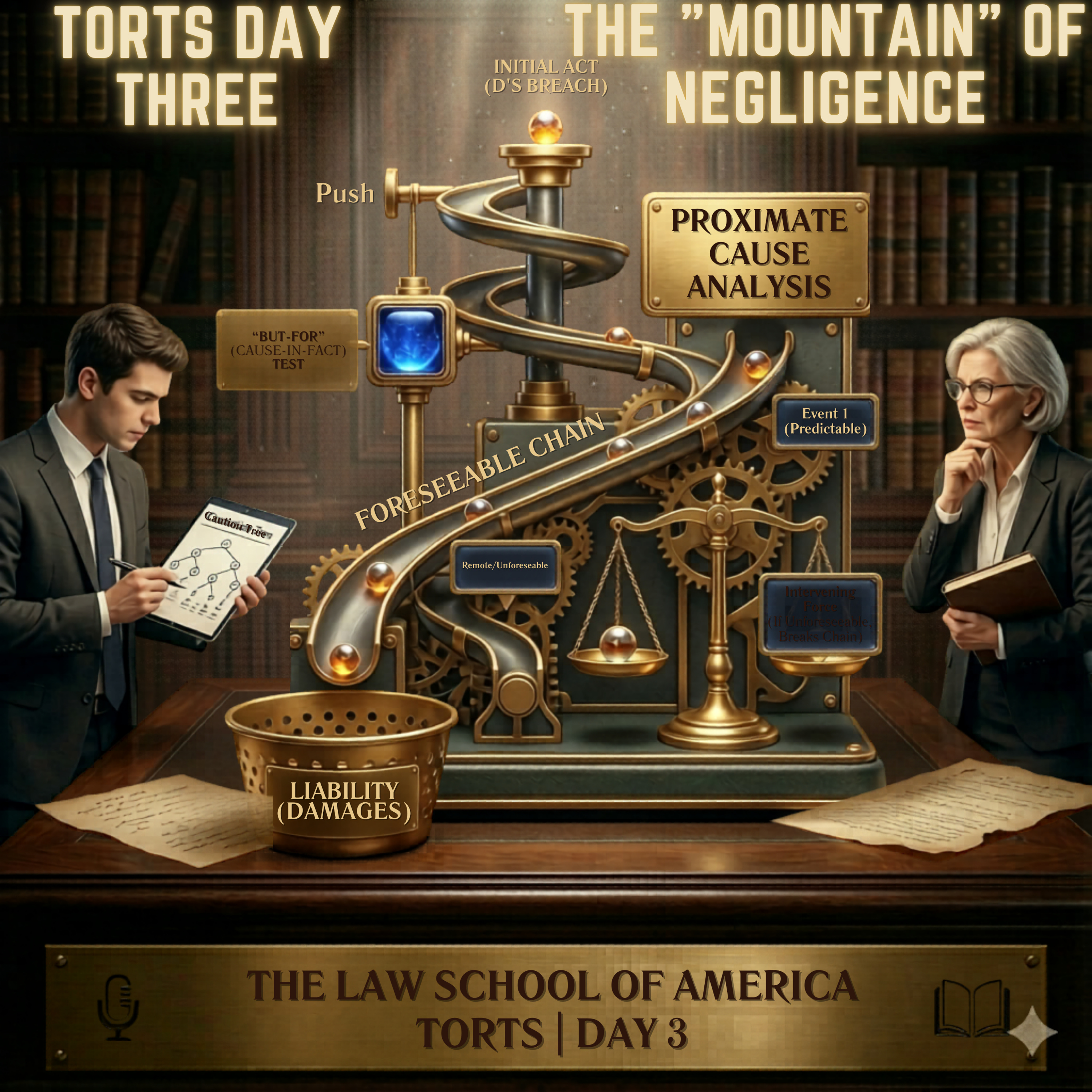
Torts Day Three: The "Mountain" of Negligence [not-audio_url] [/not-audio_url]

Duration: 1:01:53
In this episode, we explore the fundamental doctrines of negligence—the most crucial foundation of personal injury law—and decode how courts determine fault through duty and breach analysis. Whether you're a law student,…
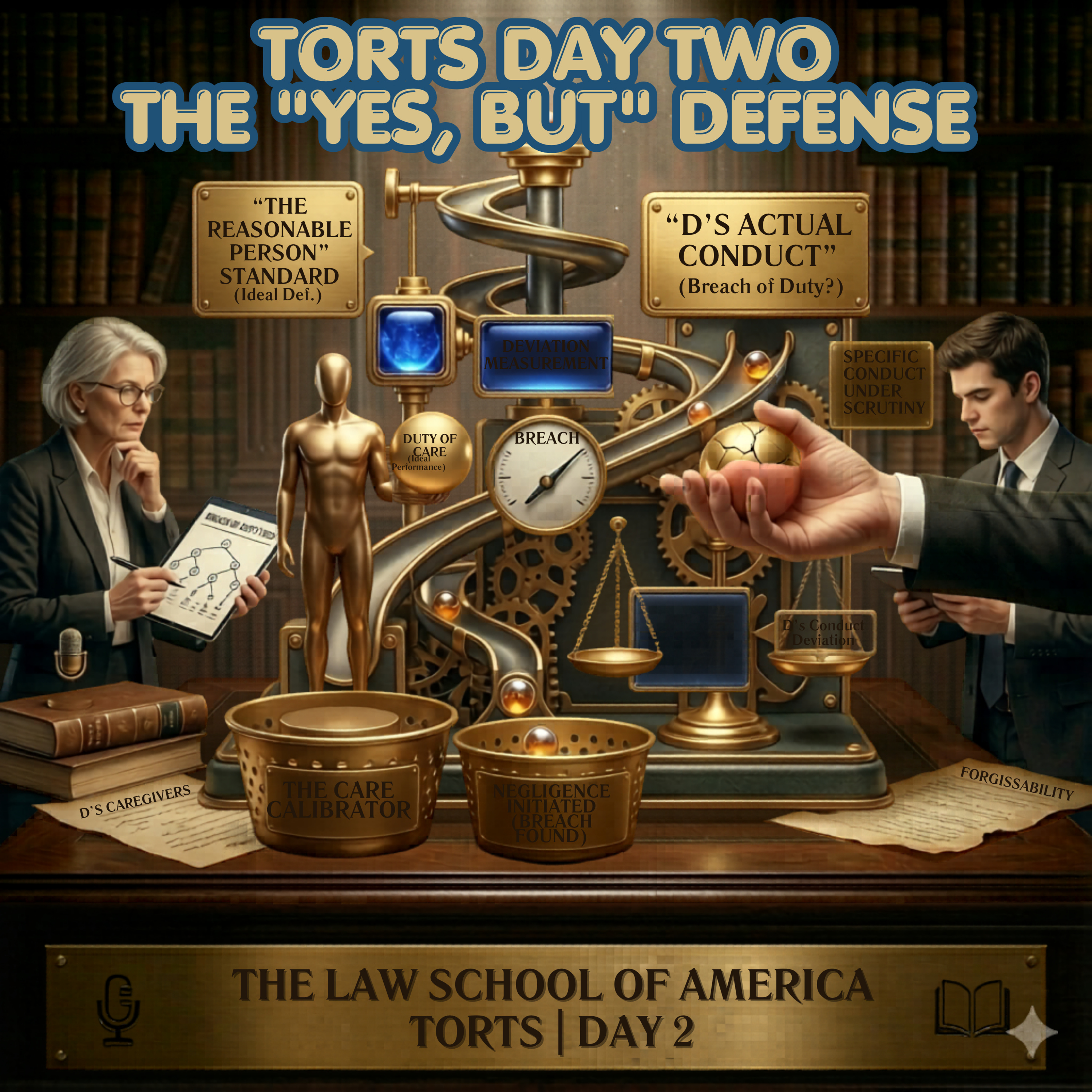
Torts Day Two: The "Yes, But" Defense [not-audio_url] [/not-audio_url]

Duration: 1:03:03
In this episode, we delve into the strategic complexity of affirmative defenses in tort law. Understanding how and when these shields apply can turn a losing case into a victory, or vice versa. We explore key defenses li…
Torts Day One: The Power of Intent [not-audio_url] [/not-audio_url]

Duration: 58:52
This episode breaks down the core principles of intentional torts, from the foundational engine of volitional acts and intent to the nuanced doctrine of transferred intent. Whether you're preparing for law school exams o…
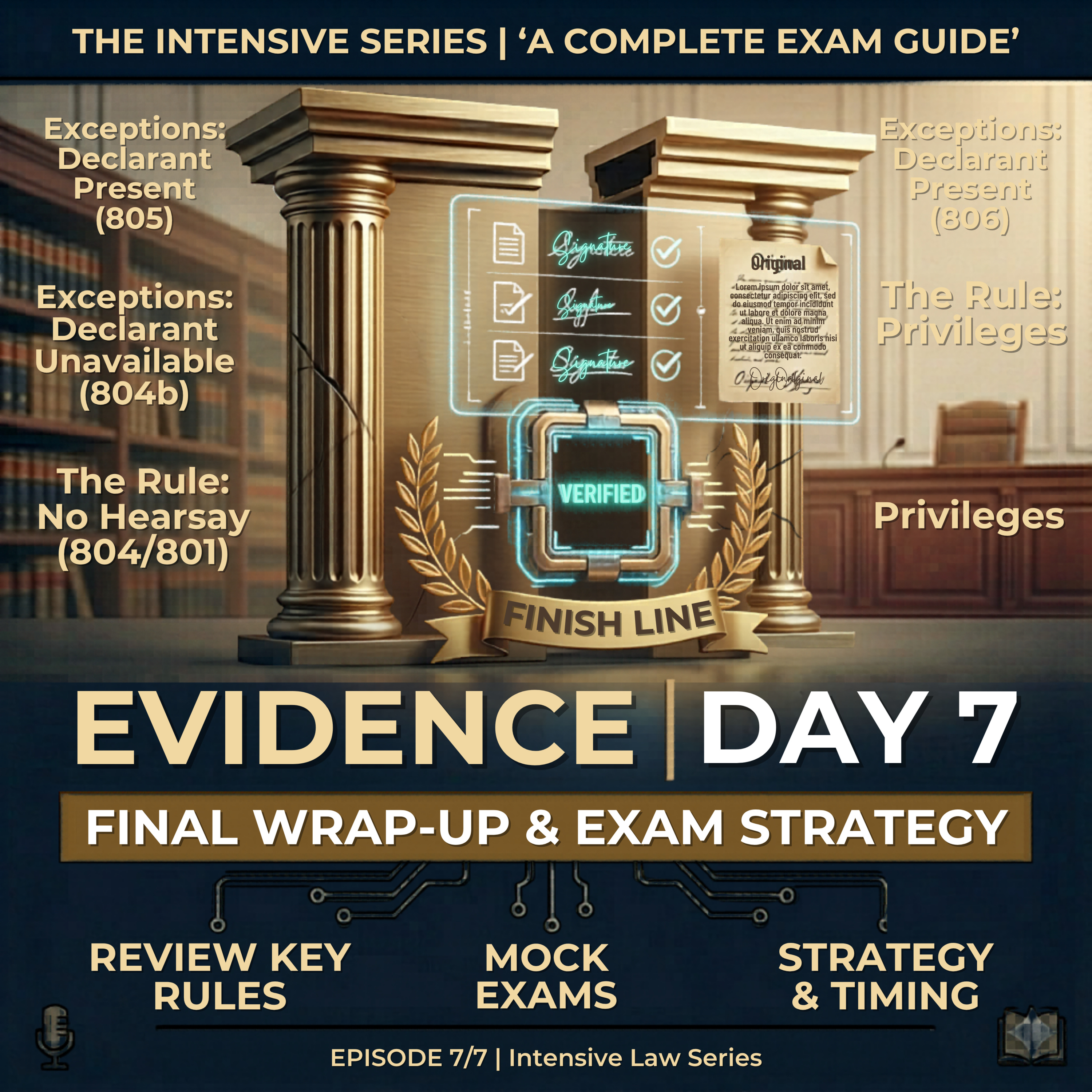
Evidence Day Seven: The Vault and the Final Machine [not-audio_url] [/not-audio_url]

Duration: 1:26:54
Prepare for your next exam or courtroom with a systematic framework that demystifies the complexity of evidence law. In this episode, we dissect the layered process of evaluating evidence—from privileges and presumptions…
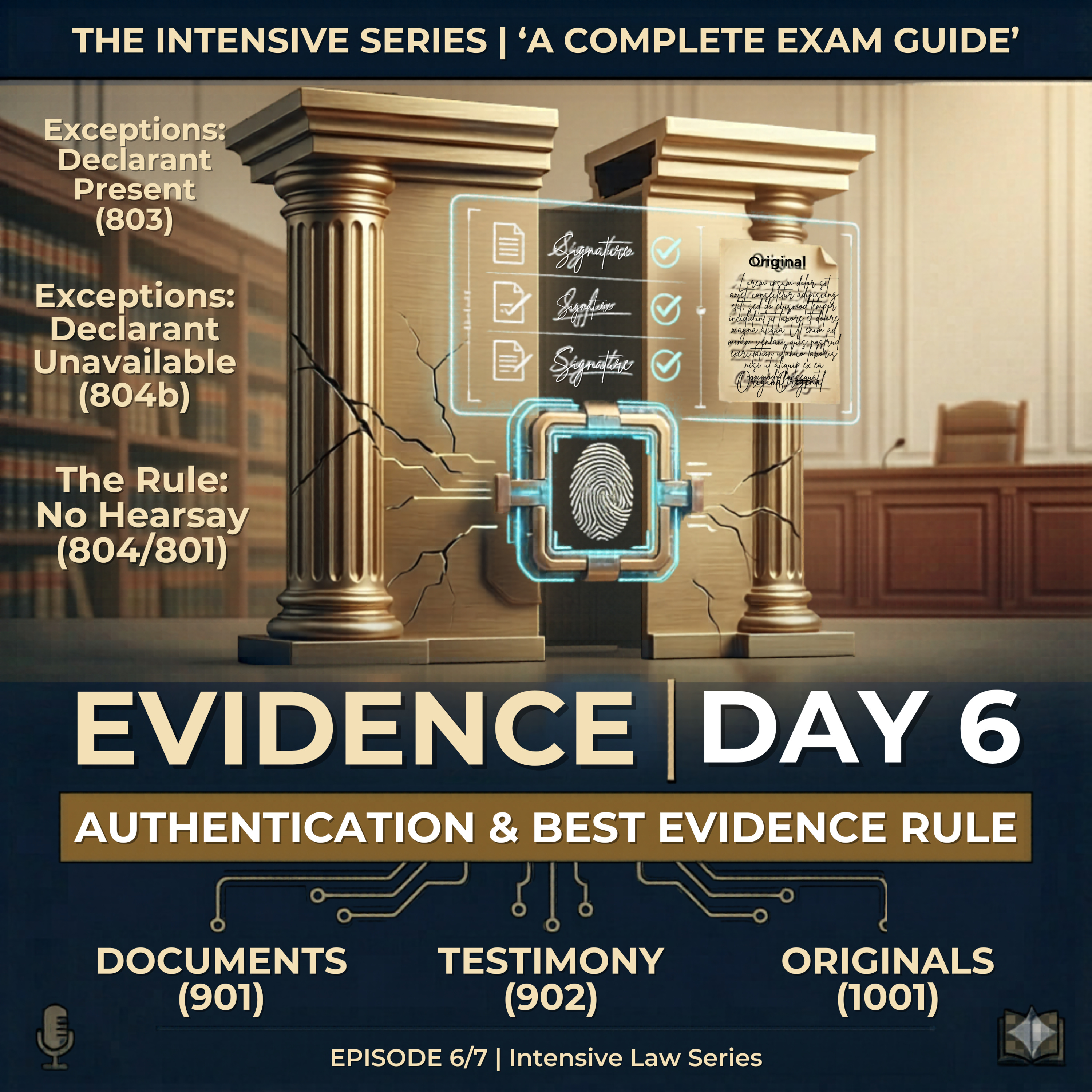
Evidence Day Six: The Container and the Key [not-audio_url] [/not-audio_url]

Duration: 57:07
This episode takes you through the rigorous process of introducing physical evidence in court, breaking down complex rules with clear analogies and real-world examples. Whether you're preparing for the bar exam or seekin…
Evidence Day Five: The Hearsay Exceptions [not-audio_url] [/not-audio_url]

Duration: 1:07:12
In this deep dive into evidence law, we explore how courts differentiate between trustworthy and unreliable out-of-court statements through rules, doctrines, and constitutional safeguards. If you're preparing for a law e…
Evidence Day Four: The Hearsay Gauntlet [not-audio_url] [/not-audio_url]

Duration: 1:01:34
In this episode, we demystify the complex world of hearsay evidence, turning what often feels like an insurmountable maze into a clear, actionable framework. Whether you're a law student, a lawyer, or just a curious mind…
Evidence Day Three: The Witness Clinic [not-audio_url] [/not-audio_url]

Duration: 1:06:48
In this episode, we delve into the foundational pillars of witness testimony, unraveling the complexities of competency, memory, and the art of impeachment. Designed to equip law students and future lawyers, this session…
Evidence Day Two: The Character Assassination Clinic [not-audio_url] [/not-audio_url]

Duration: 1:01:41
In this episode, we explore the intricate landscape of character evidence within U.S. law, emphasizing how rules and exceptions are designed to balance fairness with societal interests. Whether you're a law student or a…