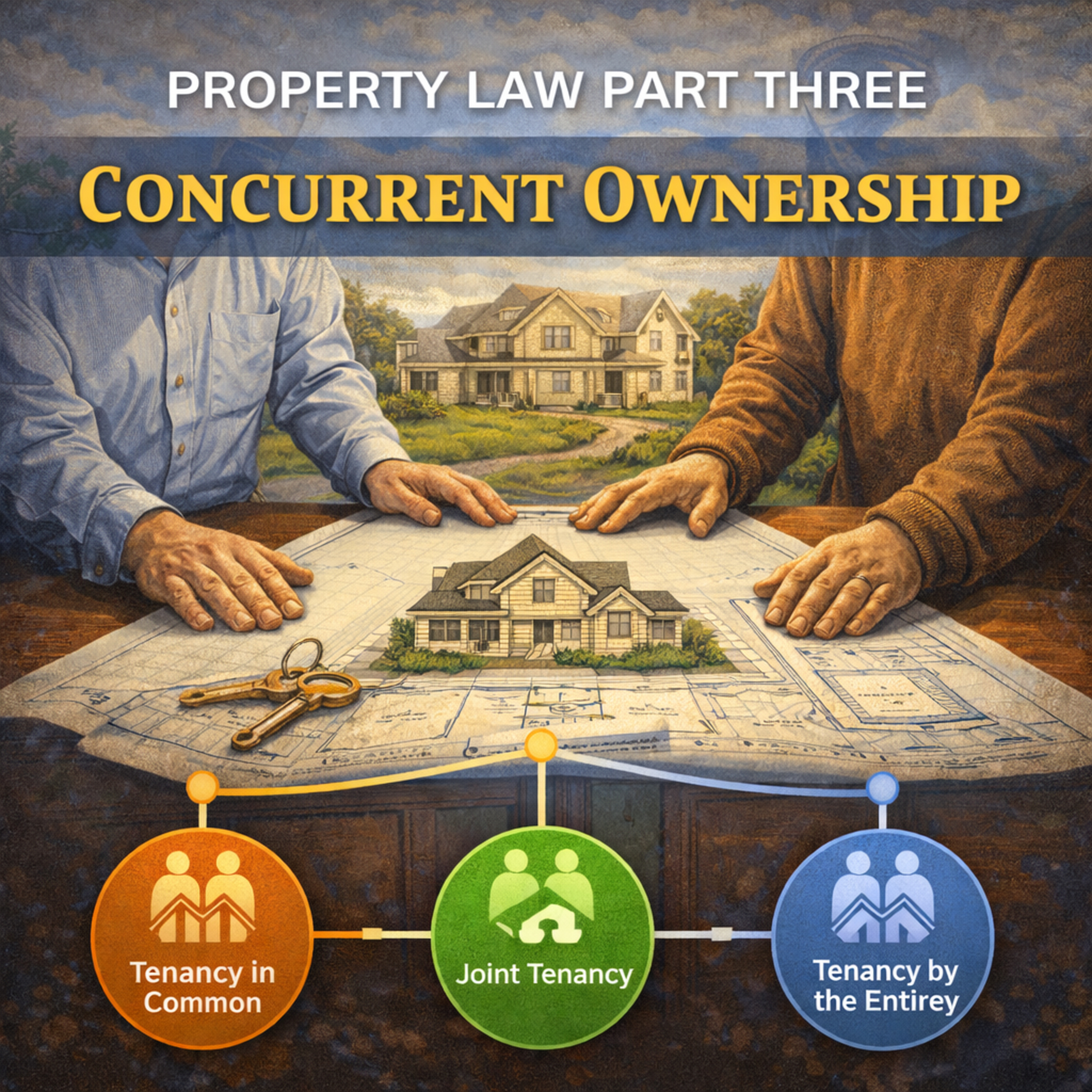
Most people assume owning property together is simple—until the law reveals its chaotic, high-stakes complexity. If you think co-ownership is just "my house or yours," think again. One wrong step or misunderstood rule can turn a seamless partnership into a chaotic nightmare, especially when a life or death situation hits. This episode unlocks the hidden frameworks behind concurrent ownership—cases, concepts, and tricks that can make or break your exam success and legal certainty.
Delve into the core distinctions that define property sharing. You’ll discover how tenancy in common—the default estate—creates a flexible, undivided interest with no survivorship rights, meaning interests pass to heirs and can be sold or gifted without the others' consent. We break down the significance of the four unities—time, title, interest, possession—necessary to form a joint tenancy, and reveal the "magic words"—"as joint tenants with right of survivorship"—that create this fragile but powerful estate. But beware: even a single mistake like a unilateral sale, a mortgage, or a vague deed can sever the tenancy, instantly transforming it into a tenancy in common.
You’ll uncover the secret art of severance—how acts like selling a share during your lifetime or certain jurisdictional nuances (title theory versus lien theory) can unravel the survivorship shield. And just when you think the game is straightforward, we expose the rare, controversial "secret severance" maneuvers—deeds to oneself or straw men—that courts often reject as fraud, especially highlighted in recent landmark cases like Pennsylvania’s Re’s State of Grant.
Marriage introduces a special variation: tenancy by the entirety, offering near-absolute protections—no unilateral sale, creditor shields for individual spouses, and the power of survivorship. But those walls crumble upon divorce, death, or mutual agreement, reverting to plain joint tenancy or tenancy in common. We analyze the policy debates—should long-term partners or even room-mates get similar protections?—prompting you to think beyond tradition.
This episode also reveals the gritty realities of co-ownership management. When one occupant pays all expenses—mortgage, taxes—you’ll learn how courts balance fairness with law, using concepts like contribution and offsets especially in post-divorce scenarios like Barrow v. Barrow. And when disagreements escalate—disputes over rent, improvements, or waste—partition becomes the ultimate tool. You’ll understand the differences between physical division in kind and sale by the court, and the critical principles guiding those decisions.
A robust four-step exam framework wraps up our journey: identify the estate, check for severance, analyze ownership disputes, and apply the proper remedy. PLUS, we challenge outdated conventions—asking whether marriage-based protections should evolve into home-centric, long-term arrangements that include same-sex couples and long-term friends, reflecting societal shifts.
Whether you’re studying for law school, the bar exam, or just want to grasp how property law shapes societal values, this episode delivers a condensed, detailed roadmap to master concurrent ownership. It’s packed with concrete examples, critical case insights, and practical tips to help you analyze any question confidently—and avoid the common pitfalls that trip up even experienced students.
If understanding land rights, estate plans, or complex ownership conflicts excites you—or if you want to avoid that exam trap of thinking "ownership is simple"—this episode is your essential guide. Tap into the legal web of interests, rights, duties, and tricks that govern real property. Master the foundational concepts—because in property law, what you don’t know can cost you everything.
property law, concurrent ownership, tenancy in common, joint tenancy, tenancy by the entirety, legal rights, property rights, co-ownership, severance, partition