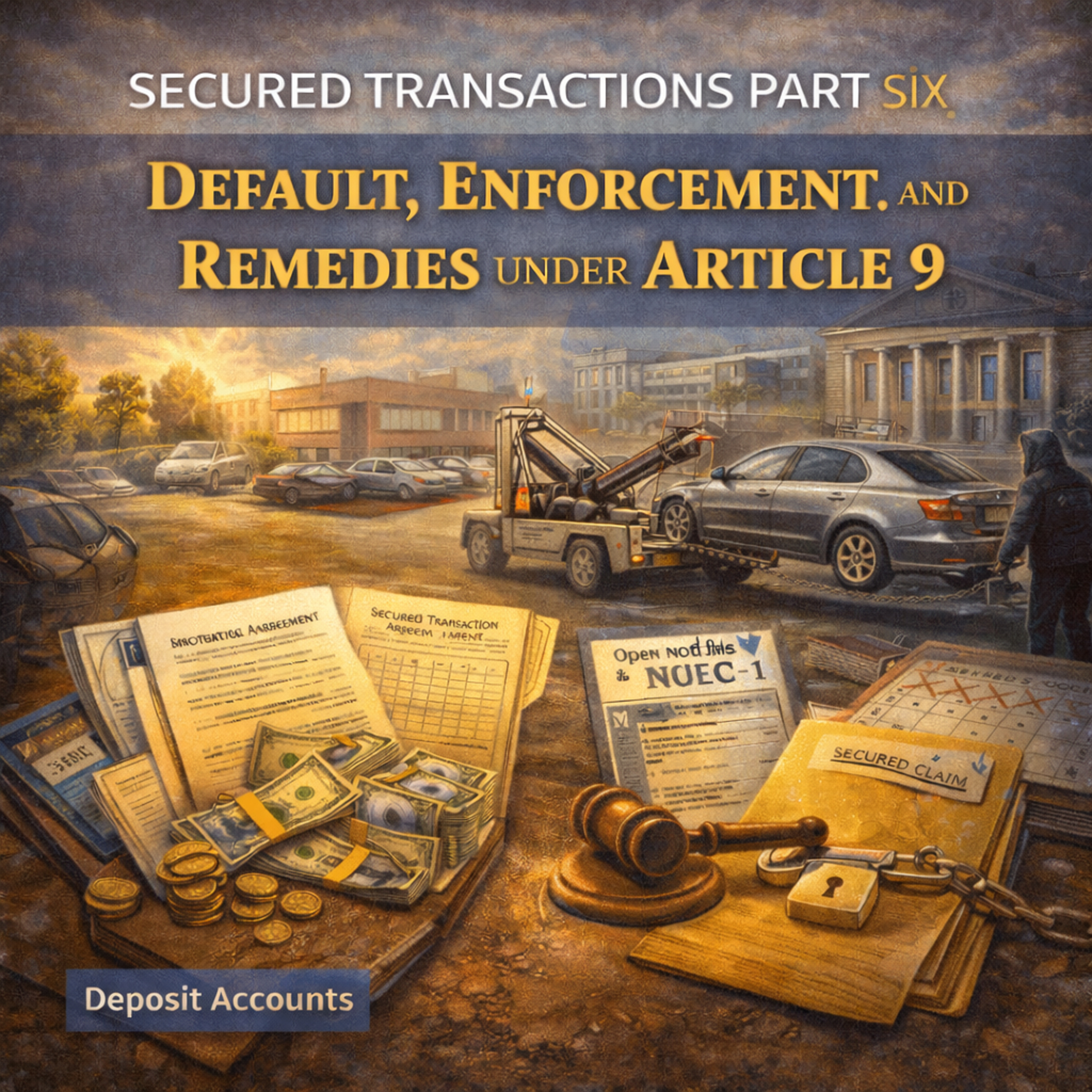
In this deep dive, we explore the complexities of secured transactions, focusing on the lifecycle of a transaction from the optimistic drafting phase to the crisis point of default enforcement and remedies. The discussion emphasizes the importance of understanding the statutory void in defining default, the rights of secured parties in repossession, the necessity of commercially reasonable sales, and the implications of bankruptcy on secured claims. The conversation provides a roadmap for navigating Article Nine, highlighting the procedural protections for debtors and the strict compliance required from creditors.
Most secured transactions hinge on a single moment—the default. But behind this pivotal event lies a complex web of rules balancing lender power and debtor rights. In this in-depth episode, we expose the hidden intricacies of Chapter 6 of Article 9, confronting what happens when a deal goes wrong and the stakes are at their highest. Whether you're a law student prepping for the bar or a professional navigating risky enforcement, understanding this process can make or break your case.
Discover how the law cleverly avoids defining default explicitly, leaving it to contract terms—meaning, your security agreement dictates the trigger, not the code. We unravel the common default triggers, including missed payments, covenant breaches, and the infamous insolvency clause—often a trap in disguise, since federal bankruptcy law can override even the clearest contractual provisions. Recognize the tactical importance of assuming default on exams: focusing on enforcement, not parsing contract language.
The episode zooms into the key options secured parties hold once default is established. Should they pursue judicial repossession or self-help methods? Learn case law nuances like breach of peace—what constitutes a violation, night-time repossessions, and deceptive tactics like impersonating law enforcement—risks that turn well-meaning repossessions into liability jackpots.
Moving into sale and liquidation, we explore the power of commercially reasonable dispositions—why process often outweighs price and how missteps can void the entire enforcement. You'll uncover the critical notice requirements, the differences between public and private sales, and insider purchase restrictions ensuring fair market value. Unexpected pitfalls, such as using consumer notification forms for business loans, reveal how minor technical errors can cost millions.
We break down the waterfall: costs, secured rights, junior liens, and surplus—plus the crucial rule that senior liens generally stay attached in a foreclosure sale, potentially leaving new buyers with nasty surprises. Understand the strict standards for sales, whether absolute or rebuttable presumption, and how courts scrutinize efforts to maximize recoveries and avoid sham dealings.
The stakes escalate further when breaches occur—improper notices, breach of the peace, or unreasonable sale practices can strip secured parties of their remedies, sometimes turning aggressive enforcement into civil liability. Lastly, the interplay with bankruptcy halts all proceedings instantly, bifurcating claims and drastically reducing recovery potential. The law’s constant tension between power and procedural rigor pushes you to think discipline, caution, and precision.
Perfect for exam takers and practitioners alike, this episode offers a masterclass in navigating high-stakes default scenarios. As technology moves towards algorithmic liquidations, we pose a provocative question: Will traditional standards of commercial reasonableness survive in the age of instant AI-driven sales? Prepare to rethink enforcement in a rapidly evolving legal landscape.
Follow this checklist: Review security agreements, ensure repossessions are peaceful, verify notice compliance, confirm sales are reasonable, and master the calculation of deficiencies. Fail to do so, and your enforcement risks becoming a costly liability.