Structural Civil Procedure Part Four: Claim Preclusion, Issue Preclusion, and the Constitutional Meaning of Finality

Structural Civil Procedure Part Four: Claim Preclusion, Issue Preclusion, and the Constitutional Meaning of Finality

Author: The Law School of America March 12, 2026 Duration: 1:06:42
Issue Preclusion: The Systemic Power of Finality in Civil ProcedureIn this episode, we dissect the intricate doctrines of claim and issue preclusion—principles that dictate when a lawsuit truly ends and how judgments shape future litigation. Understanding these systemic rules is vital not only for exam success but also for navigating the complex landscape of modern mass litigation.Main Topics Covered:The fundamental distinction between claim preclusion (res judicata) and issue preclusion (collateral estoppel)How final judgments achieve systemic finality and the importance of the power of finalityThe five key elements ensuring proper application of issue preclusionThe constitutional and procedural limits on binding non-partiesThe role of courts' respect for judgments across different jurisdictions via the Full Faith and Credit ClauseHow doctrines adapt to mass litigation, such as class actionsKey Insights:Finality as systemic power: Judgments are more than mere resolutions—they possess a systemic authority that shapes future rights, reinforcing legal stability at the cost of occasional injustices.Claim preclusion is broad: It bars relitigation of claims arising from the same core facts if there’s a final, on-the-merits judgment between the same parties.Transactional test: Modern courts favor a pragmatic approach—claims are considered identical if they stem from the same operative nucleus of fact, preventing strategic claim splitting.Issue preclusion’s surgical precision: It prevents relitigation of specific issues actually litigated and essential to a final judgment, but only if those issues were actually decided and were appealable.Procedural safeguards matter: Default judgments, settlement agreements, and defaulted claims often escape issue preclusion because they’re not actually litigated or decided.Inter-jurisdictional respect: The Full Faith and Credit Clause ensures judgments from one state or federal court are recognized and enforced across jurisdictions, with application of the originating jurisdiction’s preclusion law.Non-party preclusion and due process: Strict mutuality rules have evolved into a more flexible framework allowing certain non-parties to be bound when fairness, representation, or statutory schemes justify it—foremost among them, class actions and statutory proceedings like bankruptcy.Practical Application:Approach complex fact patterns systematically: always start with claim preclusion, then move to issue preclusion if needed.Verify the finality, on-the-merits status, identity of parties, and whether the issue was actually litigated and essential.Always consider whether non-party preclusion applies under the six Taylor exceptions.Recognize the profound systemic importance: judgments are not just personal disputes—they shape real-world rights and systemic authority, often overriding individual participation for societal stability.Resources:Restatement (Second) of JudgmentsBernhard v. Bank of America (California case establishing non-mutual issue preclusion)[Full Faith and Credit Clause - U.S. Constitution](https://constitution.congress.gov/constitution/article-4/)[28 U.S.C. Section 1738](https://www.law.cornell.edu/uscode/text/28/1738)Taylor v. Sturgell (Supreme Court case on non-party preclusion)Federal Rule of Civil Procedure 13 (Joinder and Counterclaims)Connect with the Experts:Legal Professor on Civil ProcedureCivil Procedure PodcastMaster these doctrines with a structured, methodical approach, and you'll confidently navigate the systemic power of finality in civil litigation—crucial for both exams and real-world practice.
Ever wondered how the law really works but felt intimidated by dense textbooks and jargon? Law School, from The Law School of America, is here to change that. This podcast approaches legal education like a series of engaging conversations, breaking down the foundational principles of the American legal system into clear, manageable segments. Each episode focuses on a specific concept or area, building your comprehension step-by-step without overwhelming you. You'll hear straightforward explanations that connect theory to real-world application, making complex topics accessible whether you're a student, a professional in a related field, or simply a curious citizen. The goal is to demystify the law, transforming it from an abstract subject into a practical understanding you can use. By consistently tuning in, you gradually construct a solid framework of legal knowledge. This isn't about quick tricks; it's about dedicated, cumulative learning. The structure of the podcast is designed for steady progress, allowing listeners to absorb information at their own pace and truly integrate it. Think of it as an audio companion for your intellectual journey into jurisprudence, offering clarity and insight one episode at a time.
Author: Language: en-us Episodes: 100

Law School
Podcast Episodes
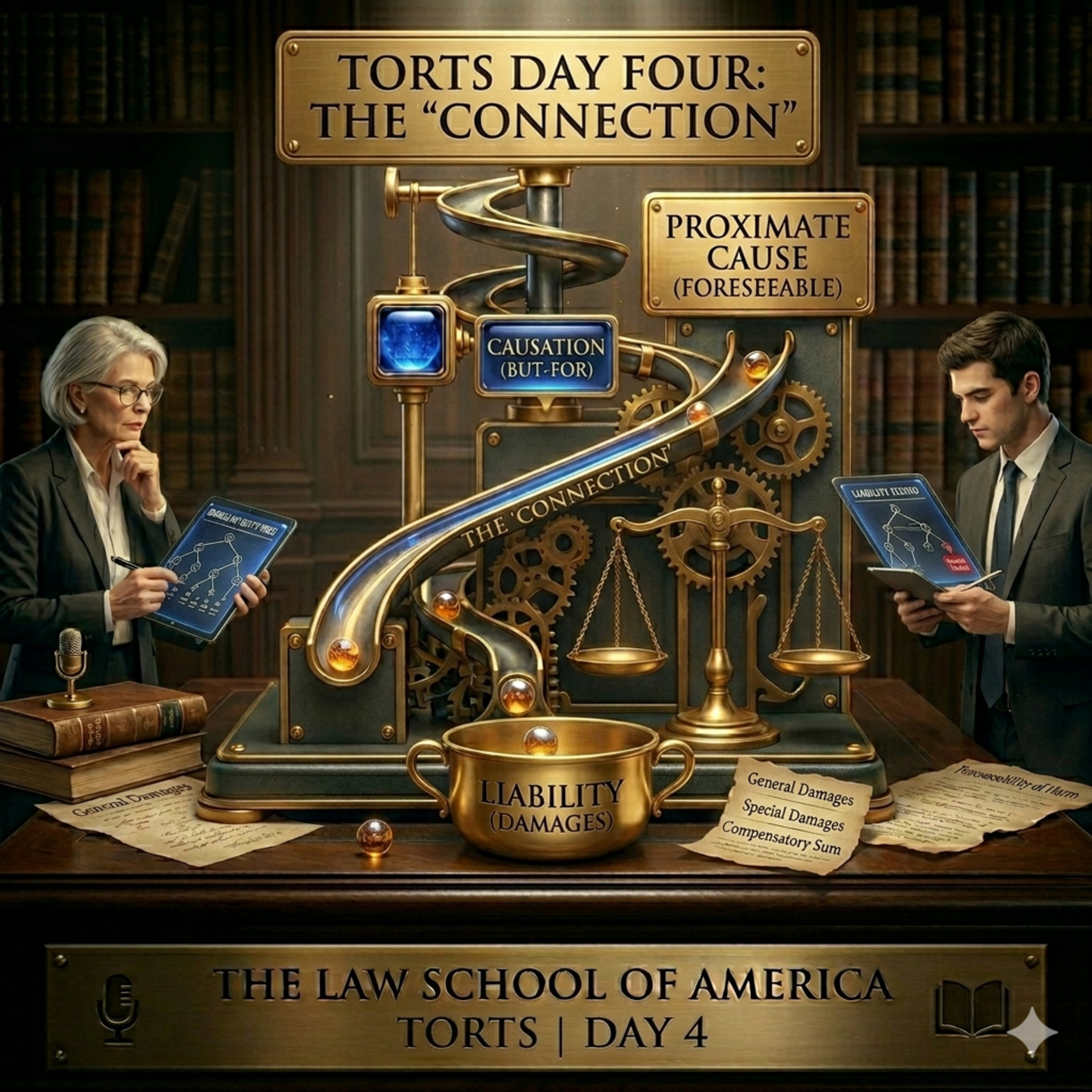
Torts Day Four: The "Connection" [not-audio_url] [/not-audio_url]

Duration: 58:32
In this episode, we explore the core principles and intricate mechanics of tort law, focusing on how courts connect careless acts to injuries and assign responsibility. From the factual causation to the nuanced doctrines…
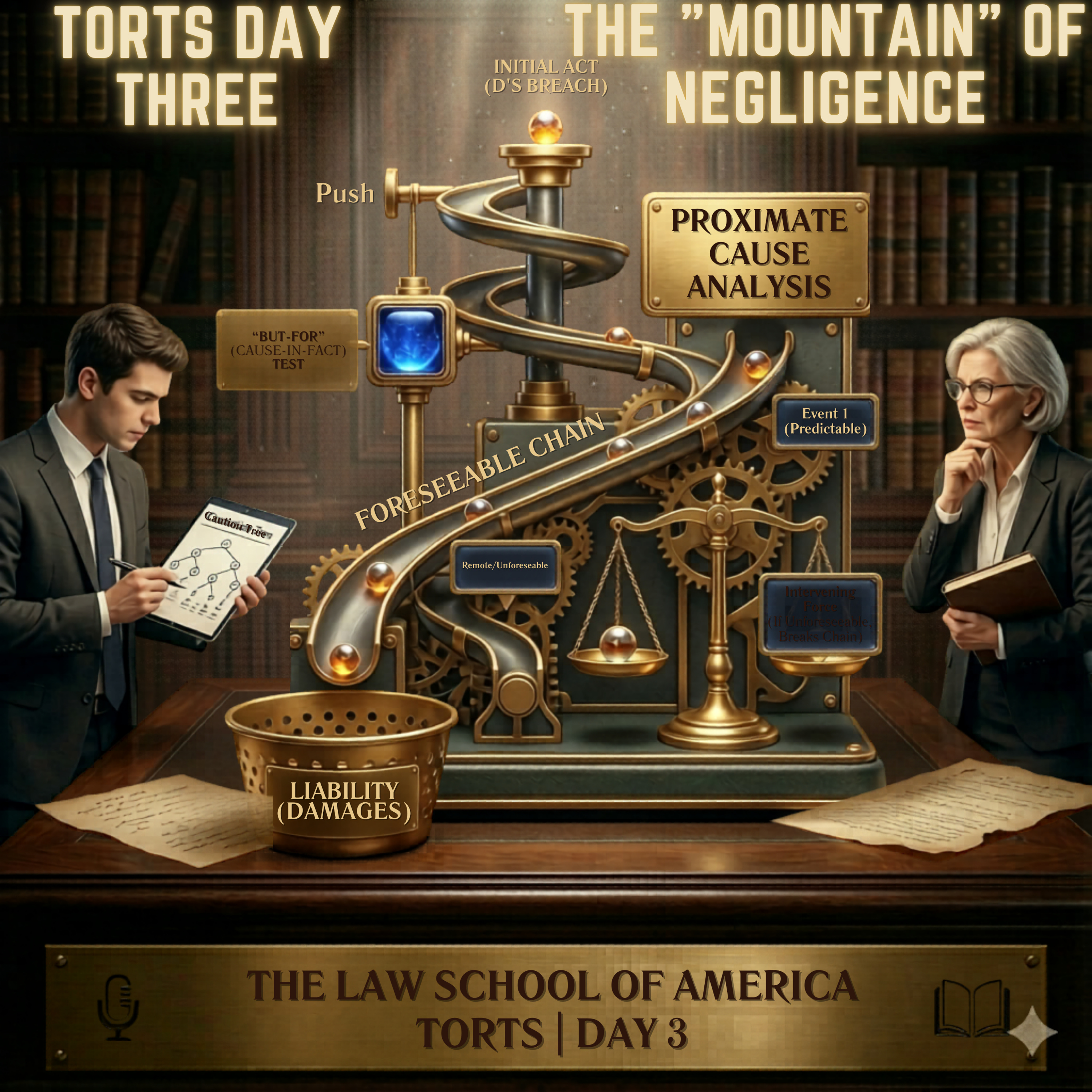
Torts Day Three: The "Mountain" of Negligence [not-audio_url] [/not-audio_url]

Duration: 1:01:53
In this episode, we explore the fundamental doctrines of negligence—the most crucial foundation of personal injury law—and decode how courts determine fault through duty and breach analysis. Whether you're a law student,…
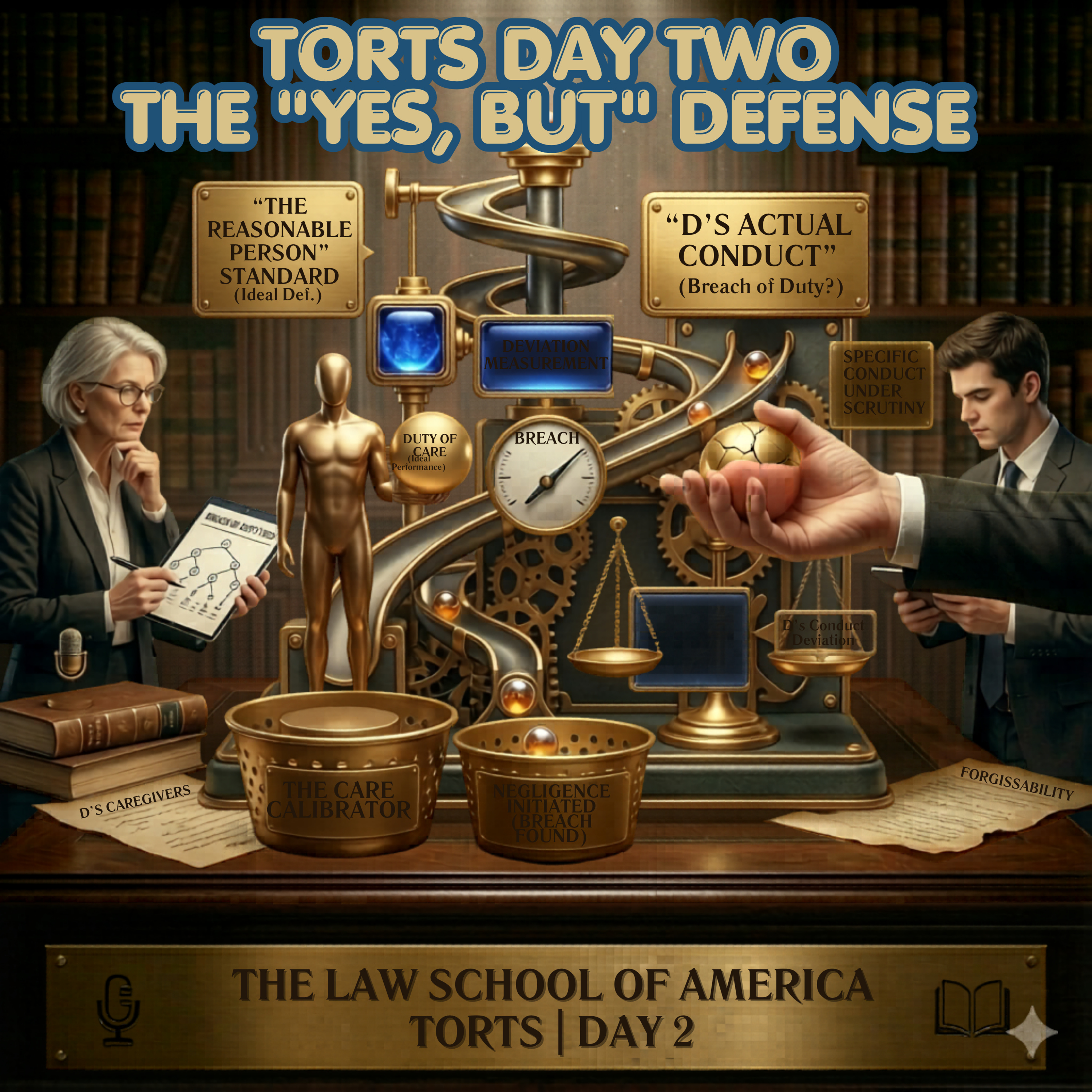
Torts Day Two: The "Yes, But" Defense [not-audio_url] [/not-audio_url]

Duration: 1:03:03
In this episode, we delve into the strategic complexity of affirmative defenses in tort law. Understanding how and when these shields apply can turn a losing case into a victory, or vice versa. We explore key defenses li…
Torts Day One: The Power of Intent [not-audio_url] [/not-audio_url]

Duration: 58:52
This episode breaks down the core principles of intentional torts, from the foundational engine of volitional acts and intent to the nuanced doctrine of transferred intent. Whether you're preparing for law school exams o…
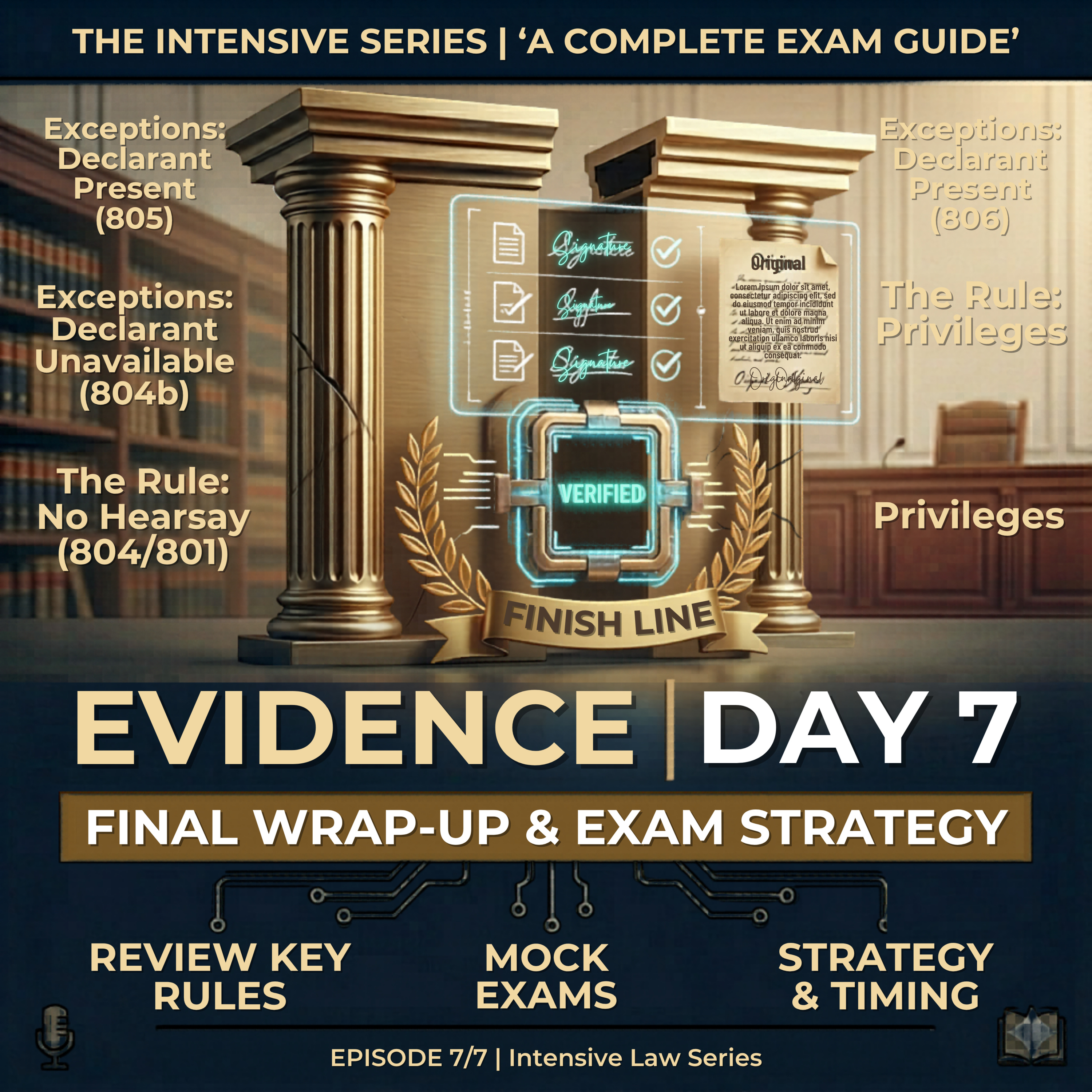
Evidence Day Seven: The Vault and the Final Machine [not-audio_url] [/not-audio_url]

Duration: 1:26:54
Prepare for your next exam or courtroom with a systematic framework that demystifies the complexity of evidence law. In this episode, we dissect the layered process of evaluating evidence—from privileges and presumptions…
Evidence Day Six: The Container and the Key [not-audio_url] [/not-audio_url]

Duration: 57:07
This episode takes you through the rigorous process of introducing physical evidence in court, breaking down complex rules with clear analogies and real-world examples. Whether you're preparing for the bar exam or seekin…
Evidence Day Five: The Hearsay Exceptions [not-audio_url] [/not-audio_url]

Duration: 1:07:12
In this deep dive into evidence law, we explore how courts differentiate between trustworthy and unreliable out-of-court statements through rules, doctrines, and constitutional safeguards. If you're preparing for a law e…
Evidence Day Four: The Hearsay Gauntlet [not-audio_url] [/not-audio_url]

Duration: 1:01:34
In this episode, we demystify the complex world of hearsay evidence, turning what often feels like an insurmountable maze into a clear, actionable framework. Whether you're a law student, a lawyer, or just a curious mind…
Evidence Day Three: The Witness Clinic [not-audio_url] [/not-audio_url]

Duration: 1:06:48
In this episode, we delve into the foundational pillars of witness testimony, unraveling the complexities of competency, memory, and the art of impeachment. Designed to equip law students and future lawyers, this session…
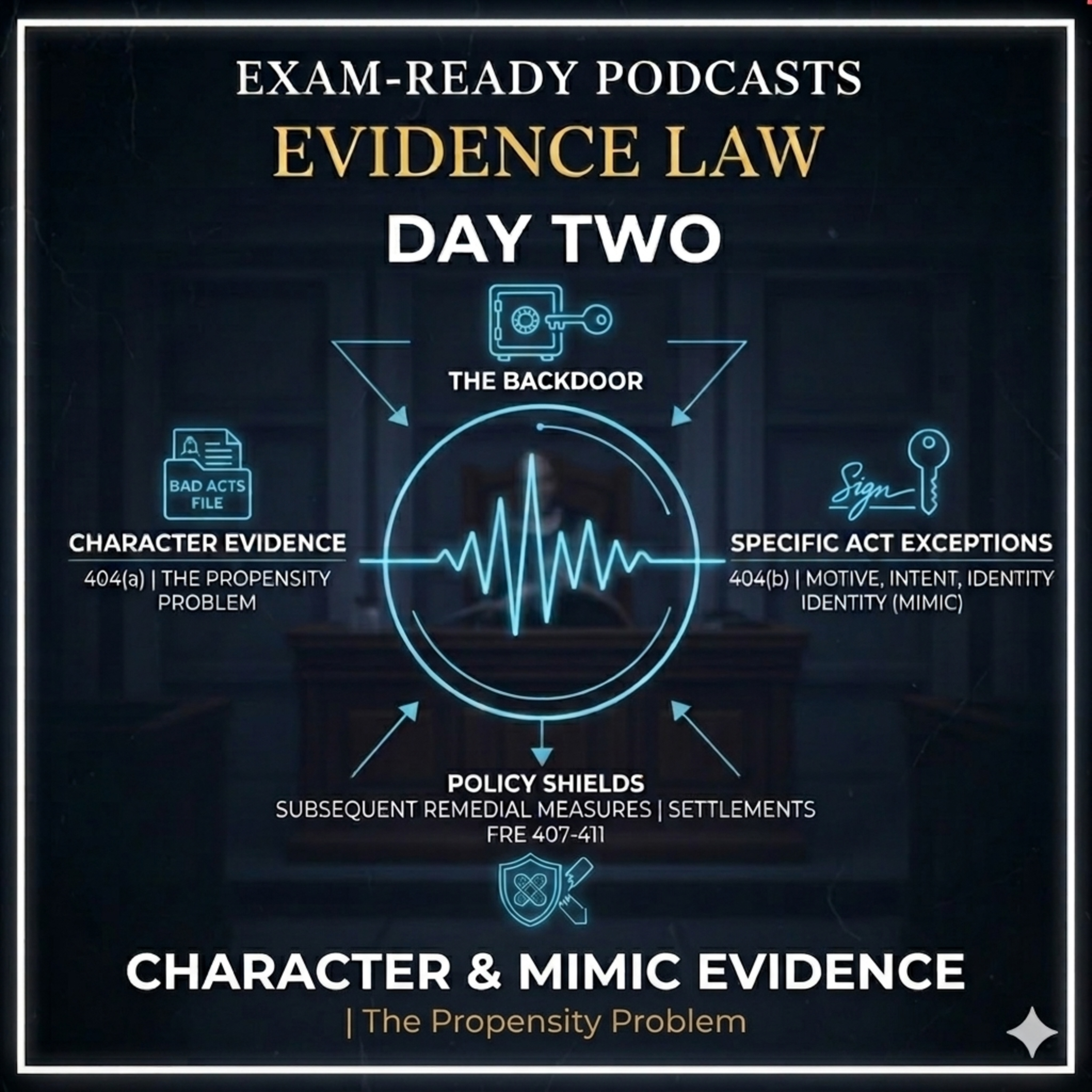
Evidence Day Two: The Character Assassination Clinic [not-audio_url] [/not-audio_url]

Duration: 1:01:41
In this episode, we explore the intricate landscape of character evidence within U.S. law, emphasizing how rules and exceptions are designed to balance fairness with societal interests. Whether you're a law student or a…