"Maybe there’s a pattern here?" by dynomight

"Maybe there’s a pattern here?" by dynomight

Author: LessWrong March 5, 2026 Duration: 15:23
1.

It occurred to me that if I could invent a machine—a gun—which could by its rapidity of fire, enable one man to do as much battle duty as a hundred, that it would, to a large extent supersede the necessity of large armies, and consequently, exposure to battle and disease [would] be greatly diminished.

Richard Gatling (1861)

2.

In 1923, Hermann Oberth published The Rocket to Planetary Spaces, later expanded as Ways to Space Travel. This showed that it was possible to build machines that could leave Earth's atmosphere and reach orbit. He described the general principles of multiple-stage liquid-fueled rockets, solar sails, and even ion drives. He proposed sending humans into space, building space stations and satellites, and travelling to other planets.

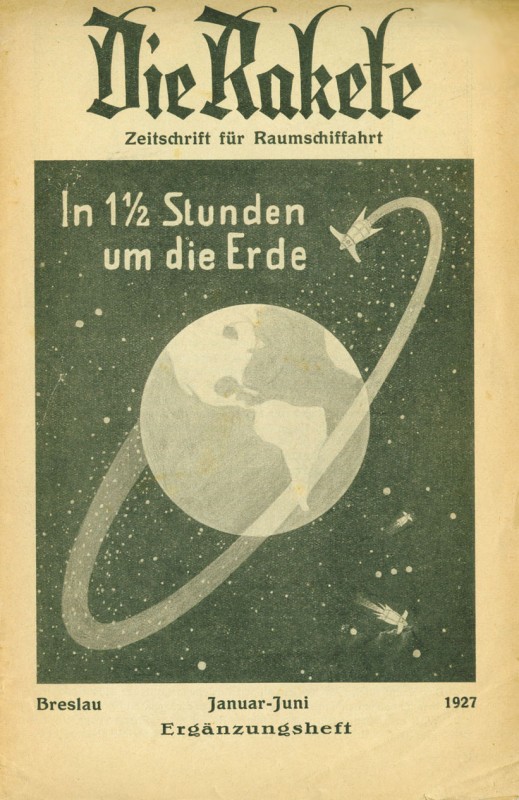
The idea of space travel became popular in Germany. Swept up by these ideas, in 1927, Johannes Winkler, Max Valier, and Willy Ley formed the Verein für Raumschiffahrt (VfR) (Society for Space Travel) in Breslau (now Wrocław, Poland). This group rapidly grew to several hundred members. Several participated as advisors of Fritz Lang's The Woman in the Moon, and the VfR even began publishing their own journal.

In 1930, the VfR was granted permission to [...]

---

Outline:

(00:09) 1.

(00:36) 2.

(03:55) 3.

(06:09) 4.

(10:33) 5.

(11:41) 6.

---

First published:
March 4th, 2026

Source:
https://www.lesswrong.com/posts/TjcvjwaDsuea8bmbR/maybe-there-s-a-pattern-here

---


Narrated by TYPE III AUDIO.

---

Images from the article:

German magazine cover
French newspaper front page showing early airplane demonstration at Bois de Boulogne.
Workers carrying boxes on their heads near a streetcar.Apple Podcasts and Spotify do not show images in the episode description. Try Pocket Casts, or another podcast app.


Dive into a stream of ideas where technology, culture, philosophy, and society intersect, all through the lens of the LessWrong (Curated & Popular) podcast. This isn't a traditional talk show with hosts, but rather a curated audio library of the most impactful writing from the LessWrong community. Each episode is a narration of a full post, selected for its high value and interesting arguments, focusing on pieces that have been formally curated or have garnered significant community approval. You'll hear clear, thoughtful readings of essays that tackle complex topics like artificial intelligence, rational thinking, moral philosophy, and the forces shaping our future. The audio format lets you absorb these dense, often paradigm-shifting concepts during a commute or a walk, turning written analysis into an immersive listening experience. This particular feed is deliberately selective, offering a manageable stream of the community's standout work. For those who want an even deeper dive into the discussion, there are broader feeds available. The LessWrong (Curated & Popular) podcast serves as an intellectual filter, delivering the signal through the noise and inviting you to engage with some of the most rigorously examined ideas on the internet.
Author: Language: English Episodes: 100

LessWrong (Curated & Popular)
Podcast Episodes
"My journey to the microwave alternate timeline" by Malmesbury [not-audio_url] [/not-audio_url]

Duration: 20:26
Cross-posted from Telescopic Turnip Recommended soundtrack for this post As we all know, the march of technological progress is best summarized by this meme from Linkedin: Inventors constantly come up with exciting new i…
"Stone Age Billionaire Can’t Words Good" by Eneasz [not-audio_url] [/not-audio_url]

Duration: 23:19
I was at the Pro-Billionaire march, unironically. Here's why, what happened there, and how I think it went. Me on the far left. From WSJ. I. Why? There's a genre of horror movie where a normal protagonist is going throug…
"On Goal-Models" by Richard_Ngo [not-audio_url] [/not-audio_url]

Duration: 6:36
I'd like to reframe our understanding of the goals of intelligent agents to be in terms of goal-models rather than utility functions. By a goal-model I mean the same type of thing as a world-model, only representing how…
"Post-AGI Economics As If Nothing Ever Happens" by Jan_Kulveit [not-audio_url] [/not-audio_url]

Duration: 16:38
When economists think and write about the post-AGI world, they often rely on the implicit assumption that parameters may change, but fundamentally, structurally, not much happens. And if it does, it's maybe one or two em…
