"Solar storms" by Croissanthology

"Solar storms" by Croissanthology

Author: LessWrong March 9, 2026 Duration: 23:22
Most of civilization's electricity is generated far off-site from where it's delivered. This is because you don't want to be running and refueling coal/gas/nuclear plants inside cities, hydraulic/wind power can't be moved, and solar panels are cheaper to install on flat desert terrain than on cities:

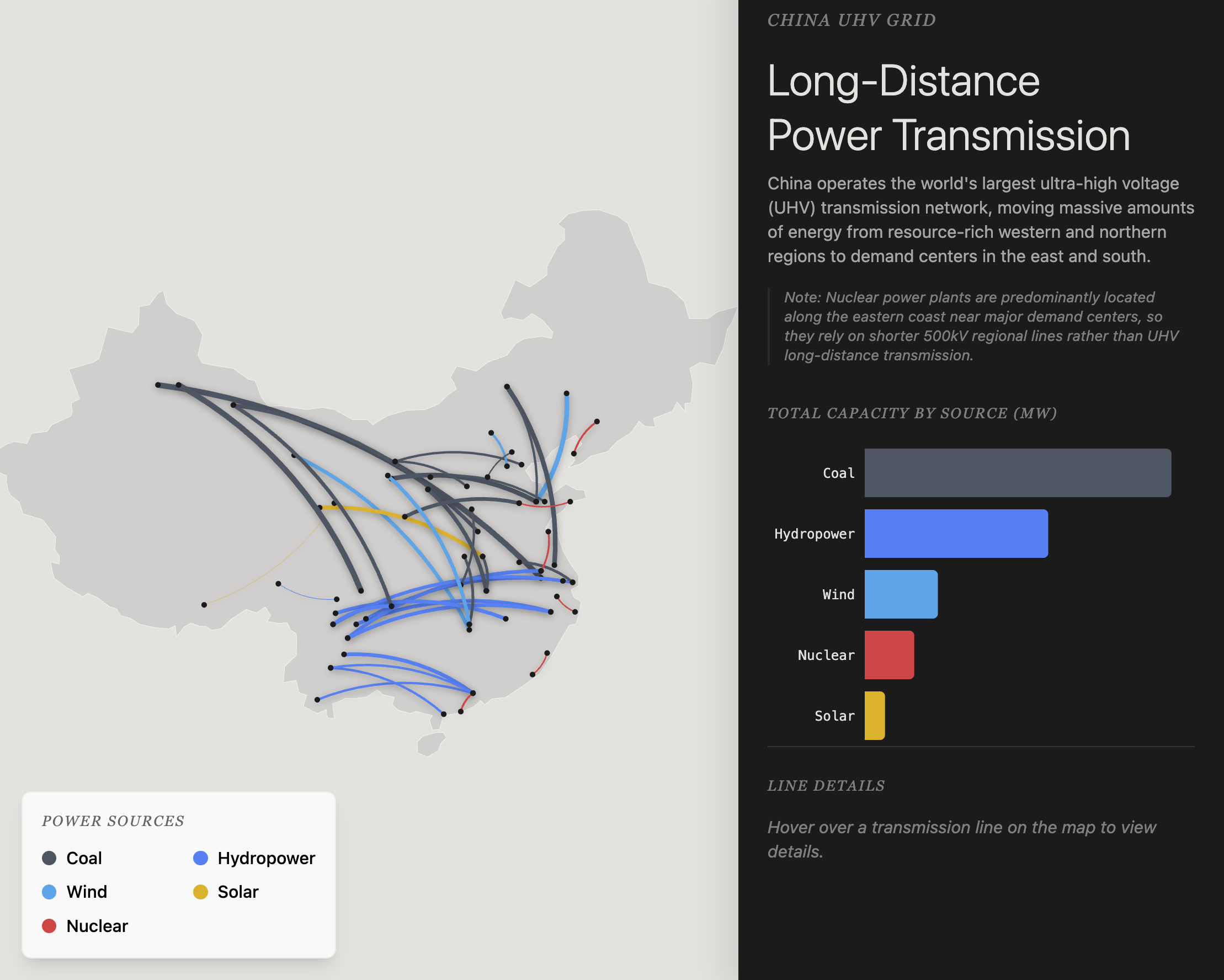
So in practice this means running power over hundreds or even thousands of kilometers. E.g. here are the Chinese long-distance lines:

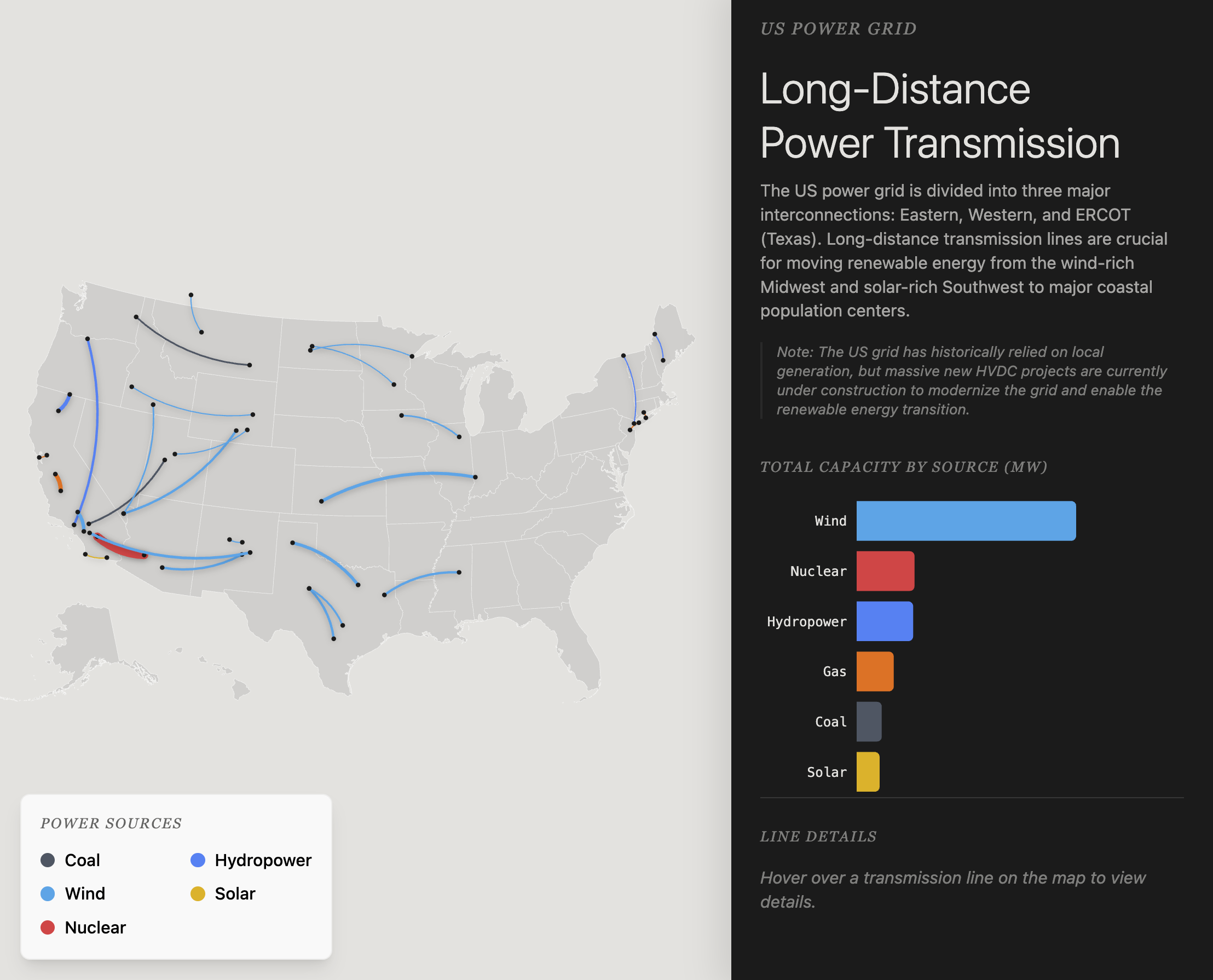
Gemini 3.1 Pro-preview in AI studio American long-distance lines:

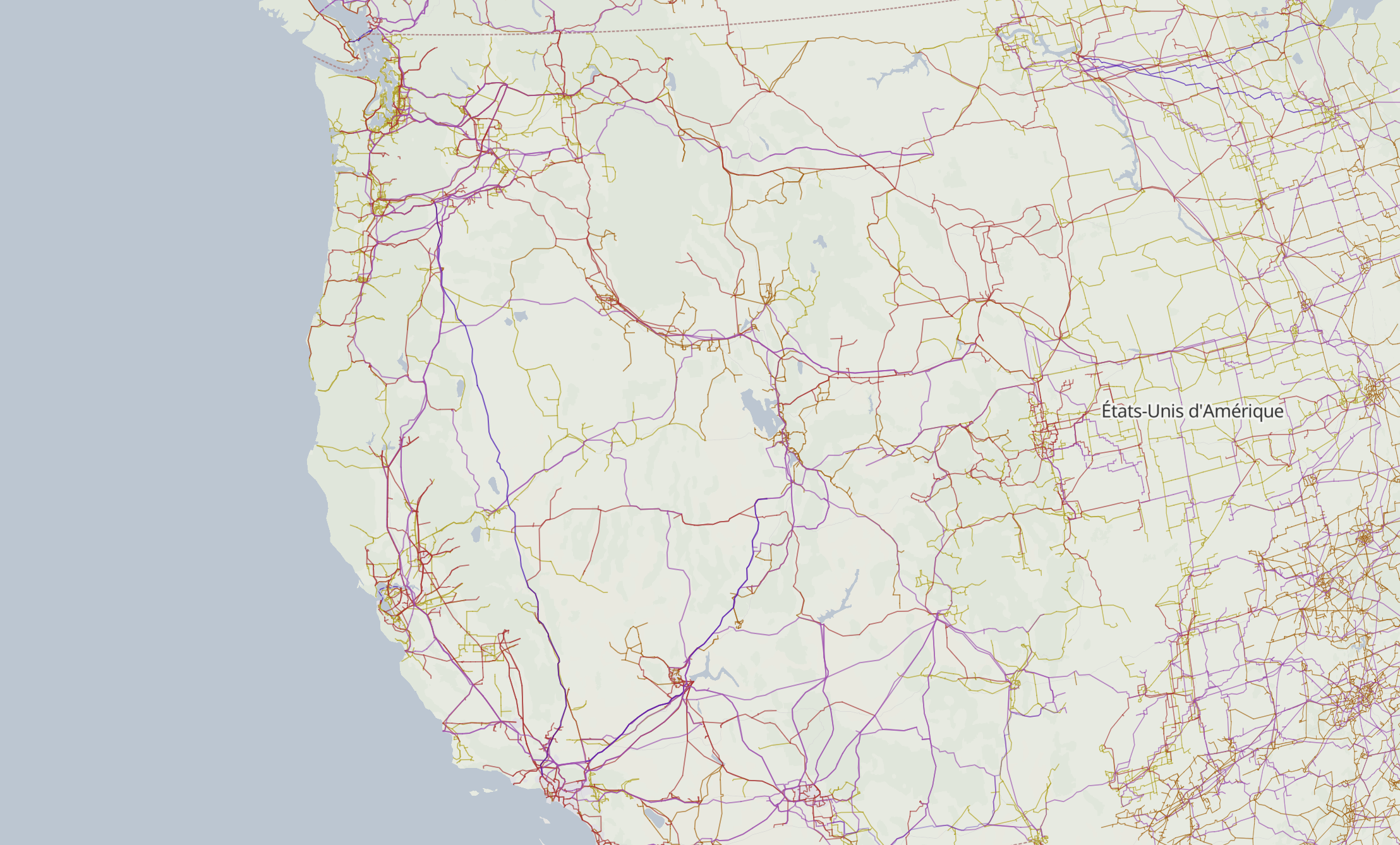
These are simplified maps meant to illustrate how insanely long power lines get. The true shape of solar storm vulnerability looks like a spiderweb overlayed on population density (see below), which you can visualize on this website.

The fact that civilization finds it economical to generate its electricity hundreds or thousands of kilometers away from its population centers is rather mind-blowing given the infrastructure involved. For example, the Tucuruí line spans the Amazon rainforest and the Amazon river to supply the Brazilian coast with inland hydropower:

China's Zhoushan Island crossing involves lattice pylons taller than the Eiffel tower and spanning 2.7 kilometers of open sea:

These transmission lines respectively power 2.4 and 6.6 GW, which is insane. The [...]

---

Outline:

(05:46) Solar storms can cause LPTs to violently, messily explode

[... 4 more sections]

---

First published:
March 8th, 2026

Source:
https://www.lesswrong.com/posts/ghq9EwiXbRbWSnDzF/solar-storms

---


Narrated by TYPE III AUDIO.

---

Images from the article:

Gemini 3.1 Pro-preview in AI studio
Infographic showing US power grid long-distance transmission lines and capacity by source.
Road map of the western United States showing transportation networks.
High-voltage power lines cutting through dense green forest landscape.

Dive into a stream of ideas where technology, culture, philosophy, and society intersect, all through the lens of the LessWrong (Curated & Popular) podcast. This isn't a traditional talk show with hosts, but rather a curated audio library of the most impactful writing from the LessWrong community. Each episode is a narration of a full post, selected for its high value and interesting arguments, focusing on pieces that have been formally curated or have garnered significant community approval. You'll hear clear, thoughtful readings of essays that tackle complex topics like artificial intelligence, rational thinking, moral philosophy, and the forces shaping our future. The audio format lets you absorb these dense, often paradigm-shifting concepts during a commute or a walk, turning written analysis into an immersive listening experience. This particular feed is deliberately selective, offering a manageable stream of the community's standout work. For those who want an even deeper dive into the discussion, there are broader feeds available. The LessWrong (Curated & Popular) podcast serves as an intellectual filter, delivering the signal through the noise and inviting you to engage with some of the most rigorously examined ideas on the internet.
Author: Language: English Episodes: 100

LessWrong (Curated & Popular)
Podcast Episodes
"My journey to the microwave alternate timeline" by Malmesbury [not-audio_url] [/not-audio_url]

Duration: 20:26
Cross-posted from Telescopic Turnip Recommended soundtrack for this post As we all know, the march of technological progress is best summarized by this meme from Linkedin: Inventors constantly come up with exciting new i…
"Stone Age Billionaire Can’t Words Good" by Eneasz [not-audio_url] [/not-audio_url]

Duration: 23:19
I was at the Pro-Billionaire march, unironically. Here's why, what happened there, and how I think it went. Me on the far left. From WSJ. I. Why? There's a genre of horror movie where a normal protagonist is going throug…
"On Goal-Models" by Richard_Ngo [not-audio_url] [/not-audio_url]

Duration: 6:36
I'd like to reframe our understanding of the goals of intelligent agents to be in terms of goal-models rather than utility functions. By a goal-model I mean the same type of thing as a world-model, only representing how…
"Post-AGI Economics As If Nothing Ever Happens" by Jan_Kulveit [not-audio_url] [/not-audio_url]

Duration: 16:38
When economists think and write about the post-AGI world, they often rely on the implicit assumption that parameters may change, but fundamentally, structurally, not much happens. And if it does, it's maybe one or two em…
