"The optimal age to freeze eggs is 19" by GeneSmith

"The optimal age to freeze eggs is 19" by GeneSmith

Author: LessWrong February 18, 2026 Duration: 13:31
If you're a woman interested in preserving your fertility window beyond its natural close in your late 30s, egg freezing is one of your best options.

The female reproductive system is one of the fastest aging parts of human biology. But it turns out, not all parts of it age at the same rate.

The eggs, not the uterus, are what age at an accelerated rate. Freezing eggs can extend a woman's fertility window by well over a decade, allowing a woman to give birth into her 50s. In fact, the oldest woman to give birth was a mother in India using donor eggs who became pregnant at age 74!

In a world where more and more women are choosing to delay childbirth to pursue careers or to wait for the right partner, egg freezing is really the only tool we have to enable these women to have the career and the family they want.

Given that this intervention can nearly double the fertility window of most women, it's rather surprising just how little fanfare there is about it and how narrow the set of circumstances are under which it is recommended.

Standard practice in the fertility [...]

---

Outline:

(05:12) Polygenic Embryo Screening

(06:52) What about technology to make eggs from stem cells? Wont that make egg freezing obsolete?

(07:26) We dont know with certainty how long it will take to develop this technology

(07:48) Stem cell derived eggs are probably going to be quite expensive at the start

(08:36) Cells accrue genetic mutations over time

(09:12) How do I actually freeze my eggs?

(12:12) Risks of egg freezing

---

First published:
February 8th, 2026

Source:
https://www.lesswrong.com/posts/dxffBxGqt2eidxwRR/the-optimal-age-to-freeze-eggs-is-19

---


Narrated by TYPE III AUDIO.

---

Images from the article:

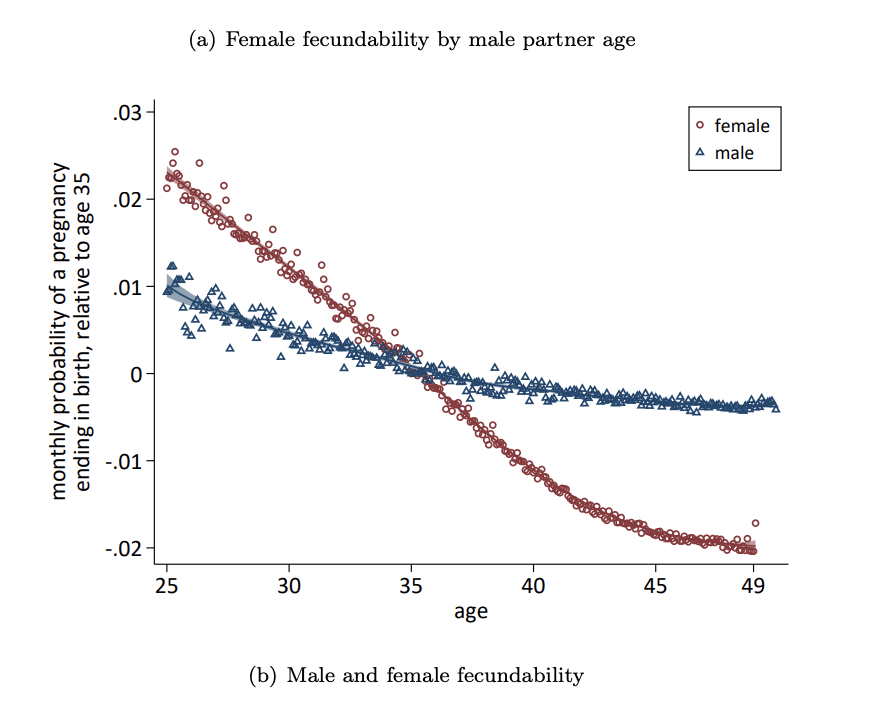
Graph showing monthly probability of pregnancy ending in birth by male partner age.
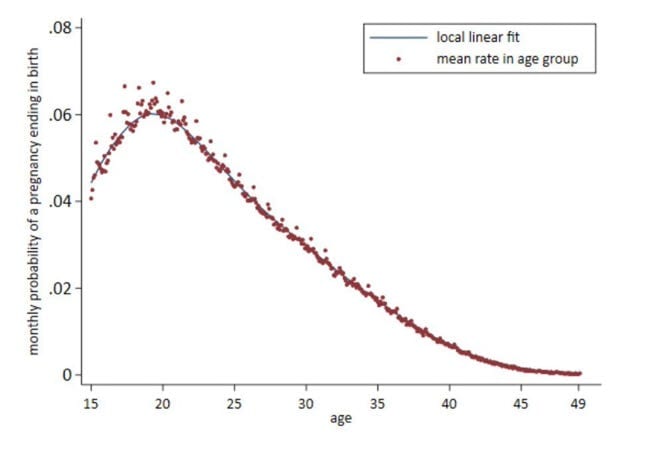
Monthly probability of getting pregnant for couples not on birth control. Note that these couples weren't actively trying for pregnancy, which is why the absolute probability is so low. See figure A4 from Geruso et al. for context.
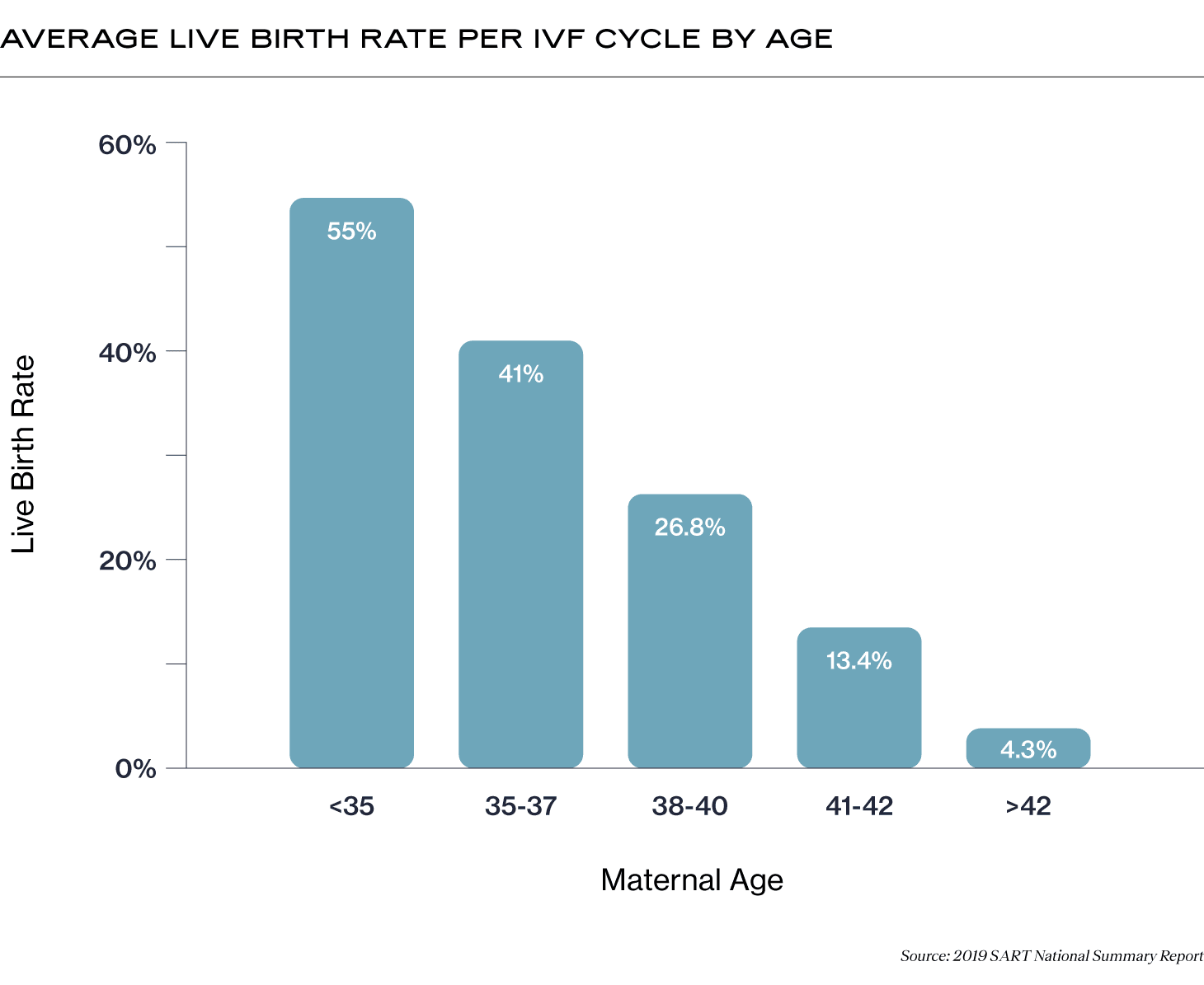
Yes, you're reading this right. SART literally does not distinguish between 20 year olds and 34 year olds in their succe</truncato-artificial-root>

Dive into a stream of ideas where technology, culture, philosophy, and society intersect, all through the lens of the LessWrong (Curated & Popular) podcast. This isn't a traditional talk show with hosts, but rather a curated audio library of the most impactful writing from the LessWrong community. Each episode is a narration of a full post, selected for its high value and interesting arguments, focusing on pieces that have been formally curated or have garnered significant community approval. You'll hear clear, thoughtful readings of essays that tackle complex topics like artificial intelligence, rational thinking, moral philosophy, and the forces shaping our future. The audio format lets you absorb these dense, often paradigm-shifting concepts during a commute or a walk, turning written analysis into an immersive listening experience. This particular feed is deliberately selective, offering a manageable stream of the community's standout work. For those who want an even deeper dive into the discussion, there are broader feeds available. The LessWrong (Curated & Popular) podcast serves as an intellectual filter, delivering the signal through the noise and inviting you to engage with some of the most rigorously examined ideas on the internet.
Author: Language: English Episodes: 100

LessWrong (Curated & Popular)
Podcast Episodes
“Little Echo” by Zvi [not-audio_url] [/not-audio_url]

Duration: 4:08
I believe that we will win. An echo of an old ad for the 2014 US men's World Cup team. It did not win. I was in Berkeley for the 2025 Secular Solstice. We gather to sing and to reflect. The night's theme was the opposite…
“A Pragmatic Vision for Interpretability” by Neel Nanda [not-audio_url] [/not-audio_url]

Duration: 1:03:58
Executive Summary The Google DeepMind mechanistic interpretability team has made a strategic pivot over the past year, from ambitious reverse-engineering to a focus on pragmatic interpretability: Trying to directly solve…
“AI in 2025: gestalt” by technicalities [not-audio_url] [/not-audio_url]

Duration: 41:59
This is the editorial for this year's "Shallow Review of AI Safety". (It got long enough to stand alone.) Epistemic status: subjective impressions plus one new graph plus 300 links. Huge thanks to Jaeho Lee, Jaime Sevill…
“Eliezer’s Unteachable Methods of Sanity” by Eliezer Yudkowsky [not-audio_url] [/not-audio_url]

Duration: 16:13
"How are you coping with the end of the world?" journalists sometimes ask me, and the true answer is something they have no hope of understanding and I have no hope of explaining in 30 seconds, so I usually answer someth…
“An Ambitious Vision for Interpretability” by leogao [not-audio_url] [/not-audio_url]

Duration: 8:49
The goal of ambitious mechanistic interpretability (AMI) is to fully understand how neural networks work. While some have pivoted towards more pragmatic approaches, I think the reports of AMI's death have been greatly ex…
“MIRI’s 2025 Fundraiser” by alexvermeer [not-audio_url] [/not-audio_url]

Duration: 15:37
MIRI is running its first fundraiser in six years, targeting $6M. The first $1.6M raised will be matched 1:1 via an SFF grant. Fundraiser ends at midnight on Dec 31, 2025. Support our efforts to improve the conversation…
“The Boring Part of Bell Labs” by Elizabeth [not-audio_url] [/not-audio_url]

Duration: 25:57
It took me a long time to realize that Bell Labs was cool. You see, my dad worked at Bell Labs, and he has not done a single cool thing in his life except create me and bring a telescope to my third grade class. Nothing…
