SSRI Withdrawal Is Mitochondrial Dysfunction

SSRI Withdrawal Is Mitochondrial Dysfunction

Author: Chris Masterjohn, PhD November 23, 2025 Duration: 1:29:04

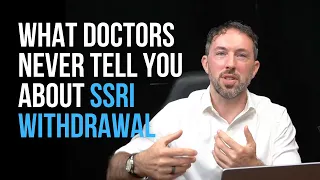
Chris Masterjohn, PhD, Founder and Scientific Director of mito.me, explains why SSRI withdrawal is mitochondrial dysfunction and what to do about it.

This is not medical advice, diagnosis, or treatment. 

29 million Americans and about 5-10% of the world's population are on SSRIs, which have become the first-line treatment of depression.

These can cause sexual dysfunction and emotional blunting in up to half of people, an unclear incidence of sleep disruption, and a rare risk of suicidality, self-harm, and new-onset psychosis.

On the other hand, 20-50% of people who go off experience SSRI discontinuation syndrome.

This can involve irritability, anxiety, mood problems, crying, dread, suicidal ideation, insomnia, nightmares, excessive dreaming, lethargy, fatigue, headache, tremor, sweating, anorexia, flu-like symptoms, nausea, vomiting, diarrhea, pain, numbness, tingling, feeling like something is crawling on the skin, electric shocks running through the brain or body, rushing noises, visual traces (seeing something persist when it is no longer there, or seeing moving objects leaving illusory streaks of light behind them, etc), dizziness, light-headedness, "brain zaps," vertigo, confusion, difficulty concentrating, amnesia, genital hypersensitivity, and premature ejaculation.

A closely related problem is post-SSRI sexual dysfunction (PSSD), which can cause total inability to feel the penis for males or for females the genitals and nipples, loss of sexual pleasure, weak orgasms, decreased libido, erectile dysfunction, and premature ejaculation. PSSD is often associated with general anhedonia, apathy, and poor mood.

In this video, Masterjohn maintains that the reason there are no good solutions to these problems is because we have completely misunderstood the role of serotonin and SSRIs.

Serotonin's role is to help mitochondria adapt to changing demands for oxygen-based energy production. 

SSRIs enhance some of the mechanisms, and interfere with others. They enter the cell and stimulate independent mechanisms of mitochondrial stress adaptation, but in doing so they turn a cyclical and rhythmic pathway into a constantly stimulated one, creating mitochondrial dependence and making mitochondria vulnerable to new-onset dysfunction upon withdrawal. Once they make it to the mitochondria itself, the SSRIs act as mitochondrial toxins.

Scientific references for everything covered in the video can be found in this series:

https://chrismasterjohnphd.substack.com/p/prozac-is-a-performance-enhancing

At the bottom of each article is a link to the next one.

0:30 SSRI Side Effects

1:00 SSRI Discontinuation Syndrome and PSSD

11:33 The Problem With Primary Care Doctors and Psychiatrists

14:56 The Reason We Don't Have Good Solutions Is Because We Don't Understand the Problem

16:22 Prozac Is a Performance-Enhancing Drug

18:40 Depression and Altitude

19:36 The Truth About Serotonin  

25:10 How Serotonin Helps Us Breathe 

30:05 Hypoxia Explains Why Serotonin Is So Abundant In the Gut

33:55 Serotonin, Melatonin, and the Mitochondria

35:50 Serotonin and Light

39:25 Intermittent Hypobaric Hypoxia Training

42:56 SSRIs Are Whole-Body, Primarily Non-Brain, Non-Neuronal, Mitochondrial Drugs

44:00 SSRIs and Birth Defects

46:37 SSRIs Deplete Serotonin

48:50 SSRIs Distort the Sigma-1 Receptor From a Cyclical to a Constant Activation

51:10 Different SSRIs Promote Different Ratios of Mitophagy and Mitochondrial Biogenesis

54:00 Going Off SSRIs Causes New-Onset Mitochondrial Dysfunction

58:30 Slow and Hyperbolic Tapers

1:02:10 What to Do About SSRI Withdrawal Mitochondrial Dysfunction

Chris Masterjohn, PhD, is the Founder and Scientific Director of the mitochondrial test Mitome.

Do You Have Hidden Mitochondrial Dysfunction?

Mitochondrial dysfunction is one of the earliest signs of aging and chronic disease—and most people don't know they have it. Mitome is the first at-home test that measures your cellular energy directly and gives you a personalized roadmap to optimize energy, slow aging, and protect against disease.

Find it here at mito.me

Chris Masterjohn, PhD hosts Mastering Nutrition, a podcast that digs into the science of how our bodies work at a fundamental level. The focus here is on mitochondrial health-the energy powerhouses within our cells-and how optimizing them forms the cornerstone of lasting vitality. Chris brings his background as a nutrition scientist and his experience founding BioOptHealth to these conversations, which move beyond generic diet advice. Instead, the podcast explores how individual differences, informed by tools like whole genome sequencing and detailed biochemical data, can reveal personalized paths to better metabolic function. Listeners will hear deep dives into cutting-edge research, practical interpretations of complex studies, and discussions on how to apply these insights in a real-world context. This isn't about quick fixes or trending superfoods; it's about building a coherent, scientifically-grounded understanding of nutrition from the cellular level up. Each episode aims to provide the kind of nuanced, evidence-based perspective that can help you make sense of conflicting health information. Whether the topic is a specific nutrient, a metabolic pathway, or a broader principle of wellness, Chris works to translate dense science into actionable knowledge. Tune in for a thoughtful, detailed exploration of what it truly means to master your own nutritional landscape.
Author: Language: English Episodes: 712

Mastering Nutrition
Podcast Episodes
How to Get Enough Niacin From Food | Chris Masterjohn Lite #137 [not-audio_url] [/not-audio_url]

Duration: 11:41
Here's how to get NIACIN from FOOD. 🍲😋 I recommend getting a half gram to a gram of protein per pound of bodyweight (double this if you measure your weight in kilograms), which contributes to your niacin status, as well…
Do Women Need More Niacin Than Men? | Chris Masterjohn Lite #136 [not-audio_url] [/not-audio_url]

Duration: 9:31
Do women need more niacin than men? The RDA says they need less. But the evidence suggests otherwise. This episode is brought to you by Ancestral Supplements' Grass Fed Beef Brain. Our Native American ancestors believed…
Coffee! How to Free the Locked-Up Niacin | Chris Masterjohn Lite #134 [not-audio_url] [/not-audio_url]

Duration: 6:21
COFFEE 😍😍😍 Is it a good source of NIACIN? That depends on how you brew it. This episode has the details on the effect of roasting, coffee strength, and decaffeination. This episode is brought to you by Ancestral Suppleme…
How to Know If You Need More Niacin | Chris Masterjohn Lite #133 [not-audio_url] [/not-audio_url]

Duration: 8:41
Ever wonder if you need more niacin? This episode covers the signs and symptoms of niacin deficiency as well as the reasons you'd be likely to become deficient. This episode is brought to you by Ancestral Supplements' Gr…
The Best Form of Niacin for Anti-Aging | Chris Masterjohn Lite #131 [not-audio_url] [/not-audio_url]

Duration: 6:43
Niacin, niacinamide, nicotinamide riboside, nicotinamide mononucleotide, oh my! 🙉 Which form should you take for anti-aging? In this episode, I recommend nicotinamide riboside (NR). It's better at increase NAD+ levels th…
Should You Inject Yourself With NAD+? | Chris Masterjohn Lite #130 [not-audio_url] [/not-audio_url]

Duration: 10:46
Should you inject yourself with NAD+ to stay young forever? 💉😮 My buddy Ben and some guys at Onnit are doin' it. 👊 I'm a little less prone to livin' on the edge. 🤓 I like the idea of living forever, but, well, I don't wa…
What to Do About Fatty Liver | Chris Masterjohn Lite #129 [not-audio_url] [/not-audio_url]

Duration: 10:31
An estimated 70 million Americans have fatty liver disease, and the strongest predictors are obesity and type 1 or type 2 diabetes. The lab I worked in when I completed my PhD specialized in fatty liver disease, so I did…
Vitamin A and Fatty Liver | Chris Masterjohn Lite #128 [not-audio_url] [/not-audio_url]

Duration: 6:30
Fatty liver can hurt your liver's ability to store vitamin A, which could make vitamin A supplements or vitamin A-rich foods toxic. Yet one of the main conditions that causes fatty liver -- obesity -- also makes your cel…
