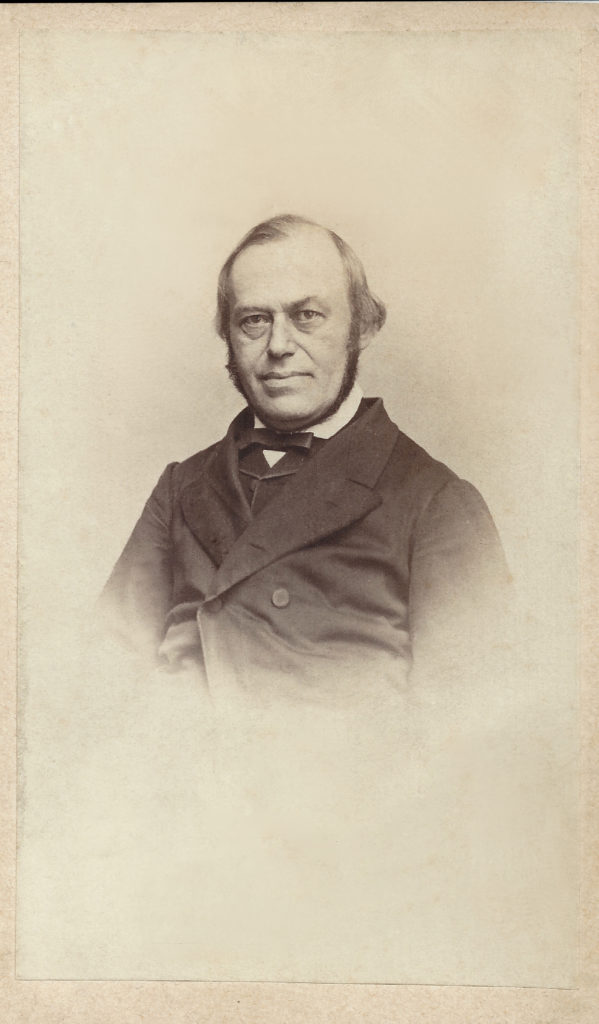
We mark the birth on June 19, 1810 – 213 years ago today – of the German virtuoso violinist and composer, Ferdinand David. Born in the exact same house in Hamburg that saw Felix Mendelssohn’s birth 16½ months before, David died while on vacation in Switzerland on July 18, 1873, at the age of 63.
We will get to the specifics of Maestro David’s life and career and why, to my mind, he is “our kind of musician” in a moment. But first, with your indulgence, a brief bit of editorializing.
When the Performer Becomes the Show
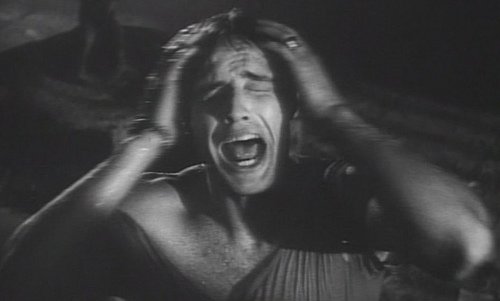
Marlon Brando (1924-2004) in A Streetcar Named Desire (1951) (FYI: I have a granddaughter named Stella and find it difficult to resist calling her “Hey Stellaaa!”)
Marlon Brando (1924-2004). Yes, Marlon Brando: actor, director, activist, and father of at least 16 children (at least 16 children). I would respectfully suggest that a movie with Marlon Brando is not so much a movie in which Marlon Brando plays a role as it is a movie in which Marlon Brando plays Marlon Brando playing a role. Accordingly, I would assert that in A Streetcar Named Desire, Marlon Brando portrays Marlon Brando portraying Stanley Kowalski; in The Godfather, Marlon Brando portrays Marlon Brando playing Vito Corleone; in Apocalypse Now, Marlon Brando portrays Marlon Brando playing Colonel Walter Kurtz, and so forth. Brando was so brilliant, his persona so larger than life, his affectations so uniquely individual, that his personal brand always seemed to overshadow the actual characters he portrayed.
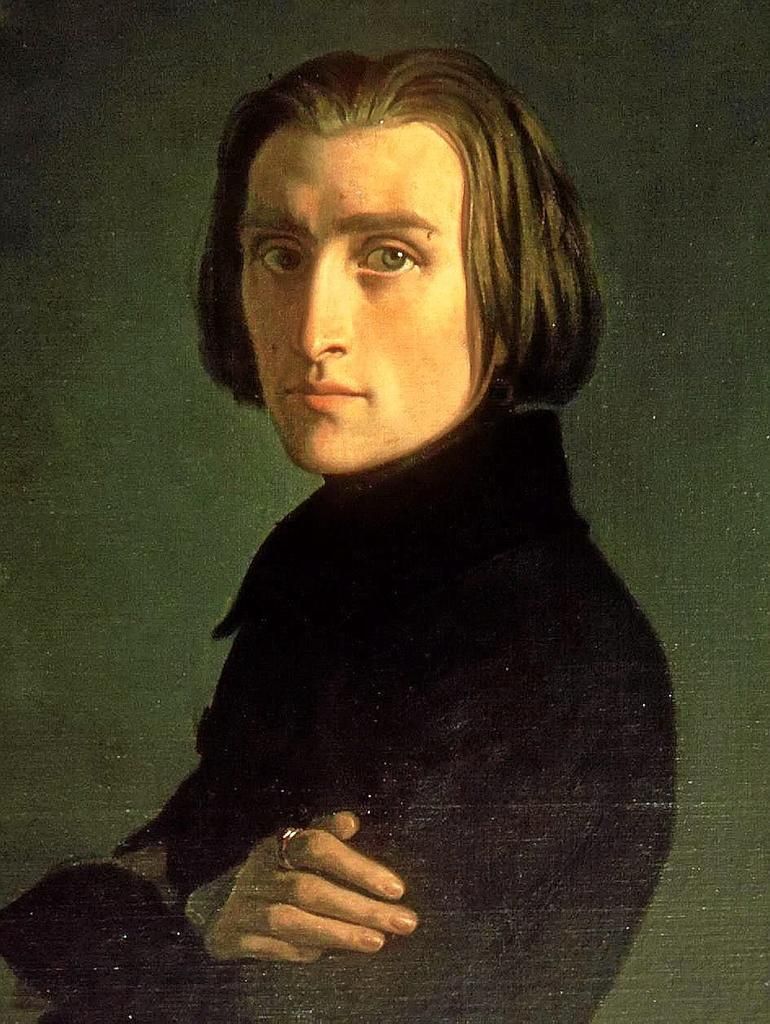
Franz Liszt (1811-1886) in 1839, by Henri Lehmann
So it is with certain musicians, and so it has been since the pianist Franz Liszt (1811-1886) blazed across the European musical firmament during the mid-nineteenth century. Liszt was not just the greatest pianist of his time but the greatest pianist ever to have lived up to his time, and arguably the greatest pianist of all time. But mere pianistic greatness was not enough for Liszt. He composed a huge body of piano music that, initially, only he could play, music often calculated to stun simply by its technical excess. Blessed with movie-star good looks and a fearless, aristocratic bearing, he toured tirelessly with this music, performing in a fashion that was calculated – always – to call attention to himself.
Let there be no mistake about it: Franz Liszt was almost certainly the greatest performing musician of the nineteenth century. But his legend was a not just a product of his pianism but of his performingpersona, which often bordered on carnival hucksterism. Many of his greatest contemporaries, including Robert and Clara Schumann, Felix Mendelssohn, Johannes Brahms, and Joseph Joachim, were awed by Liszt’s pianism but physically sickened by his onstage shenanigans.
But it was Liszt’s persona – those onstage shenanigans – that put derrieres in seats and money in the bank, and many – if not most – of those people who paid to see Liszt perform did so not for the music he played but for the show he put on.
The Liszt-inspired instrumental performer-as-hero, as God, as an object-of-sexual-desire, pretty much disappeared by the early twentieth century, only to return with a vengeance by the end of the twentieth century. Part of it was rock ‘n’ roll, as some young concert musicians wanted for themselves the same sort of money, popularity, and notoriety enjoyed by rock ‘n’ roll musicians. …
Every week, Music History Monday arrives with the kind of curiosity that turns dates on a calendar into doorways. Hosted by composer and historian Robert Greenberg, this podcast digs into the stories that happened *around* the music, finding the human moments-sometimes profound, sometimes scandalous, always fascinating-tied to a specific Monday. Greenberg approaches his subjects not as distant icons but as the complicated, brilliant, and often messy people they were, which makes each episode feel like a conversation rather than a lecture. You’ll hear about pivotal premieres, bitter rivalries, unexpected inspirations, and the sheer luck or misfortune that shaped the pieces we know today. The tone is erudite but never dry, packed with context and delivered with a wit that respects the art without putting it on a sterile pedestal. It’s for anyone who loves a good story and suspects that the history behind a symphony or a sonata is just as compelling as the notes themselves. Tune in each Monday with Robert Greenberg to connect the dots between a day in history and the soundtrack it inspired.
Author: Robert Greenberg
Language: en-us
Episodes: 100
Giovanni Gabrieli (circa 1555-1612) We mark the death on August 12, 1612 – 412 years ago today – of the composer Giovanni Gabrieli. Born in Venice circa 1555, he grew up and spent his professional life in that glorious c…