Happy New Year! As we leap into 2082, it’s time to resiliently tackle your resolutions—and stay sharp on the latest happenings in our beloved Nepal! From political scandals that could fill a soap opera script to exciting new investments hot off the press, this edition keeps you in the loop with all the latest flavors of our vibrant nation!
Politics & Governance 🪧
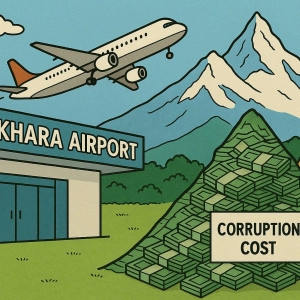
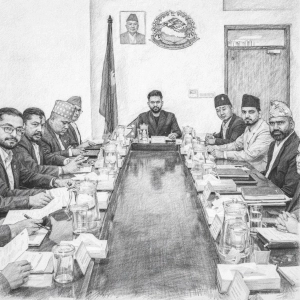
A subpanel of the House of Representatives’ Public Accounts Committee (PAC) has unearthed a sprawling corruption scandal surrounding the construction of Pokhara International Airport, estimating a misappropriation of approximately Rs 14 billion at current exchange rates. The probe calls for immediate action, with KTM Post revealing irregularities such as tax exemptions illicitly granted to construction companies. Crucially, the agreements stipulating that these construction companies pay their required taxes were ignored, reflecting a troubling willingness by governing agencies to allow this mismanagement.
The scope of the fraud includes allegations that the $5.5 million allocated to transport soil and pebbles for the runway never actually resulted in the import of materials; what little was used came primarily from the local area. The Republica report calls for the immediate suspension of CAAN chief Pradeep Adhikari, who previously oversaw the airport project, to facilitate further investigation. This case represents one of the most blatant attempts to defraud the Nepali populace in recent memory.
This misappropriation at the Pokhara Airport is a glaring symptom of a wider issue, as David Seddon of Nepali Times points out: systemic corruption remains a deeply entrenched aspect of Nepal’s political economy, proving resistant to meaningful alleviation. The need for accountability is critical in all facets of government; Republica reports that governmental initiatives often fail to adequately address the real needs of the population, undermining efforts for impactful change.
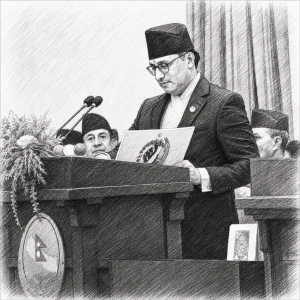
As corruption probes and charges pile up, other governance developments continue, including the ruling coalition's push for quick approval of the Civil Service Bill, as stated by Republica. Despite rising dissatisfaction, the relationship between Congress and UML appears stable for now, while new political challenges arise following Sumana Shrestha's resignation from the RSP, highlighted by KTM Post. Furthermore, the ongoing struggles of landless citizens demonstrate slow progress in addressing critical social issues, as noted in TRN, while the Army deals with its own scandals via Brigadier General Khadka's recent corruption charges, as reported by Republica. In other public interest matters, a proposed legal framework for the regulation of iodization within salt has been discussed, marking another significant issue for governance (KTM post).
Social & Cultural ⭐
Nepal's education sector is facing renewed turmoil as teachers continue to protest in Kathmandu, demanding the immediate passage of the School Education Bill. Teachers feel their voices have been ignored for too long, as the School Education Bill, intended to address key issues in the education system, remains stuck in political limbo, leaving them with no choice but to take to the streets for change. Despite government appeals and promises, the bill remains stalled, leading to ongoing disruption in schools nationwide, as reported by Nepal News. The situation has seen Prime Minister Oli intervening by calling agitating teachers for talks, according to Republica, reflecting the gravity of the issue and ripple effects felt, from parents to local municipalities. The government urges agitating teachers to return to the classroom as reported by TRN, but no de-escalation is expected anytime soon, leaving students and parents bracing for continued uncertainty.
Tensions in Birgunj Metropolitan Area, sparked by incidents during the Hanuman Jayanti procession, are gradually subsiding. As reported by both My Republica and Onlinekhabar, the local administration, political parties, and community leaders have been diligently working to restore social and communal harmony, and a sense of normalcy is ensuing. The unrest, which began on April 12, had prompted a ban on rallies and demonstrations, but authorities are now working towards lifting those restrictions with support and goodwill from all sides.
While efforts are underway to promote harmony and education, other key areas also require attention. In a bid to address health concerns, the Ministry of Health is administering Vitamin A and deworming tablets to 2.2 million children nationwide, as reported by reports TRN, while the Gandaki province government is launching screening campaigns for non-communicable diseases TRN. On the digital front, Nepal is pushing Meta to register under tougher social media rules, with Meta sending representatives to Kathmandu to discuss regulations, according to KTM Post, a move that could set a precedent for other platforms. This effort comes as concerns about digital security arise following the arrest of a youth who allegedly stole over Rs 10 million from 4,000 eSewa accounts, according to Republica, highlighting the persistent risk of online security issues.
Simultaneously, the Kathmandu Valley continues to grapple with air quality issues, ranking second globally in pollution levels according to Republica. Lastly, in more positive news, a new bird species, the Violet Cuckoo, has been discovered in Ilam, highlighting Nepal's rich biodiversity as reported by TRN. However, pre-monsoon season disaster incidents have claimed 41 lives so far, casting a shadow over the region with the latest numbers according to TRN.
Economy & Development 💸
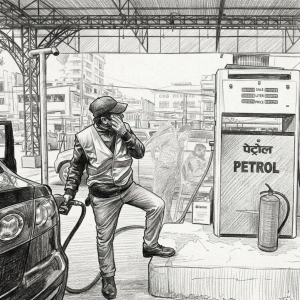
Nepal is tackling its burgeoning trade deficit head-on with the newly enforced Trade Policy 2025. According to Republica, the policy aims to boost domestic product competitiveness through infrastructure development and streamlined trade practices, particularly important as Nepal prepares to graduate from Least Developed Country status. This move comes as data reveals a concerning trade deficit of Rs 987.39 billion in the first eight months of the fiscal year. A contributing factor, reports THT, is the increasing reliance on agricultural imports, even in sectors where Nepal traditionally held an advantage, which is in need of immediate correction.
Prime Minister KP Sharma Oli has been actively involved in inaugurating and inspecting key infrastructure projects across the country, highlighting a strong push for national development. Onlinekhabar reported on the inauguration of the expanded six-lane road in Bharatpur, signalling better connectivity. These infrastructural improvements coincide with a notable surge in tourism investment in Pokhara. According to Republica, approximately Rs 4 billion has been invested in the tourism sector in the last six months, with new hotels opening driven by expanded highways and the new international airport, bolstering hopes among investors and locals alike.
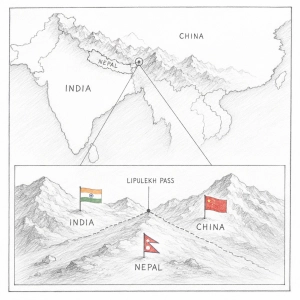
The Ministry of Health is set to launch a digital 'Unique Health ID' system to consolidate citizens' medical information, as reported by THT. In other financial news, Sanvi Energy Limited has launched its IPO for locals affected by hydropower projects and overseas Nepalis, according to Republica. Meanwhile, Rastriya Banijya Bank (RBB) is issuing bonds worth Rs 2.50 billion, also detailed in Republica. On the trade front, KTM Post reveals that while trade at the Korala border with China is robust on the Chinese side, Nepal's lack of infrastructure is hindering its trade potential on its side—something that urgently needs to be addressed.
Did you know ❓
source: IRHA
Nepal features unique agricultural practices, such as Community Seed Banks, which empower local farmers to preserve and share indigenous seed varieties. This vital practice not only promotes genetic diversity but also enhances food security, especially in rural areas. By collaborating to maintain traditional seeds suited to local climatic conditions, communities build resilience against climate change impacts. A recent study from the Nepal Agricultural Research Council (NARC) highlights how these seed banks foster cooperation and knowledge sharing among farmers, creating a stronger sense of ownership over local agricultural biodiversity. For more insights on this practice, check out the detailed research by the Food and Agriculture Organization: FAO Study on Community Seed Banks.
This is a public episode. If you would like to discuss this with other subscribers or get access to bonus episodes, visit
www.nepalidiaspora.net