From plunging tomato prices and booming soybean oil exports to rhino mysteries and socialist mergers—Nepal sure knows how to mix economics, politics, and drama! Toss in border fairs and digital remittances, and you've got a recipe that's never boring. Buckle up, let's unpack the latest! 🚀
Economy & Development 💸
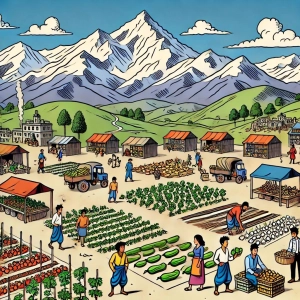
Vegetable prices across Nepal have seen a sharp decline, with wholesale rates for key produce dropping by as much as 66 percent due to a seasonal surge in supply. According to KTM Post, the Kalimati Fruits and Vegetable Market has reported significant price cuts on tomatoes, onions, gourds, beans, and a host of other vegetables, thanks to the peak winter harvest and a normalization in production levels. Traders expect this downward trend to continue until pre-monsoon rains begin to disrupt output. While wholesale prices are dropping quickly—such as Nepali large tomatoes falling to Rs. 18.33 per kg from Rs. 55 a month ago—retail prices remain stickier, with the same tomatoes still selling for around Rs. 50–55 per kg. Interestingly, despite the current price correction, Nepal Rastra Bank data shows that vegetable inflation over the past year rose by 7.56 percent, highlighting the time lag between wholesale market changes and household-level costs.
Nepal’s export performance, on the other hand, has given policymakers and businesses something to cheer about. As reported by TRN, the country exported goods worth Rs. 158.17 billion in the first eight months of the current fiscal year—an impressive 57.2 percent increase compared to the same period last year. This growth was driven largely by a massive surge in soybean oil exports, which alone accounted for 30 percent of total outbound trade. Nepal exported Rs. 47.94 billion worth of soybean oil during this time, up from just Rs. 754 million the previous year, with Rs. 15.53 billion worth shipped in a single month (Falgun). While imports also rose by 11.2 percent to Rs. 1.14 trillion, contributing to a widening trade deficit of Rs. 987 billion, the uptick in export earnings—particularly from processed goods—reflects a growing maturity in Nepal’s manufacturing and trade sectors.
But even as trade numbers show promise, the health of Nepal’s fiscal position remains a growing concern. Public debt has ballooned to Rs. 2.676 trillion, now accounting for 46.91 percent of GDP, up from 42.65 percent in mid-July 2024, according to MyRepublica. Over the first eight months of the fiscal year, the government borrowed an additional Rs. 241.93 billion, much of which was spent on regular administrative expenses and debt servicing. Only Rs. 82.56 billion was channeled into capital investment, further raising red flags about fiscal priorities. Experts warn that the lack of discipline in borrowing, combined with weak revenue collection and spending on unproductive sectors, is exacerbating Nepal's debt vulnerability. Additionally, currency depreciation has added an extra Rs. 66.29 billion burden due to the rising cost of servicing foreign loans, underlining the need for a more sustainable debt strategy.
Other key developments this month round out a mixed picture for Nepal’s economy. Commercial banks issued Rs. 22.74 billion in new loans last month alone, as per data from the Nepal Bankers’ Association via MyRepublica, with lending largely driven by imports and margin loans—especially for raw materials used in export products like edible oils. Meanwhile, the Nepal Electricity Authority is prioritizing pumped storage hydropower projects to better manage energy demands and boost export potential, with feasibility studies underway for several high-capacity sites, including a 1,596 MW project near Kathmandu, according to ApEx. On the financial markets front, investor sentiment remained shaky: ApEx reported that NEPSE fell 12.38 points on Thursday alone, and MyRepublica noted a total weekly loss of 67.17 points, equating to Rs. 111 billion in investor wealth wiped out—largely due to uncertainty around central bank leadership and political unrest.
Social & Cultural ⭐
The recent deaths of 20 one-horned rhinos in Chitwan National Park over the past eight months have stirred quiet concern—not only among conservationists, but within a society that regards these majestic animals as powerful symbols of national identity. Most of the deaths were attributed to natural causes such as tiger and crocodile attacks, illness, and aging, continuing a pattern seen in recent years. However, the suspension of the national rhino census due to funding shortages signals a deeper issue: the weakening of institutional support for long-term wildlife protection. With 694 of Nepal’s 752 rhinos living in CNP, their fate reflects how closely our cultural values are tied to environmental stewardship. These losses serve as a subtle but urgent reminder that preserving nature is not just a matter of science and policy, but of collective care and national character. THT
Enjoying this issue? 📩 Share it with a friend & let’s keep Nepalis worldwide in the loop! Got thoughts? Hit reply—we’re all ears!
Politics & Governance 🪧
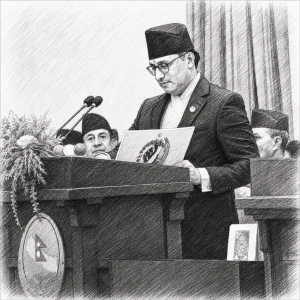
Pushpa Kamal Dahal 'Prachanda' has announced an ambitious plan to unite all socialist and Maoist forces ahead of the 2084 BS general elections, aiming to strengthen his party's position and dispel the perception that it relies on alliances to win elections, reports TRN. Speaking at a mass gathering in Chitwan, the Maoist Centre Chairman emphasized the need for a directly-elected presidential system, arguing it's essential for Nepal's development. Party leaders also highlighted increasing public trust and grassroots support for the Maoists, signaling a renewed political energy as the polls approach.
Nepal's smaller political parties are strongly opposing proposed amendments that would toughen requirements for achieving national party status, according to KTM Post. The draft bill by the Election Commission suggests that parties must contest at least 70 percent of constituencies and maintain inclusive structures at central, provincial, and local levels, prompting fringe parties to accuse the commission of favoring larger parties like Nepali Congress and CPN-UML. The commission insists its goal is merely to ensure national parties have genuine countrywide support, while critics warn these rules could marginalize smaller parties and undermine diversity in representation.
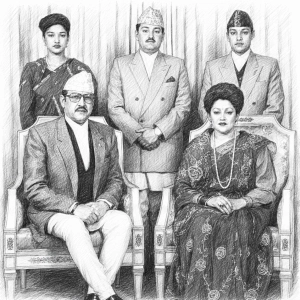
Meanwhile, former King Gyanendra Shah's recent resurgence in Nepal's political landscape has stirred controversy, sparking both royalist rallies and fierce opposition from mainstream political forces, reports Annapurna Express. Internal disputes within the Rastriya Prajatantra Party (RPP) over leadership of the monarchy restoration movement are intensifying, further complicating the political scene, according to Republica. Amidst this turmoil, Foreign Minister Arzu Rana Deuba has downplayed rumors of Indian meddling in Nepal's internal politics following her recent visit to India, emphasizing India's continued support for Nepal's democratic framework, according to KTM Post. Additionally, China has significantly increased its diplomatic outreach toward Nepali Congress (NC), marking a notable shift to diversify its political engagement beyond Nepal’s communist parties, Annapurna Express reports.
Did you know ❓
Nepal once had a fully electric trolleybus service connecting Kathmandu and Bhaktapur, making it one of South Asia’s earliest electric public transportation systems. Built in collaboration with China and launched in 1975, this eco-friendly trolleybus operated quietly and cleanly, offering residents a sustainable way to travel. At its peak, it was highly popular among commuters, students, and locals, symbolizing a progressive era in Nepal’s transportation history. Sadly, due to financial issues and maintenance challenges, this innovative service stopped running completely in 2008, leaving only memories and occasional sightings of abandoned trolley poles along the route.
Diaspora & Globalization 🌎
The Indo-Nepal International Trade Fair and Tourism Festival has kicked off in Dehradun, aiming to deepen economic and cultural ties between Nepal and India. According to TRN, the seven-day event features 200 exhibition stalls, including 50 showcasing Nepali entrepreneurs. Uttarakhand Chief Minister Pushkar Singh Dhami highlighted the fair's potential to boost bilateral trade and announced longer opening hours for the Banbasa border bridge, easing cross-border travel and commerce.
In another positive step for Nepalis abroad, Esewa Money Transfer has partnered with the Social Security Fund (SSF) to streamline contributions from overseas Nepalis, as reported by Republica. Nepali workers abroad can now easily contribute to Nepal’s social security system via Esewa’s global network, simplifying participation and strengthening the country's social welfare programs.
These developments highlight Nepal’s increasing global integration through trade and digital innovations, benefiting Nepali communities both at home and overseas.
Let’s connect
Loved this issue? Share it with friends and help us keep Nepalis worldwide informed!📩 Share your thoughts! Let us know what you think via our Feedback form or follow us on Facebook | LinkedIn
About Nepali Diaspora Digest:
The Nepali Diaspora Digest connects the global Nepali community with curated news, insights, and stories that matter most. Join us as we celebrate and explore the diverse voices and achievements of Nepalis worldwide.
Partner shout out
belayat.uk: helping Nepalis connect in the UK on jobs, housing, events and finding local nepali owned businesses
This is a public episode. If you would like to discuss this with other subscribers or get access to bonus episodes, visit
www.nepalidiaspora.net