E34: /Collaborative Circles/, part 1: a teaser

E34: /Collaborative Circles/, part 1: a teaser

Author: Brian Marick July 4, 2023 Duration: 24:56

 Michael P. Farrell's Collaborative Circles: Friendship Dynamics and Creative Work (2001) is about how groups of people ("circles") begin with discomfort about the status quo and, after collaboration and discussion, make creative breakthroughs. It's based on six case studies. Four are circles of artists and painters, one looks at the early development of Freud's psychoanalysis, and one is devoted to a particular group of "first wave" feminist agitators.

This episode aims to tempt you to want to learn more: by summarizing two of Farrell's case studies. My original thinking was that Farrell's model of circle development would be generally applicable to software teams dissatisfied with the status quo of development and who didn't fit common models like forming-storming-norming-performing. As I dug into the details, I realized it's not as widely applicable as I'd hoped, at least without substantial customization. So the episode ends with some reasons you might not want to listen to the next one. But I hope you do!

Other sources and references

Credits

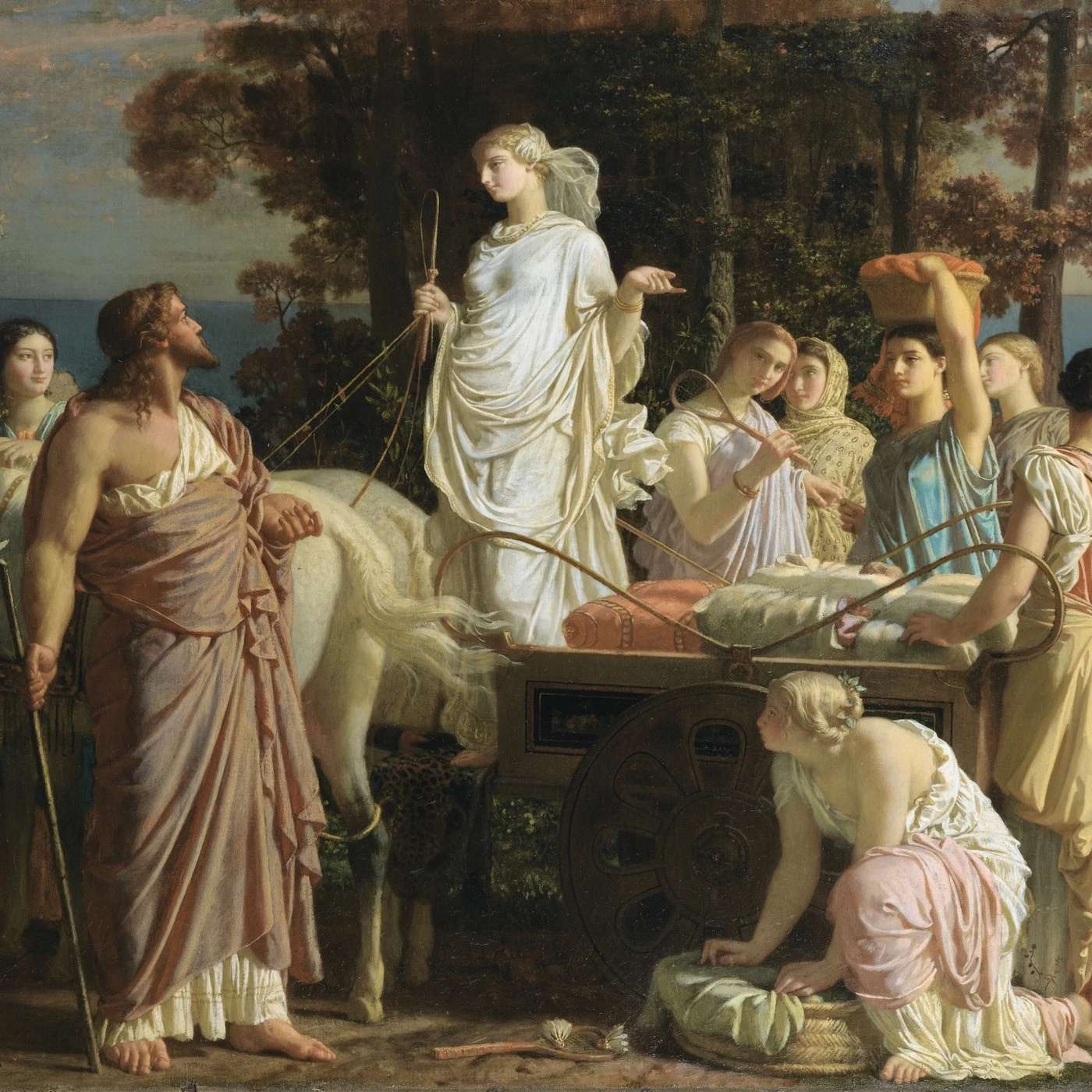
The episode image is "Ulysses and Nausicaa" by Charles Gleyre. In theme and style, it's the kind of art the Impressionists were rebelling against. 


Brian Marick hosts Oddly Influenced, a podcast that digs into the unusual and often overlooked connections between software development and the wider world. Each episode starts with a concept, theory, or practice that originated far from the realm of code-perhaps in sociology, theater, history, or urban planning-and traces its journey into the hands of software practitioners. The focus is on the concrete application: how these borrowed ideas were adapted, what problems they aimed to solve, and what actually happened when people tried them. You’ll hear about the successes, the surprising failures, and the messy, fascinating reality of translating an abstract principle into working practice. This isn’t about generic inspiration or vague parallels; it’s a detailed look at cross-disciplinary pollination, examining the mechanics of how influence actually works. The conversations are grounded and specific, avoiding hype to explore what we can genuinely learn from fields that don’t think in loops and logic. For anyone in technology or education curious about how innovation often comes from the edges, this podcast provides a unique and thoughtful perspective. It’s for listeners who enjoy deep dives into the history and sociology of their craft, who appreciate hearing stories that aren’t the usual case studies, and who are open to having their own thinking oddly influenced by the end of an episode.
Author: Language: English Episodes: 55

Oddly Influenced
Podcast Episodes
jUnit and What Makes a Successful Tool ("Packages", Part 2) [not-audio_url] [/not-audio_url]

Duration: 21:47
What characteristics make a tool or technology successful? This is the second of four episodes on Joan Fujimura’s idea of “packages” for spreading theory and technology together.
E2: Viruses, Cancer, TDD, and "Packages": Part 1 [not-audio_url] [/not-audio_url]

Duration: 20:06
The first of three episodes discussing how Joan Fujimura's ideas about technology and theory diffusion apply to test-driven design and other approaches to doing software.
E1: Boundary Objects [not-audio_url] [/not-audio_url]

Duration: 21:10
Boundary objects are an idea from the sociology of science. They are about how people use ambiguous nouns – or things – to coordinate the work of people with different backgrounds and interests (like, say, programmers an…