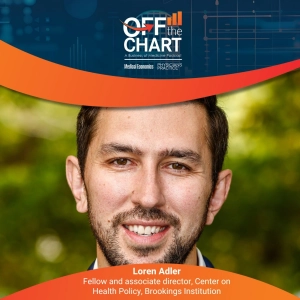
Loren Adler, fellow and associate director at the Brookings Institution's Center on Health Policy, joins the show to talk about his new
Health Affairs study examining the rise of insurer-owned primary care practices.
Adler breaks down how quickly payer ownership has expanded, why certain markets are seeing far higher concentrations and what this consolidation means for costs, competition, Medicare Advantage and independent physicians. He also discusses the data sources behind the research, the role risk adjustment plays in shaping insurer incentives and the policy questions that come with these trends.
Music Credits:
Cozy Evening Time Coffee by BJBeats -
stock.adobe.com
Relaxing Lounge by Classy Call me Man -
stock.adobe.comA Textbook Example by Skip Peck -
stock.adobe.comEditor's note: Episode timestamps and transcript produced using AI tools.
0:00 – Cold open “There are a few markets where nearly half of the primary care market is payer-operated — and typically those are largely Optum operated.”
0:20 – Introduction Austin Littrell introduces
Off the Chart and previews the conversation between Richard Payerchin and Brookings Institution health policy expert Loren Adler.
1:35 – How the study began Richard asks Adler what sparked the analysis behind
The Changing Landscape of Primary Care, and why payer ownership needed real measurement.
1:54 – Why insurers are acquiring practices Adler explains the motivations behind payer acquisitions and the lack of hard data before this study.
3:05 – Key findings A breakdown of how payer-owned primary care grew from under 1% in 2016 to more than 4% by 2023 — and why 6% of clinicians now work for a payer.
4:17 – The biggest surprises Adler discusses misconceptions about Optum’s size and the complexity of “affiliated” versus employed clinicians.
4:22 – Where consolidation is happening Why markets with high Medicare Advantage penetration and less hospital consolidation are hotspots for insurer acquisitions.
7:10 – Why 4–6% matters Adler explains how national averages hide dramatic geographic concentration — including counties where Optum controls nearly 40–50% of primary care.
7:35 – Antitrust implications A look at counties with more than 10% payer ownership and the antitrust concerns that follow.
9:31 – Input from payers What Brookings learned from stakeholder interviews — and why major insurers didn’t influence the data.
9:54 – Why Kaiser and Intermountain were excluded Adler clarifies why hospital-integrated payers were left out of this analysis.
11:29 – How the data was built Behind the scenes of the dataset: Medicare claims, ownership tracking, press releases, and acquisition timelines.
14:11 – P2 Management Minute A quick workflow and operations segment with Keith Reynolds.
14:57 – Core concerns about integration Adler outlines the biggest risks: antitrust issues, risk-coding incentives, and how payer ownership can change documentation behavior.
15:27 – Risk adjustment and coding intensity How Medicare Advantage payment design creates incentives to document as many diagnoses as possible.
17:12 – Market foreclosure concerns Could payer-owned practices limit access to rival insurers? Adler explains the risk — and the open questions.
18:40 – Potential benefits Areas where payer ownership
could improve care coordination, cost alignment, or reduce hospital use.
21:12 – What the study didn’t yet measure Why patient outcomes remain an open research area — and what anecdotal reports suggest.
23:15 – Pressure on independent practices Adler discusses aggressive contracting tactics, including first-right-of-refusal clauses.
25:19 – The reality for small practices Why some independents join IPAs or third-party organizations for leverage and better reimbursement.
25:37 – How this fits into MAHA Adler’s take on how consolidation trends intersect with federal policy priorities.
26:32 – Policy actions that matter most The need for transparency, antitrust scrutiny, and major changes to Medicare Advantage risk adjustment.
29:08 – The role of AI How large language models can help track ownership and consolidation across markets.
30:19 – What’s still unknown Will payer ownership keep accelerating, or level off? Adler outlines the unanswered questions.
31:26 – What independent physicians should know Why hospitals — not payers — remain the dominant consolidator of primary care, and how Medicare policy shapes that.
33:04 – Closing thoughts Richard wraps up the conversation and thanks Adler for joining.
33:27 – Outro Austin closes the episode with subscription reminders, publishing schedule, newsletter information, and production credits.