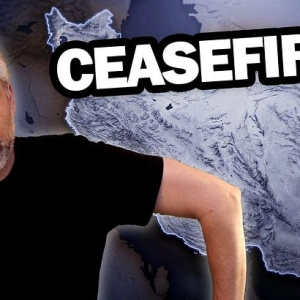
Just how absurd does the word ceasefire sounds when nobody actually stops firing? We’re calling it a ceasefire, we are acting like it is a ceasefire, but the reality on the ground does not match the label. Missiles are still being launched, ships are still being threatened, and the Strait of Hormuz is effectively shut down despite whatever was signed on paper.
That disconnect makes me question what kind of agreement was actually reached in the first place. If Iran agreed to open the strait and then immediately went back to restricting access and intimidating shipping, then either they never intended to follow through or they cannot enforce their own decisions. Neither option is particularly reassuring. When your main leverage is control over a critical global shipping lane, giving that up even briefly would be a major concession, so the reversal almost feels inevitable.
I keep coming back to how much of this hinges on internal dynamics within Iran. The delegation that is set to meet with the United States this weekend includes both more moderate figures and hardliners tied to the Revolutionary Guard. That alone tells me that whatever comes out of those talks is going to be complicated. If the people at the table are not the same people controlling the missiles, then any agreement is going to have gaps.
Politics Politics Politics is a reader-supported publication. To receive new posts and support my work, consider becoming a free or paid subscriber.
At the same time, the stakes are getting higher because the economic effects are no longer abstract. Oil prices are climbing again, shipping is disrupted, and you have thousands of people effectively stuck waiting for this situation to resolve. Iran’s ability to pressure the global economy through the Strait of Hormuz feels like its most important card, and right now they are playing it as aggressively as they can.
Back in Washington, the dysfunction is not helping anything. The DHS funding situation is still unresolved, and the Republican plan to split funding into separate reconciliation bills sounds shaky at best. The idea that lawmakers would pass a smaller bill now with promises about a larger one later, especially after the midterms, feels like something that is much easier to propose than to actually execute. It comes across as a sign that leadership does not have a clean path forward.
There is also a broader sense that neither party is really in control of the moment. Republicans are struggling to deliver on basic governing tasks even with power, while Democrats are throwing out ideas like invoking the 25th Amendment in ways that do not seem grounded in how the process actually works. It creates this environment where everyone is reacting, but nobody is clearly leading. Stretching into the middle of April, the war is still active, negotiations are uncertain, and political systems on both sides are showing strain. You have to wonder what all of this leads up to.
Chapters
00:00:00 - Intro
00:02:03 - Congress
00:07:22 - Iran
00:10:37: Zineb Riboua on the Iran War and China
00:30:16 - Update and Melania Trump
00:33:11 - DHS Shutdown and TSA Funding
00:35:32 - 25th Amendment
00:38:20 - Interview with Zineb Riboua, con’t
00:59:46 - Wrap-up
This is a public episode. If you'd like to discuss this with other subscribers or get access to bonus episodes, visit
www.politicspoliticspolitics.com/subscribe