The edible ecosystem solution, with Zach Loeks: redux

The edible ecosystem solution, with Zach Loeks: redux

Author: Oliver Goshey August 29, 2025 Duration: 25:40
have you ever wondered what the difference between a garden and an edible ecosystem is? Do you want to know how you can create one in you own yard? In this episode with author Zach Loeks from the Ecosystem Solutions Institute, you learn all that and more. We’ll walk you through how to choose your site, even if all you have is a 5ft by 5ft patch of earth. From there we’ll look into orienting the garden spot, improving the soil, and choosing your plants for form, function, and potential. The coolest part is that this system is modular and you can expand it from a tiny spot in an urban yard to a whole farm with the permabed system. While there are tons and tons of tips and information in Zachs book on edible ecosystems, the smallest and most basic form revolves around the modular permabed system that he pioneered in his first book. Starting with a 5”x5” patch of earth, you mound compost or topsoil like you might in a garden bed, with the low sides being on the south and north ideally to create tiny microclimates that favor different types of plants. in the center row at the height of the mound you can plant your key plant, which will usually be a fruit tree or berry bushes. This creates a center point with full access to sunlight and space around to plant your support species. I’ll use the example of a pear tree guild from the book. in the center is the pear tree, ideally a bare root sapling which will cost less than a potted on and is less likely to be root bound. Along with the tree on the top of the mound you could plant grape vines on either side which will use the tree as a trellis as they grow taller. strawberries are a great perennial ground cover which will help to shade out weeds and bear delicious fruit on the south side where it gets full sun. on the shadier south side of the mound you could grow a few asparagus shoots. they’re a highly nutritious perennial vegetable that will keep coming back year after year. Some echinacea planted around the top by the pear and grapes will offer some visual beauty from the flowers, attract pollinators, and is a powerful medicine too.  This is just one example of a micro edible ecosystem. If you have more space you can group multiple 5×5 squares into a row, or add multiple rows in what Zach calls a triad. play with different combinations of plants that can support one another and explore the full diversity of what grows in your climate. The options are almost limitless.

What does it mean to live a regenerative life, and how do we actually do it? That's the central question explored in Regenerative Skills, hosted by Oliver Goshey. This isn't just about theory; it's a practical dialogue focused on stewardship of the natural world and fostering strong, resilient communities. Every week, Oliver brings conversations with a diverse range of global experts right to your ears, translating their knowledge into actionable steps you can integrate into your daily habits. You'll hear tangible strategies for everything from soil health and sustainable food systems to building local networks and re-skilling ourselves for a better future. The aim is to move beyond sustainability toward active regeneration, providing the tools and perspectives needed to make a tangible difference right where you are. Tune into this educational podcast for a grounded, hopeful, and deeply informative journey. Together, these discussions build a comprehensive guide for anyone looking to heal their relationship with the environment and their neighbors, proving that positive change is woven from countless small, intentional actions.
Author: Language: en-us Episodes: 100

Regenerative Skills
Podcast Episodes
The story of soil through a microscope, with Isadora Schmidt [not-audio_url] [/not-audio_url]

Duration: 1:01:48
Continuing with my series highlighting badass local people around my community here in Spain, I was really pleased to be able to share this conversation that I had with a new close friend of mine and soil health advocate…
Keys to successful regenerative farm transition, with Andre Antunes [not-audio_url] [/not-audio_url]

Duration: 1:11:45
I have to admit, there is an unsung hero behind many of my favorite interviews of the past couple years. Connections and recommendations to some of the people who I’ve learned the most from in some recent discussions wit…
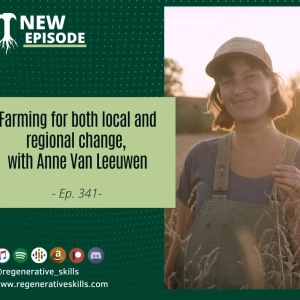
Farming for both local and regional change, with Anne Van Leeuwen [not-audio_url] [/not-audio_url]

Duration: 56:10
Today’s conversation is the first of a two part conversation with Anne Va Leeuwen from Bodemzicht in the Netherlands that I’ve been looking forward to for quite a few years. Anne and her husband Ricardo and I met for the…
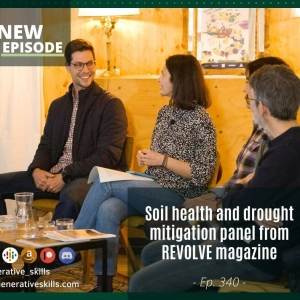
Soil health and drought mitigation panel from REVOLVE magazine [not-audio_url] [/not-audio_url]

Duration: 1:04:14
A couple weeks ago I was invited to speak on a panel discussion about soil health for the release of a new issue of REVOLVE magazine. Established in 2010, REVOLVE inspires climate action by keeping you informed about the…
Simplifying gardening and food forests, with David the Good [not-audio_url] [/not-audio_url]

Duration: 1:19:25
Continuing on the theme of last week’s episode in which I spoke with Jessica Robertson about community food forests, we’re going to go deeper into the practical knowledge and skills that anyone can develop to create thei…
Finding the potential in "invasive" species, with Tao Orion [not-audio_url] [/not-audio_url]

Duration: 1:19:59
I’m really lucky that I have been collaborating with book publishers since the early days of this podcast. It gives me access to all of the books from the authors that I interview and the full catalogs of most of the pub…