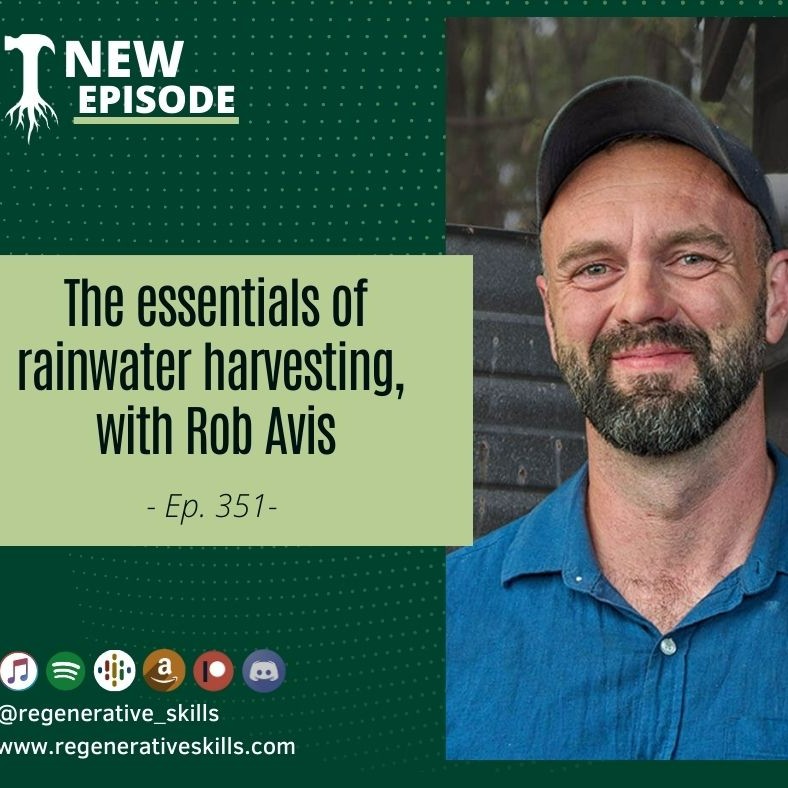
The essentials of rainwater harvesting, with Rob Avis

The essentials of rainwater harvesting, with Rob Avis

Author: Oliver Goshey August 8, 2024 Duration: 46:45
In keeping with the theme of water regeneration this month I spoke to Rob Avis, the co-author along with Michelle Avis of their book in the New Society Essentials series called Rain Water Harvesting. Rob and Michelle founded Verge Permaculture, an award-winning design, consulting and education company in Calgary, Alberta after years of international training in renewable energy and regenerative design. Since its founding, Verge has helped more than 1000 students and clients to design and create integrated systems for shelter, energy, water, waste, and food, all while supporting their local economy and regenerating the land. Through their design and consulting they create havens that produce their own energy and food, harvest water, cycle nutrients, and restore the surrounding ecosystems, enabling property owners to thrive no matter what. With such a broad range of knowledge, experience, and expertise, we focused mainly on rain water harvesting techniques and systems in this episode as an entry into the larger concept of watershed regeneration and revival. In this session Rob explains some of the key components of rain water harvesting systems and the ways that you can treat and filter the water for various uses. We talk at length about why expensive filters and disinfectants are often unnecessary, even for most potable water uses, and the different ways you can keep your stored rainwater clean. Rob also speaks about how rainwater harvesting systems fit into a larger system aimed toward water resilience in multiple living contexts from urban to rural applications. I’ve been a big fan of Verge Permaculture and all their great work for some time now and I’m intending to create a larger series of in depth talks with Rob and Michelle in the future 

What does it mean to live a regenerative life, and how do we actually do it? That's the central question explored in Regenerative Skills, hosted by Oliver Goshey. This isn't just about theory; it's a practical dialogue focused on stewardship of the natural world and fostering strong, resilient communities. Every week, Oliver brings conversations with a diverse range of global experts right to your ears, translating their knowledge into actionable steps you can integrate into your daily habits. You'll hear tangible strategies for everything from soil health and sustainable food systems to building local networks and re-skilling ourselves for a better future. The aim is to move beyond sustainability toward active regeneration, providing the tools and perspectives needed to make a tangible difference right where you are. Tune into this educational podcast for a grounded, hopeful, and deeply informative journey. Together, these discussions build a comprehensive guide for anyone looking to heal their relationship with the environment and their neighbors, proving that positive change is woven from countless small, intentional actions.
Author: Language: en-us Episodes: 100

Regenerative Skills
Podcast Episodes
Drought: Part 1. The myths, misconceptions, and causes: redux [not-audio_url] [/not-audio_url]

Duration: 55:23
It’s that time again. In todays’ regenerative round table, my good friend Nick Steiner and I give updates on our respective projects. Him on the Island of Tenerife and myself in the mountains of central Catalunya in Spai…
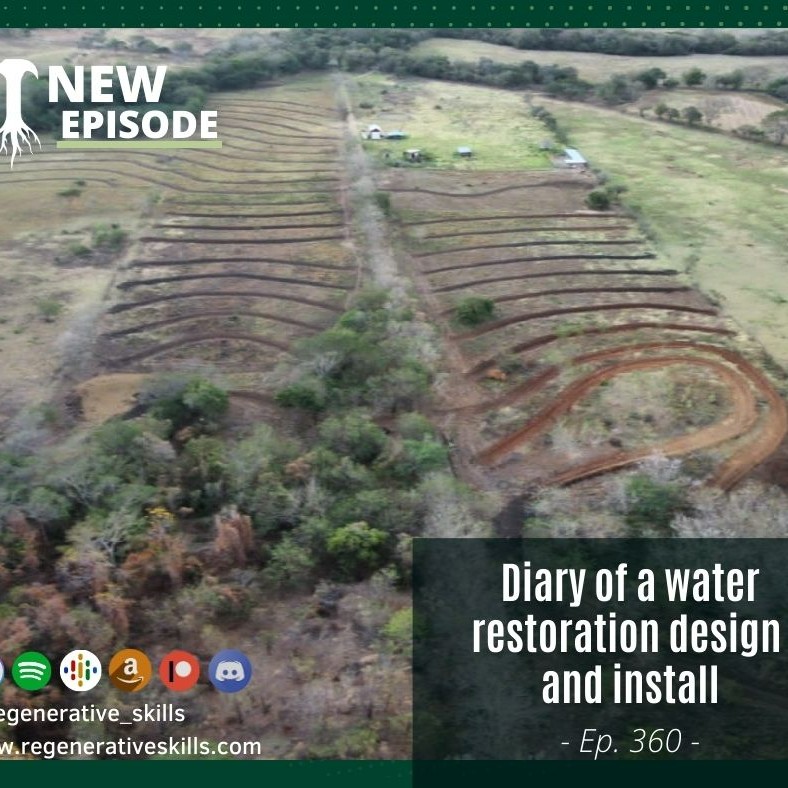
Diary of a water restoration design and install [not-audio_url] [/not-audio_url]

Duration: 1:09:35
Today I want to go back to one of my favorite episodes of the last few years. This was back at the start of the 7th season, so almost two years ago. I was trying out a new format as I headed out on a water retention land…
Managing floods, erosion, and living coastlines, with Mike Lynn [not-audio_url] [/not-audio_url]

Duration: 1:19:09
So much of the conversation around water revolves around its scarcity. Today we’ll get a chance to explore how to manage water regeneratively when the challenge is having too much. As arid zones become drier, the opposit…