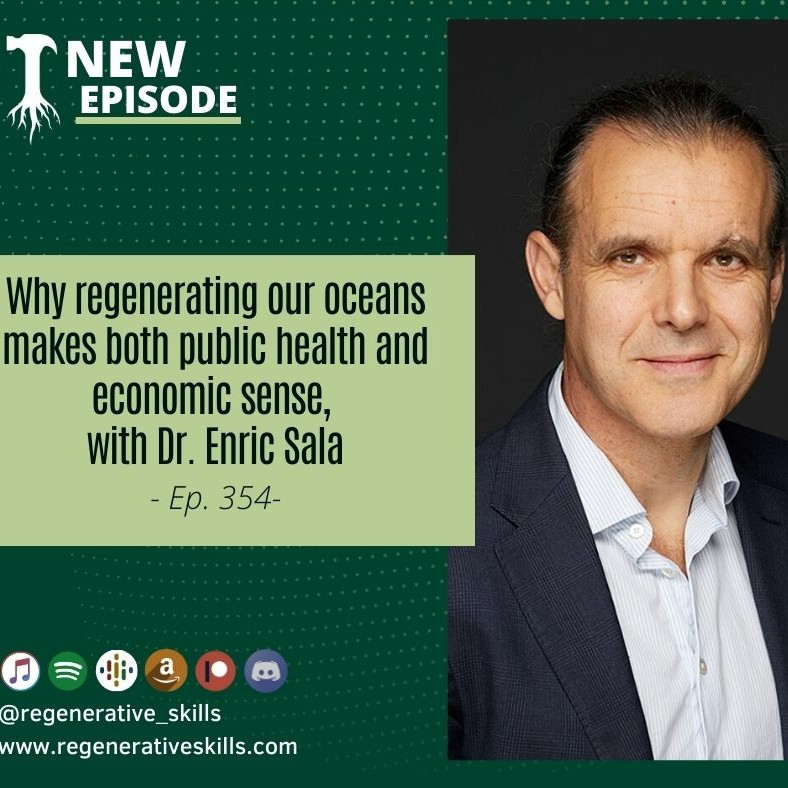
Why regenerating our oceans makes both public health and economic sense, with Dr. Enric Sala
Author: Oliver Goshey
August 30, 2024
Duration: 57:36
While the climate change narrative has mostly focused on the concentration of CO2 and other greenhouse gasses in the atmosphere since the industrial revolution, we’ve ignored the essential role that the water cycle plays in regulating global temperatures. In this series I’ll be speaking to an incredible list of scientists, farmers, and restorationists who are dedicated to reviving the precious waterways of the world. From the urban environment to the deep seas, our actions will determine whether or not we preserve our aquatic resources and all the life that depends on them for future generations.
In this first episode I got to speak with Enric Sala, a renowned ecologist making a clear case for why protecting nature is our best health insurance, and why it makes economic sense. Enric is the director of National Geographic’s Pristine Seas project (which has succeeded in protecting more than 5 million sq km of ocean and created 22 marine reserves). Dr. Sala has received the Young Global Leader Award by the World Economic Forum, a Research Award from the Spanish Geographical Society, the Lowell Thomas Award from the Explorers Club, and a Hero Award from the Environmental Media Association. In his new book “The Nature of Nature: Why We Need the Wild,” he tells the story of his scientific awakening and his transition from academia to activism. More importantly, he shows the economic wisdom of making room for nature, even as the population becomes more urbanized, and how saving nature can save us all, by reversing conditions that led to the coronavirus pandemic and preventing other global catastrophes.
In this interview we begin by unpacking the changes that have occurred in our oceans in the last few decades and how this is affecting people all over the world, even if you don’t live anywhere near the sea.
Enric also offers a lot of hope that our oceans can recover if we act swiftly and give them the space and protection to regenerate.
I learned a lot from this talk and as I begin to learn more about how marine health is closely linked to terrestrial health, I would encourage those of you listening to examine how your own habits and lifestyle choices are connected to ocean health in ways that can be hard to see.