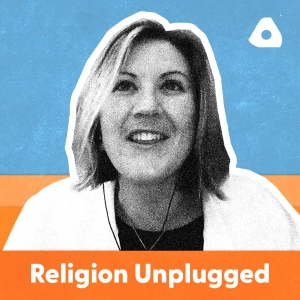
Victoria Jackson is Not Dead Yet

Victoria Jackson is Not Dead Yet

Author: The Media Project June 16, 2026 Duration: 37:09

Religion and death, for many of us, go hand in hand.


It is our faith that often shapes what we believe happens when we die and, perhaps just as importantly, what we ought to do while we still live.


In fact, if a belief system does not ask us to consider our death and what it means for us—if it avoids the subject and keeps mortality at arm’s length, it is almost certainly not a religion at all.


The Bible is many things, and among them, it is a ledger of death and dying. And, while the Bible has far less to say about the afterlife than our cultural imagination likes to impose upon it, the reality of death rings loudly through every book in the collection.


Death is the curse brought on in Genesis. It fills the following books through wars, plagues, and punishments. It operates as the enemy defeated by Jesus through resurrection. And it awaits many of his followers as they seek to spread his teachings.


Today, Christians continue to grapple with their mortality—with where exactly they are going and how exactly they might get there. And, while all of us know life will end, for those Christians who know that the end is imminent, faith can take on a whole new meaning.


To understand what it’s like to be a Christian while approaching death, Culture Critic Joseph Holmes spoke with actor and writer Victoria Jackson. Jackson was an SNL cast member back in the 80’s and has had a long career in film and television—including work in many faith-based films. Jackson suffers from terminal breast cancer, and, with the knowledge that her life is going to end, she recently wrote “Not Dead Yet,” which tells the story of her life, her faith, and how she is dealing with dying.


As with all of our podcasts, Religion Unplugged believes in a diversity of opinions. The viewpoints presented in this episode do not necessarily represent those of Religion Unplugged, its staff and contributors. 


In a world where faith is often reduced to headlines or soundbites, Religion Unplugged offers a different kind of space. This podcast, from The Media Project, engages with the profound and complex ways belief shapes our lives, politics, and history. You’ll hear candid conversations and stories drawn from original reporting by a global network of journalists. We move beyond simple debates to explore the nuanced realities of spirituality and religious practice as they intersect with culture, conflict, and community. Each episode is an opportunity to listen deeply to narratives that are frequently overlooked, understanding that religion remains a powerful and growing force across the globe. This isn’t about doctrine; it’s about the human experience at the intersection of the sacred and the everyday. Tune in for a grounded, journalistic approach that unplugs the stereotypes and connects you to the authentic stories defining faith in the 21st century.
Author: Language: en-us Episodes: 50

Religion Unplugged
Podcast Episodes
What Was American Religion Really Like in 1776 [not-audio_url] [/not-audio_url]

Duration: 56:10
Earlier this year, Pew Research published the results of a study on religious diversity around the world. While the U.S. didn’t even break the top 10 for most religiously diverse when all nations studied were taken into…
Was George Washington A Christian? [not-audio_url] [/not-audio_url]

Duration: 1:11:48
George Washington is a man of a mythological stature. A stalwart man of war, 6’2” with animal teeth and a seemingly endless supply of stories where he cheated death, Washington’s role is so much more than just a founding…
Is America A Christian Nation [not-audio_url] [/not-audio_url]

Duration: 42:31
In recent years, “Christian Nationalism” has become a ubiquitous term in American political discussion.It is said by many with fear and loathing, and by others with great excitement and conviction.Among the enthusiasts i…
African American Religion Beyond The Black Church [not-audio_url] [/not-audio_url]

Duration: 38:13
According to Pew Research Center, nearly 75% of Black Americans identify as Christian.It’s well known that many of the first African American Christians were first exposed to Christianity in the midst of enslavement. Thi…
How African Churches Are Using AI [not-audio_url] [/not-audio_url]

Duration: 24:15
Last week, Pope Leo cautioned developers and political leaders about the potential for exploitation in Artificial Intelligence development by comparing the AI race to the depravity of slavery. His wording was so strong,…
What A Bahá'í Romance Can Tell Us About Iran [not-audio_url] [/not-audio_url]

Duration: 41:54
“If the learned and worldly-wise men of this age were to allow mankind to inhale the fragrance of fellowship and love, every understanding heart would apprehend the meaning of true liberty, and discover the secret of und…
Why Murder Investigations Can Be Complicated By Ashkenazi Jewish DNA [not-audio_url] [/not-audio_url]

Duration: 23:33
There are currently 15,000 open cases of unidentified persons in the United States.Bodies are unable to be identified for a variety of reasons including severe mutilation, significant decomposition, no history of medical…
Are Big Churches As Healthy As Small Ones? [not-audio_url] [/not-audio_url]

Duration: 36:29
In C.S. Lewis’s Mere Christianity he says: “the Church exists for nothing else but to draw men into Christ, to make them little Christs. If they are not doing that, all the cathedrals, clergy, missions, sermons, even the…
Pope Leo XIV Before The Papacy [not-audio_url] [/not-audio_url]

Duration: 30:49
This week marks one year since Cardinal Robert Prevost became Pope Leo XIV.The late Cardinal Francis George who once presided over Leo’s hometown of Chicago famously said that there would never be an American Pope until…
Can Virtue Save American Conservatism? [not-audio_url] [/not-audio_url]

Duration: 37:35
This July, the United States will celebrate its 250th year as an independent nation.The Founding Fathers established the U.S. on the foundation of the ideals they believed in. The Declaration of Independence famously say…