STL181: Will a Jobsite Saw Cut It?

STL181: Will a Jobsite Saw Cut It?

Author: FineWoodworking.com January 18, 2019 Duration: 1:04:05

Check out our newest video workshop, Enfield Cupboard with Hand Tools featuring Chris Gochnour and be sure to help us make our video workshops even better by filling out this quick survey.

Question 1: From Dean: I have an enjoyable dilemma. I am building a garage with adjacent shop space at our north home.  The shop is 200 sq-ft, one third the size of my St. Paul shop, and thus creates a challenge adapting to a small space. I have been devouring all the FWW articles on small shops and believe I can make this space workable but I will have to make some concessions, mainly my tablesaw, jointer, and planer. Will I be satisfied and served by a portable, contractor-style table saw and a combination jointer-planer?  

Question 2: From Tanc: Is there a guideline for when stretchers are needed to strengthen a piece? I am looking to build an entryway table from oak that is 32-in. high, 60-in. long, 12-in. deep, with a  2 ½-in. apron and 2-in. legs that taper down to 1-in. I prefer simple designs, and would rather not have stretchers.

Ben's mockup of Tanc's table with the given dimensions:

Benside Table:

Segment: Smooth Moves

  • John: Not cleaning the lint off of a new floor finish applicator
  • Anissa: Touching a friends piece of furniture while the finish was still wet
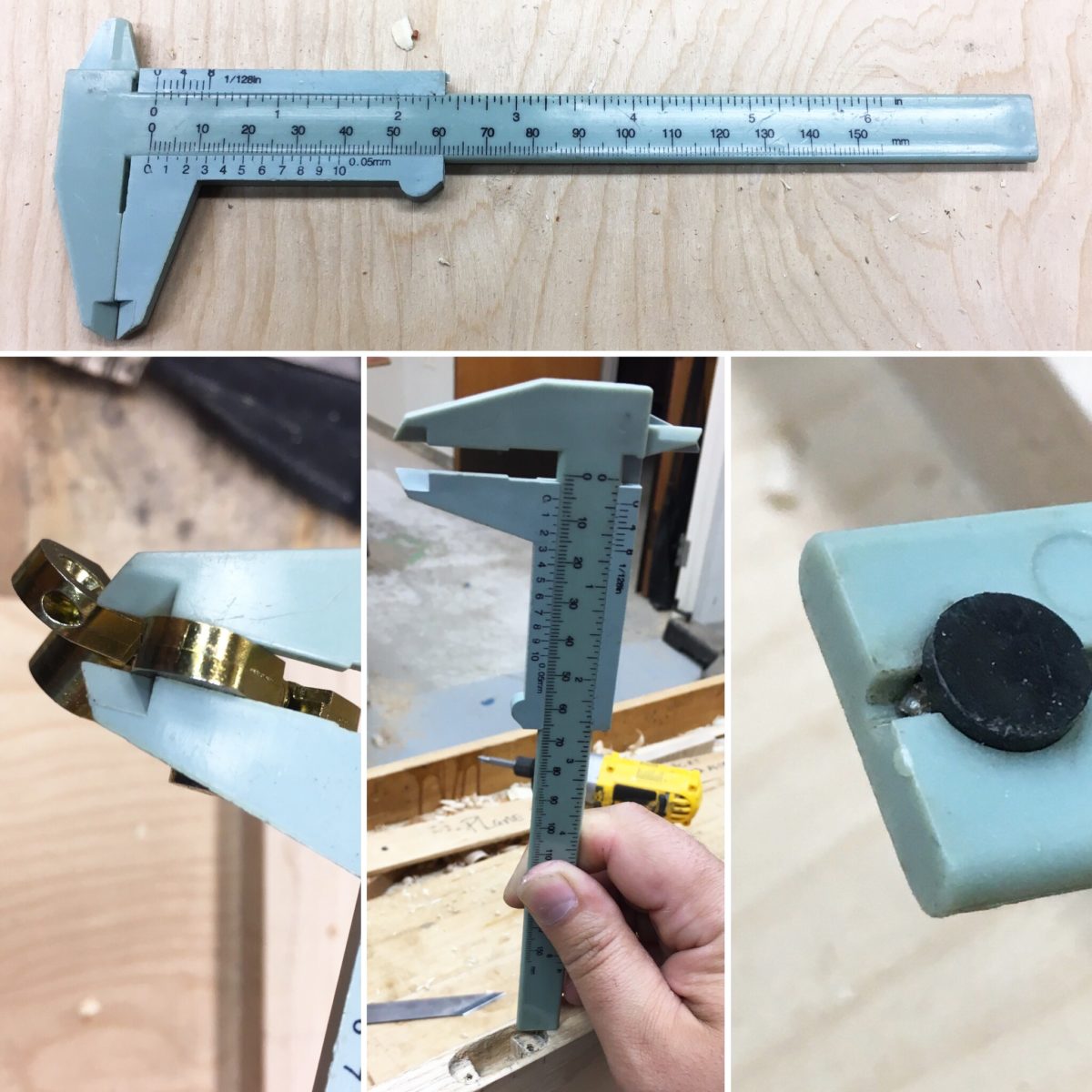
  • Ben: Trusting a tool that should never have been trusted

Question 3:   When I set up my workshop, I positioned the bench facing a south-facing window and installed fluorescents directly above the bench at about eight feet above the floor. If I have a board on edge, any markings on the side facing my body are difficult to see because that area is in shadow. I want to avoid using task lights wherever possible, as they just get in the way. I'm thinking that more overhead lighting is the answer.  Do you have any thoughts about where this should be positioned to minimize shadow areas when working at the bench?

Question 4: From David: I am baffled that some ash stock I milled a couple months ago is now nearly impossible to plane. I cut and milled the ash for a small box a while ago. It was wonderful to work with and easy to plane. I put the pieces aside to enjoy the far too short Minnesota summer. I kept it in the same place all my wood stock lives; my basement workshop. I was looking forward to getting back to work on the box. I decided to plane all the pieces again, assuming it wouldn't be flat and square as it was months ago. I was dumbfounded that it was nearly impossible to plane. I used the exact same plane I used originally. I ended up resharpening the blade twice and adjusted it to take the finest possible shaving. Still it would stick and chatter across the board and leave tear out in the middle of smooth grain. To make sure I wasn't hallucinating, I tried planing some oak and some twisty walnut. It performed beautifully. It was as though it had developed a skin of steel in the time since I first milled it. Any ideas about what/why this happened?

Recommendations:


Every two weeks, a team of Fine Woodworking staffers answers questions from readers on Shop Talk Live, Fine Woodworking's biweekly podcast. Send your woodworking questions to shoptalk@taunton.com for consideration in the regular broadcast! Our continued existence relies upon listener support. So if you enjoy the show, be sure to leave us a five-star rating and maybe even a nice comment on our iTunes page.


Ever find yourself in the middle of a project, staring at a tricky joint or a piece of lumber that just won't behave, wishing you could ask an expert? That's the space where Shop Talk Live-Fine Woodworking lives. Hosted by the editors and seasoned contributors from Fine Woodworking magazine, this isn't a formal lecture. It's the sound of a conversation happening right in the workshop, where real questions from woodworkers at every level meet practical, time-tested answers. You'll hear the specifics-discussions on tool tuning, finishing nuances, joinery adjustments, and design problem-solving-all grounded in decades of collective hands-on experience. The dialogue is direct and the advice is applicable, whether you're building your first box or restoring a classic piece. This podcast from FineWoodworking.com pulls back the curtain on the craft's finer points, turning those moments of frustration into breakthroughs. It’s like having a master woodworker right there with you, offering clarity and confidence for your next cut. Tune in for the kind of shop talk that makes your time at the bench more productive and a lot more enjoyable.
Author: Language: en-us Episodes: 100

Shop Talk Live - Fine Woodworking
Podcast Episodes
STL327: Live from Woodworking In America [not-audio_url] [/not-audio_url]

Duration: 1:09:17
Rollie Johnson, Gary Rogowski, and Phil Huber join Amanda in front of a live audience at Woodworking In America 2024. For more information about our eLearning courses - http://www.finewoodworking.com/elearning For more i…
STL326: No Finish? No Problem! [not-audio_url] [/not-audio_url]

Duration: 1:10:25
Seri Robinson, a.k.a. Dr. Spalting, says the best food-safe finish is no finish at all. For more information about Woodworking In America 2024 - https://www.woodsmith.com/article/woodworking-in-america-2024/ Links from t…
STL325: From logs to lumber [not-audio_url] [/not-audio_url]

Duration: 58:08
Amanda is joined by Brenon Plourde and Logan Wittmer to discuss milling logs, drying lumber, and their mutual "problem" of hoarding the perfect board. For more information about Woodworking In America 2024 - https://www.…
STL 324: Bridging creativity and technicality [not-audio_url] [/not-audio_url]

Duration: 1:15:24
Amanda chats with Larissa Huff and Adrian Ferrazzutti, arguably two of the most creative woodworkers in our world. Both chat about boxes and prototypes, and their workflow. Mike and Ben answer a couple questions from our…
STL323: The woodworking behind your favorite records [not-audio_url] [/not-audio_url]

Duration: 1:02:55
Woodworker and recording engineer Kenny Varga joins Ben to discuss building furniture for some of the most famous recording studios in the world. For more information about Woodworking In America 2024 - https://www.woods…
STL322: Life is like a table saw [not-audio_url] [/not-audio_url]

Duration: 1:02:37
Mike, Anissa, and Ben discuss new the issue of FW, beveling bookshelves, bench height, and what direction to turn a table saw miter gauge. Find out more about Woodworking In America here: https://www.finewoodworking.com/…
STL321: One podcast, two Mikes. [not-audio_url] [/not-audio_url]

Duration: 1:18:15
Ben and Mike Mascelli talk finishing and upholstery, Then Amanda chats with Mike about his thoughts on our "fine woodworking" question from the last episode.. Every two weeks, a team of Fine Woodworking staffers answers…
STL320: What is "fine woodworking?" [not-audio_url] [/not-audio_url]

Duration: 1:09:38
Ben and Amanda chat with Vic about bandsaw accessories and what constitutes "fine furniture" Every two weeks, a team of Fine Woodworking staffers answers questions from readers on Shop Talk Live, Fine Woodworking's biwee…
STL319: You make your own dowels? [not-audio_url] [/not-audio_url]

Duration: 1:07:47
Phil, Mike, and Ben discuss store-bought vs shop-made dowels, what wood to use for floating tenon stock, and whether CAD models negate the need for full-size mockups. For more information on our upcoming woodworking trav…
STL318: Back to School [not-audio_url] [/not-audio_url]

Duration: 1:10:14
Amanda is joined by Ashley Pieper and Bonnie Elisabeth Hawk to discuss woodworking education and how it has carved a path for them in their furniture making careers. For more information about our eLearning courses - htt…
